The gaps stayed visible.
I designed the site as a record that knew its limits. Missing materials stayed blank. Undated photographs stayed unordered. Reference-only works said what they were. Anything I derived from the source material was labelled as derived, with its status beside it.
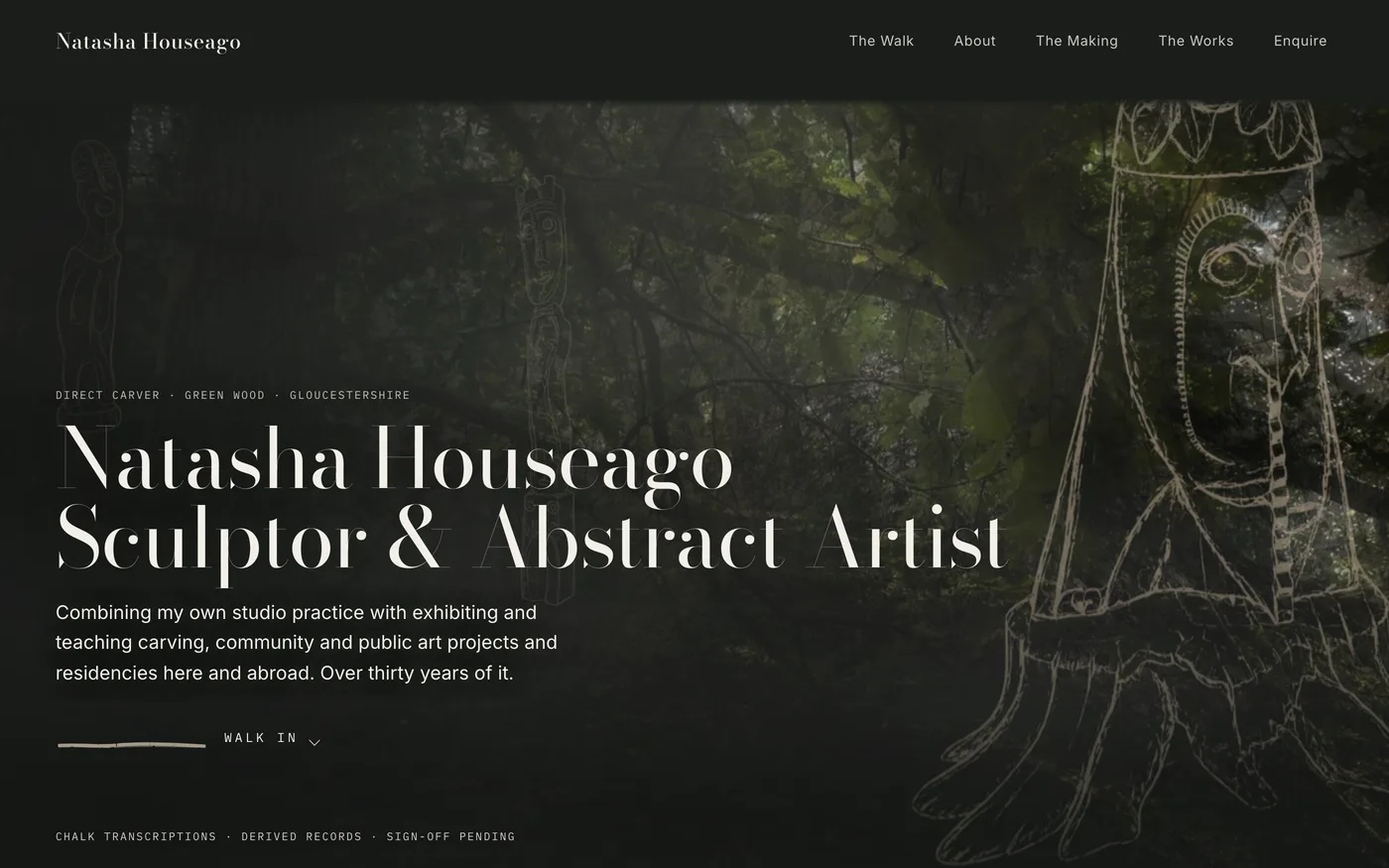
The Walk · her name, a chalk transcription and woodland at the entrance
I opened on the place and the hand.
Natasha was a direct carver working in green wood in Gloucestershire. She had worked for over thirty years. Her own framing held the range together: “Combining my own studio practice with exhibiting and teaching carving, community and public art projects and residencies here and abroad.”
I ordered the site as The Walk, About, The Making, The Works, Enquire. The entrance put her name over woodland and used a chalk transcription from her process. The transcription was not presented as an original record. Its derived label and status appeared on the same screen.
The rule
I marked the source, the derived record and its status where the visitor encountered them. I did not move that information into a note elsewhere.
A reconstruction sat beside the record.
I rebuilt selected work in three dimensions so it could occupy a dark room, but I kept the reconstruction and the evidence distinct. One work was lit in the space. Its record sat beside it. The labels named the reconstruction as derived and carried its status.
I used the marks to keep the reconstruction separate from the sculpture. A visitor could see which record was original, which was derived and what status the derived record carried.
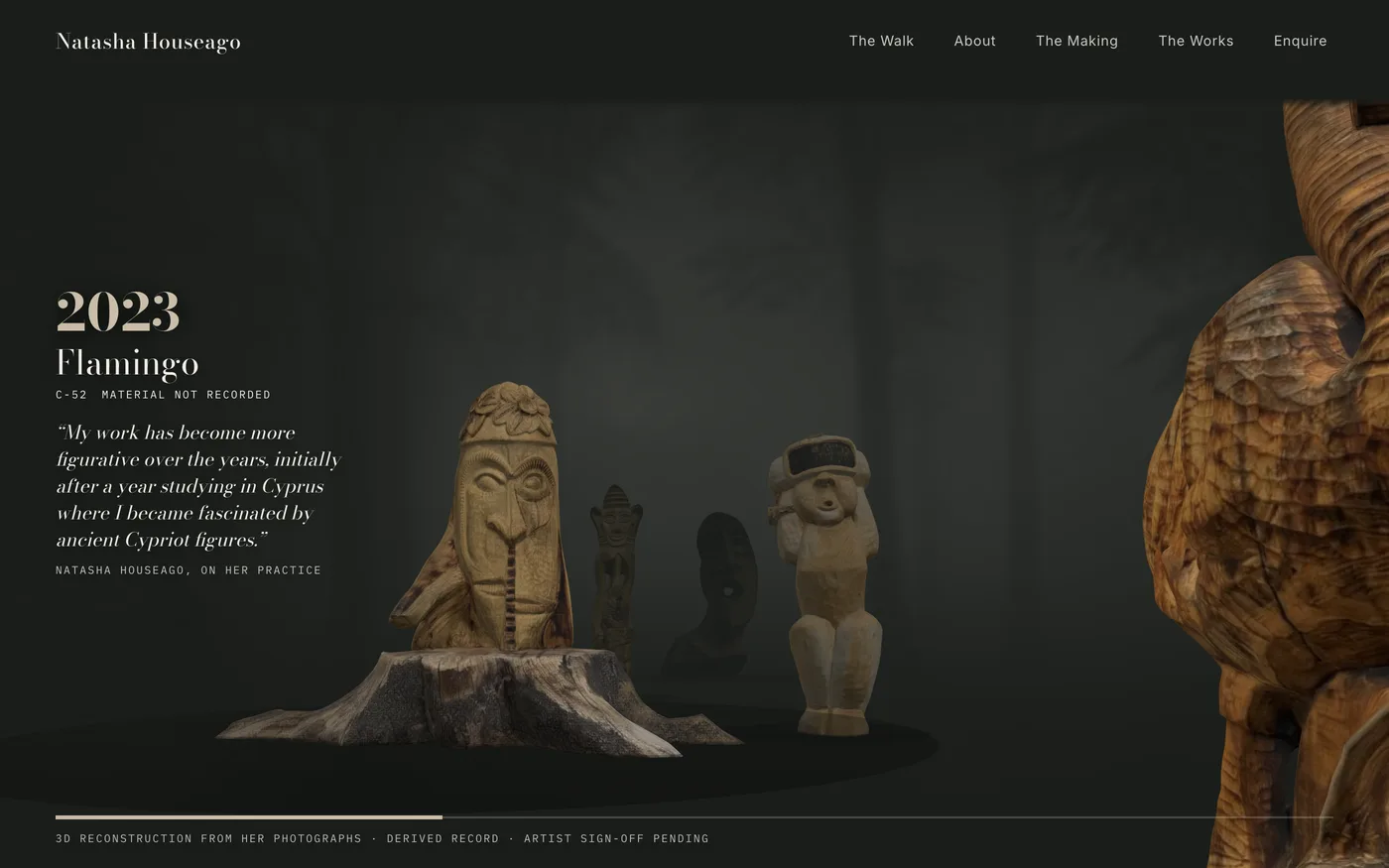
The room · reconstruction and record kept together, with the derived mark and status in view
Her words carried the account.
I used Natasha’s own words and three field photographs to answer “Who am I”. The page did not replace her account with a biography written around it.
“I have always had a deep fear of death and carving my sculptures is, perhaps, an attempt to evoke a form of immortality. Certainly the very physical presence of my sculptures means they become part of my family.”Natasha Houseago
“My work has become more figurative over the years, initially after a year studying in Cyprus where I became fascinated by ancient Cypriot figures.”Natasha Houseago
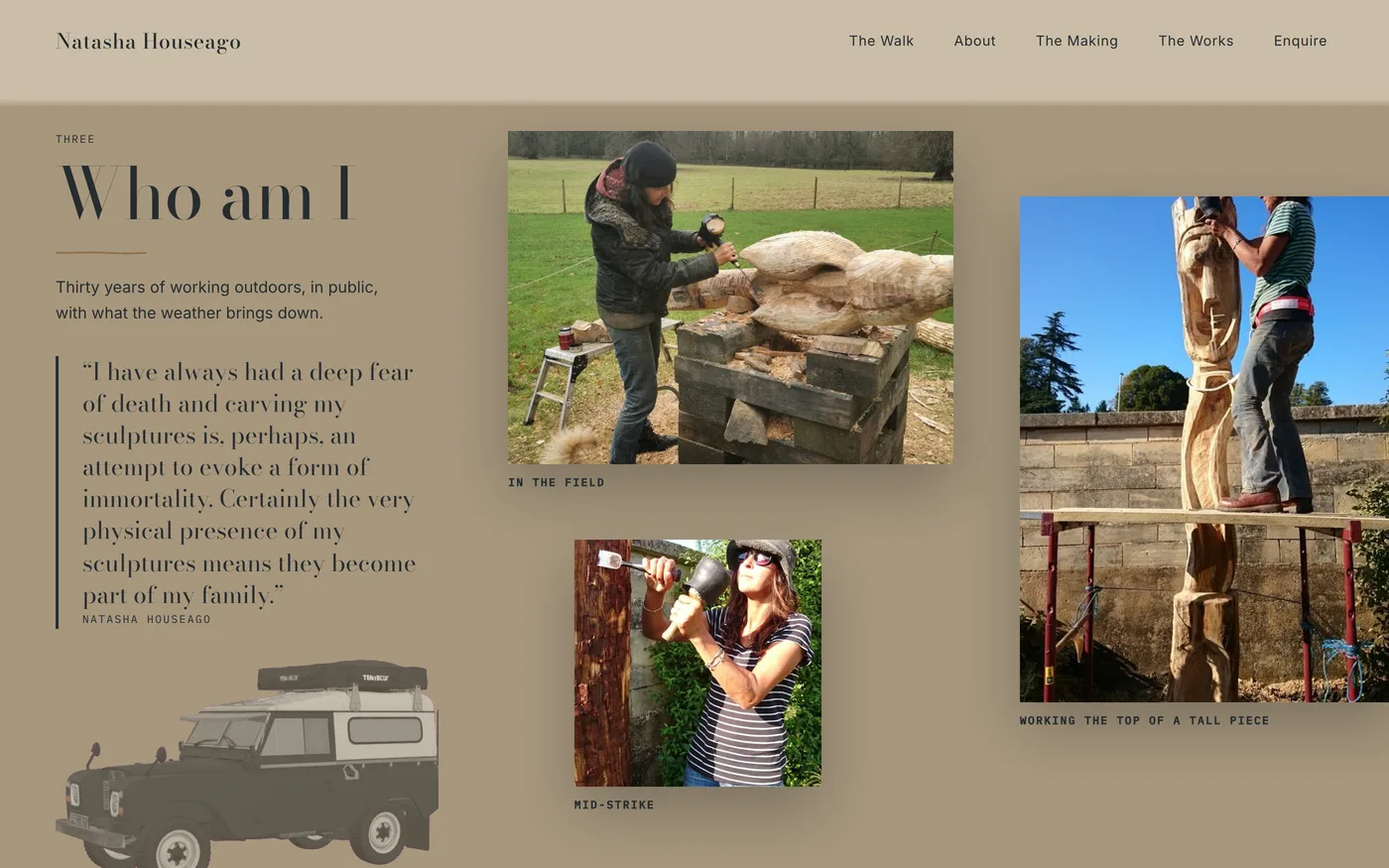
About · her account, attributed to her, with three field photographs
No date meant no sequence.
I did not turn missing dates into a chronology. The site stated: “12 photographs of her working, dropped as they came. None of them carries a year, so none of them is put in an order.”
That left the photographs as evidence of work without making them evidence of an invented progression.
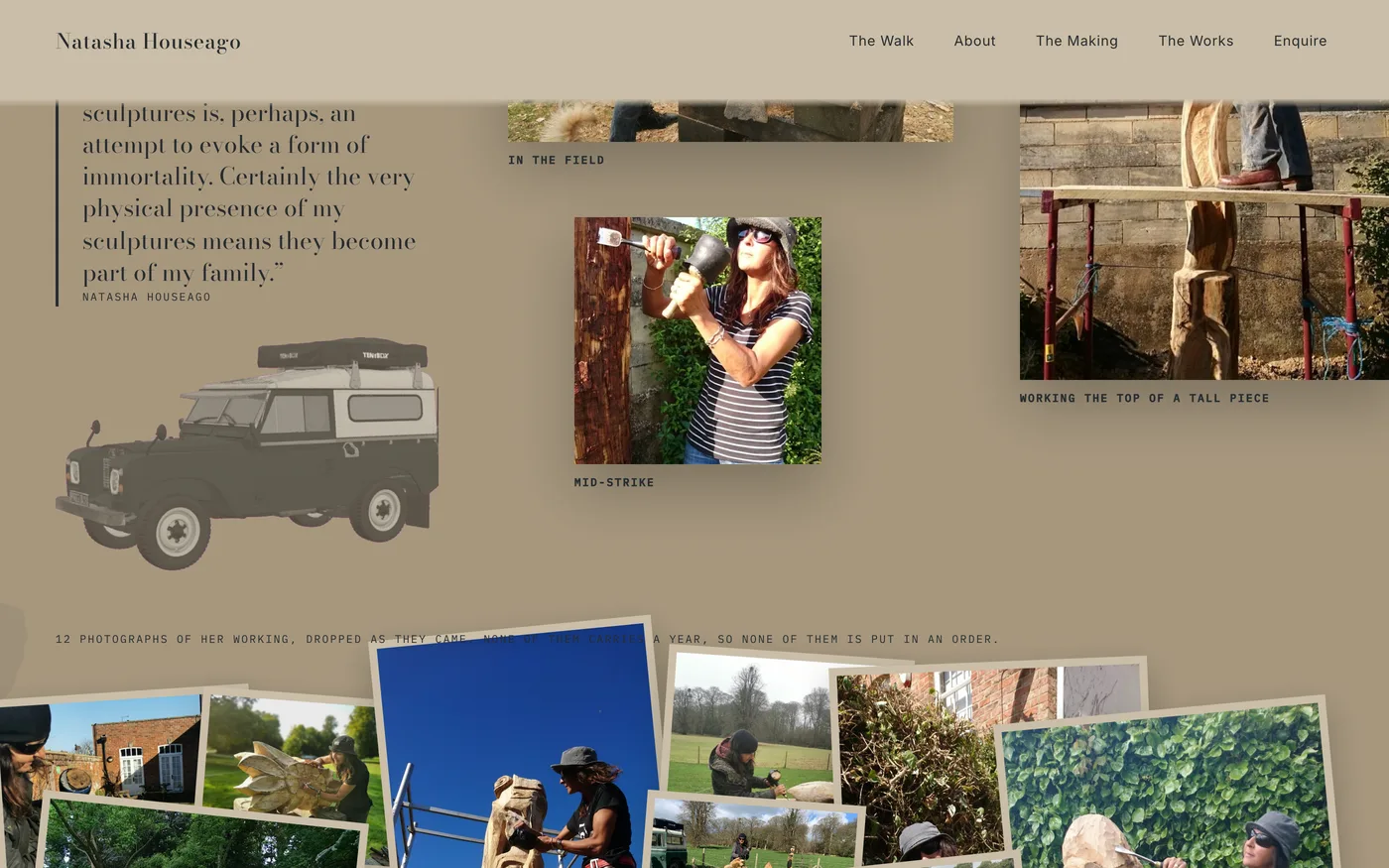
Working photographs · twelve records, dropped as they came
Six steps, in her words.
I kept the making process in six named steps. Each explanation stayed verbatim.
The wood has already fallen
All my wood has fallen naturally, and I love that sense of giving it another life.
Many loose drawings
I begin my project by doing many loose working drawings.
Chalk onto the block
I then transfer these in chalk onto my solid block of work.
Hacking, slashing
the very physical process of carving, hacking, slashing as I go to battle with my materials!
The forge
my small jewellers forge fuelled by ash chippings to scorch the tips of my forms.
Back into the garden
Once a sculpture was finished I would liaise with the gardeners about a suitable location back in the garden.
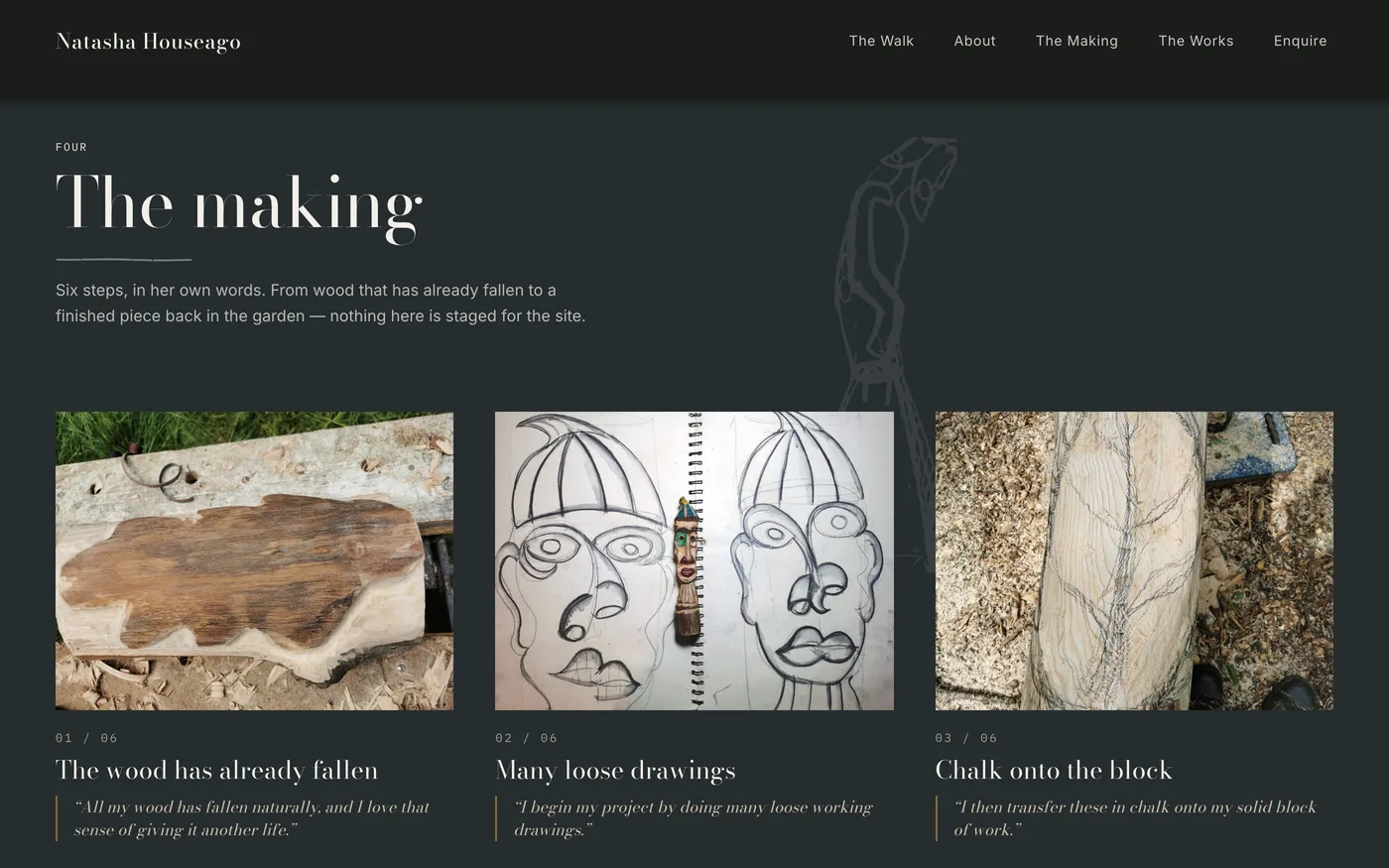
The Making · fallen wood, drawings, chalk, carving, scorching and the garden
Oldest first. Nothing filled in.
I built the catalogue as an archive rather than a claim of completeness. It held 52 works from 1995 to 2023, oldest first. Where no material had been recorded, the page printed nothing rather than a guess.
The site said: “The record thins the further back it goes, and the page says so rather than hiding it.” It also said: “24 of them survive only as a reference photograph. Every one is marked, and none of the early work has ever been photographed well.”
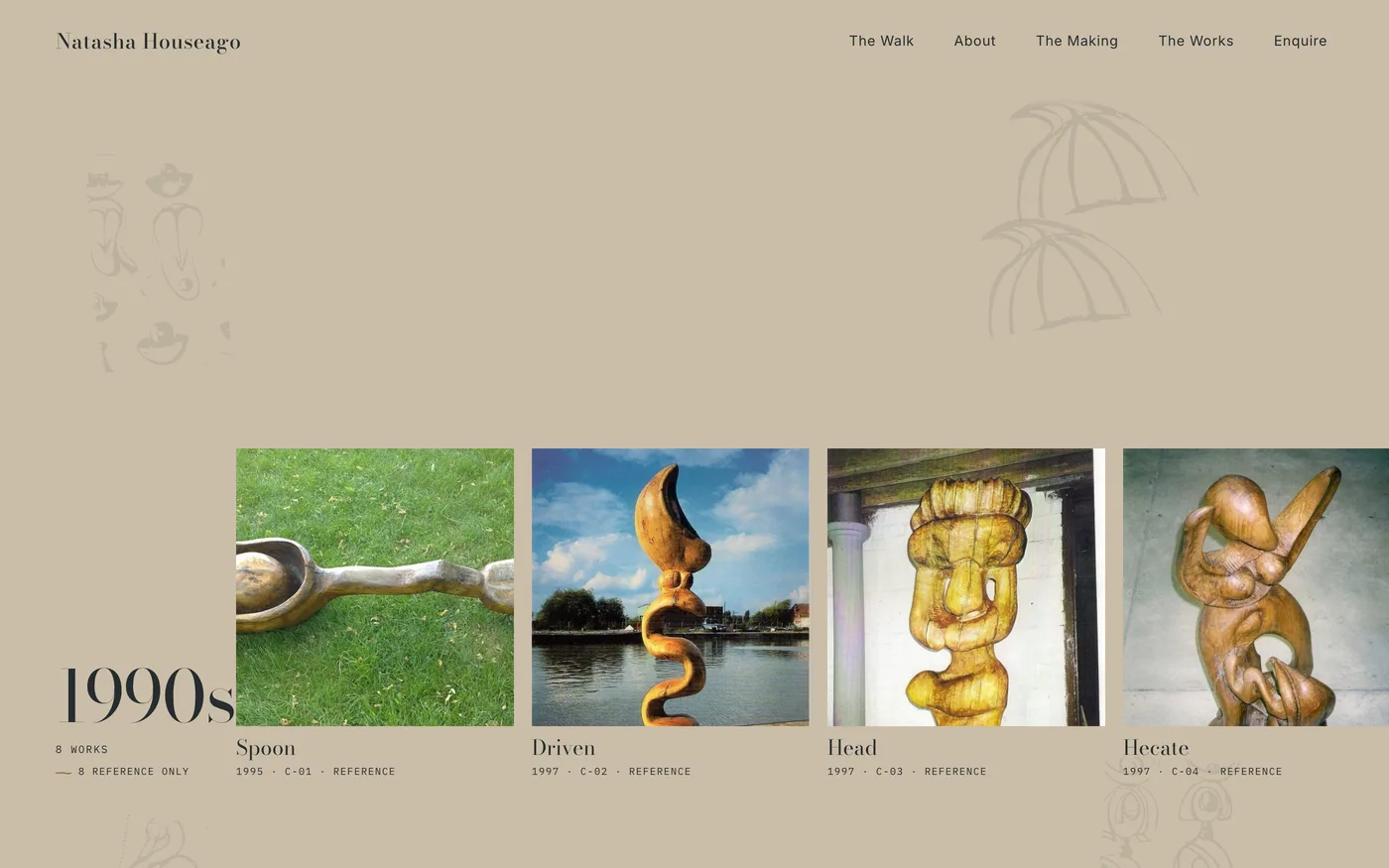
The Works · 1995 to 2023, oldest first, with reference-only records marked
The exit gave the record a use.
I ended with the residency sign and an enquiry form. It followed The Walk, About, The Making and The Works, so the practical route to Natasha came after the account of who she was, how she worked and what survived in the record.
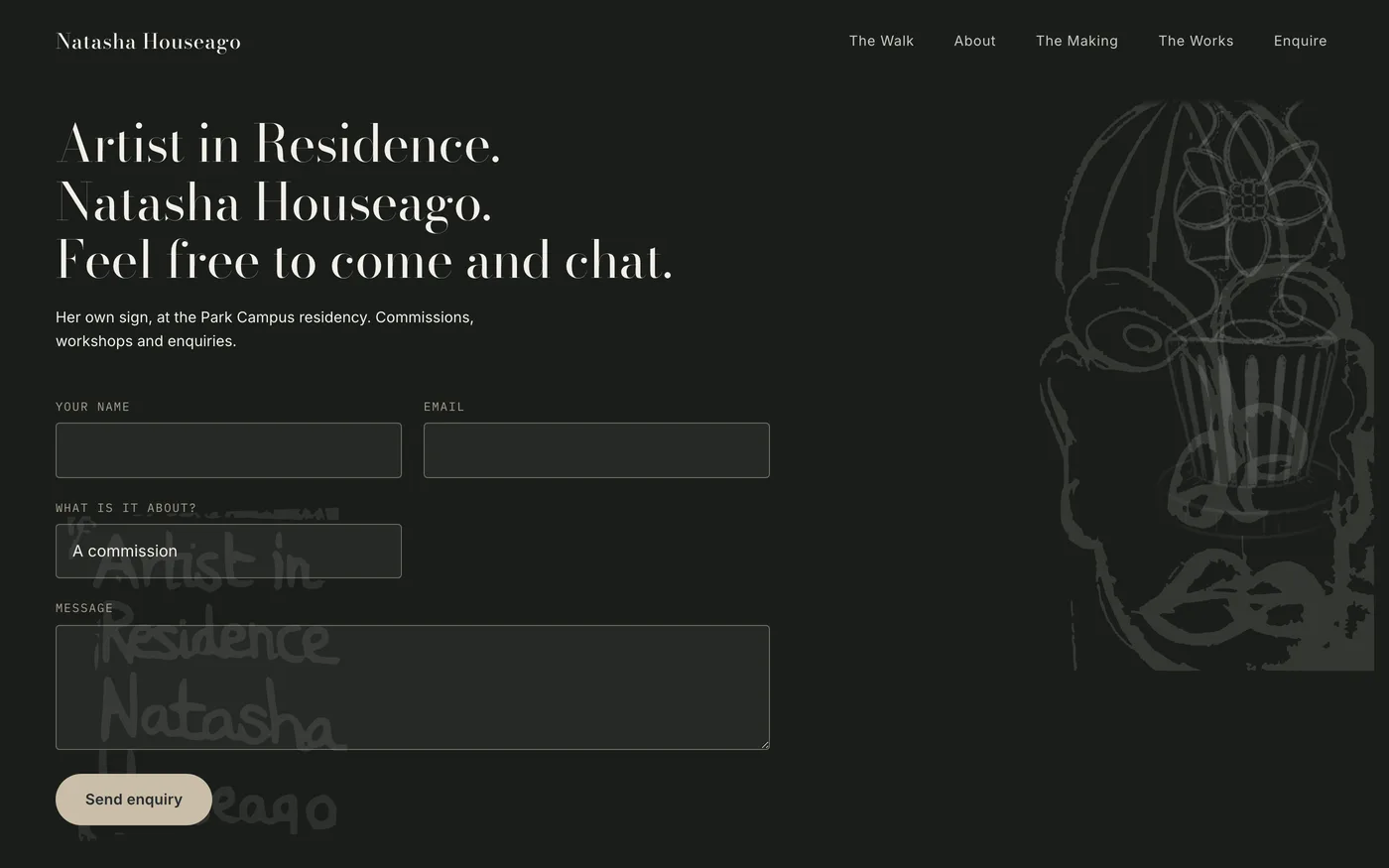
Enquire · the residency sign and the form