Every can lands in its own world.
A concept for DEYA Brewing Company's shop. Each beer arrives through a short film you scroll, and the film ends in the basket. Three beers, a landing page drawn in DEYA's own style, and a video bill of $2.80.
The landing page, captured frame by frame at 1920 × 1080. Logo, illustrated opening, then the beers.
The films are built from the last frame backwards.
Every film starts with the picture it ends on: the can at rest in its world, framed so the can already sits where the product card will be. Every other frame is one edit of that picture, never an edit of an edit, so the can and the camera can't drift. Video is only used where something physically moves, and every join between film and still is measured, not judged by eye.
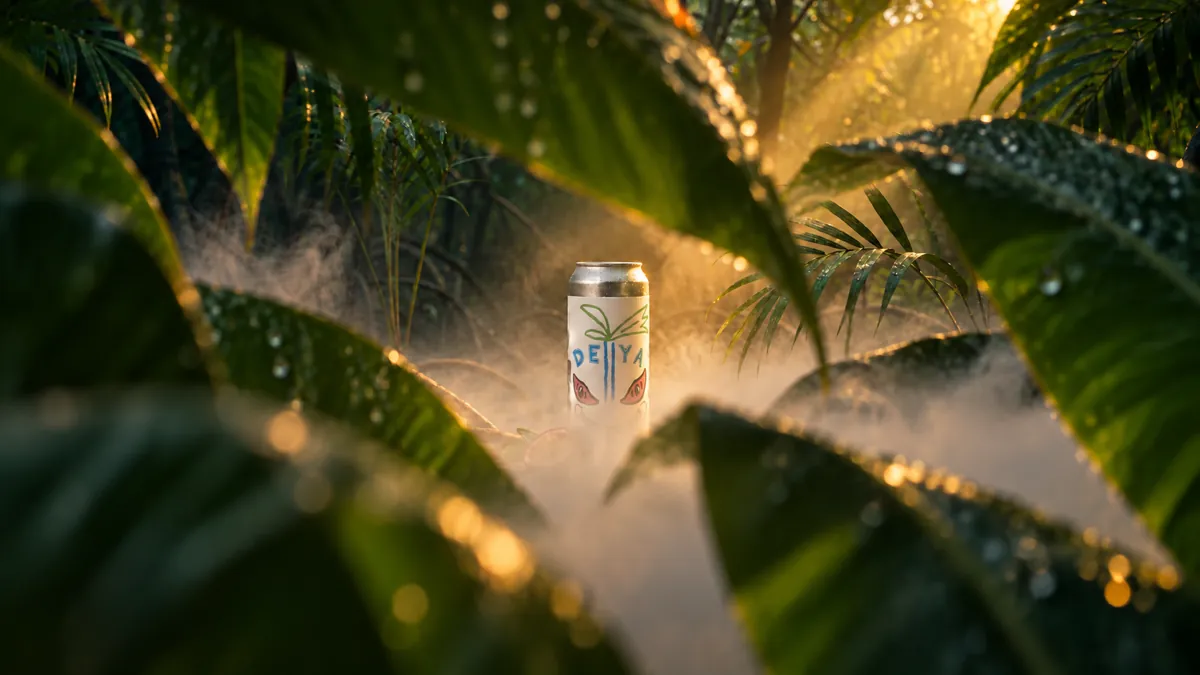
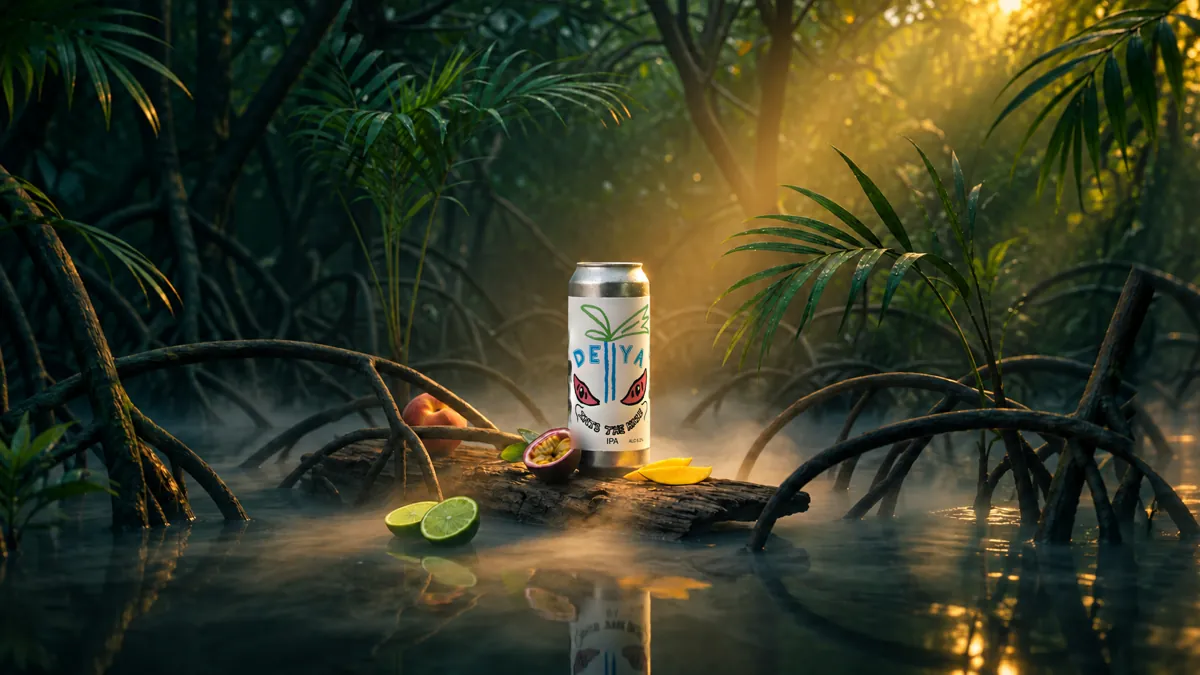
The finished picture, generated first and locked. Everything else is derived from it.
The first frame is one edit of the anchor. The label is checked at 100% against DEYA's packshot.
One Kling clip between the two, camera locked, around 60 words of prompt. $0.56.
The last frames are blended onto the still, so the film lands on it exactly, with no jump.
The splash dived, then came back up.
Tappy Pils was meant to open with the can plunging into a pool. Two takes did the same thing. The model sent the can deep, then floated it back up to meet the frame I'd given it, so the film went down, up, and down again. No trim could save it: the closest cut between the two clips was still a visible jump.
It's a rule now: end a clip on a frame where the direction of travel is obvious. Tappy opens on the still instead, and the fix is one longer clip, not a third retake of the same mistake.
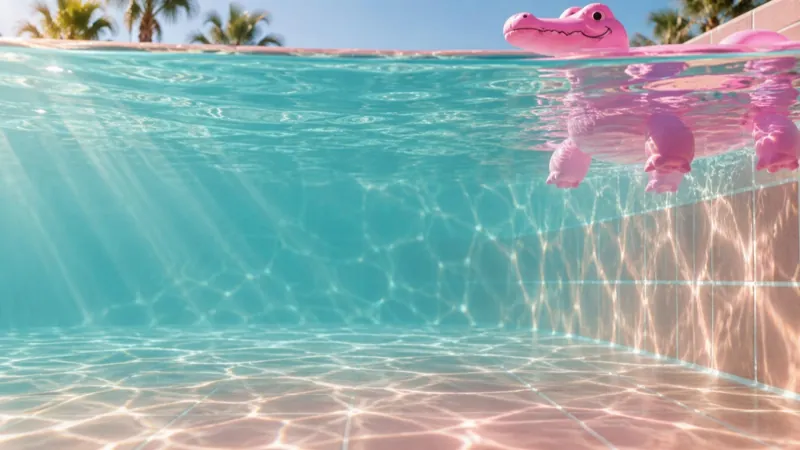
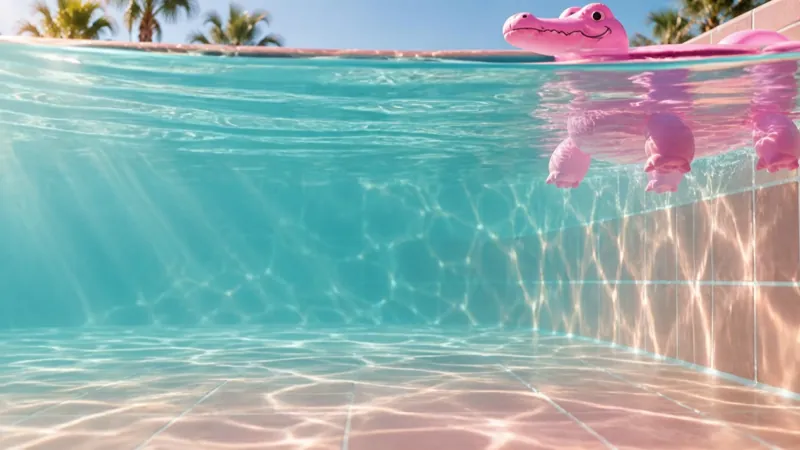
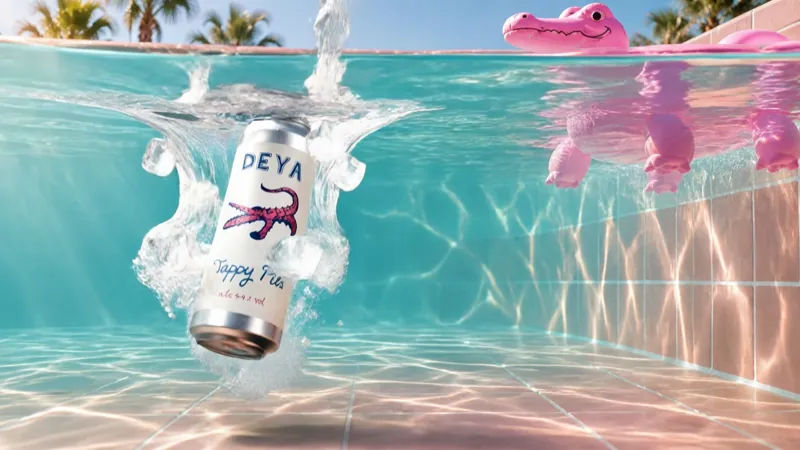
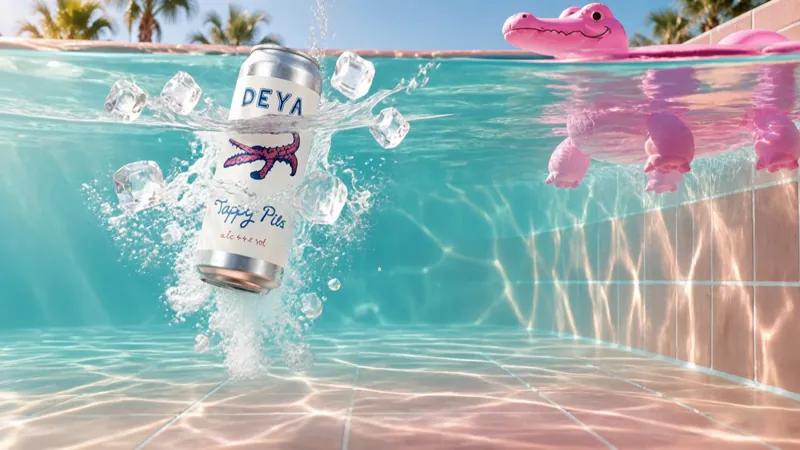
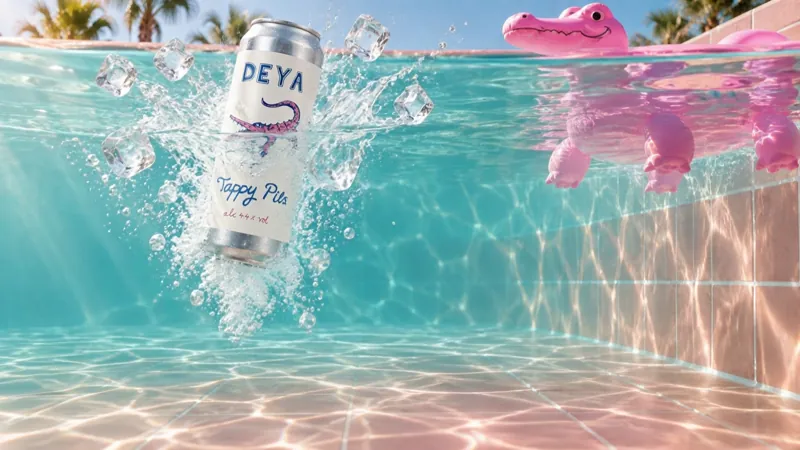
Take one, sampled across its five seconds. $0.56 each, and the second take made the same mistake.
The film ends in the basket.
When the film lands, a square around the can lifts off the frame like glass, the world washes out to the shop's cream, and the buy box comes in beside it: pack sizes, quantity, one black button. The can was placed in that square when the last frame was composed, so nothing has to slide into position.
The pages are joined by shared pictures. A beer's row on the landing page is its film's first frame, so opening the product page is invisible. Keep scrolling past a beer and the next one rises as a card, fills the screen and becomes that beer's page, on the same frame.
From the landing page into Tappy Pils, then on to Into The Haze and Steady Rolling Man, all by scrolling.
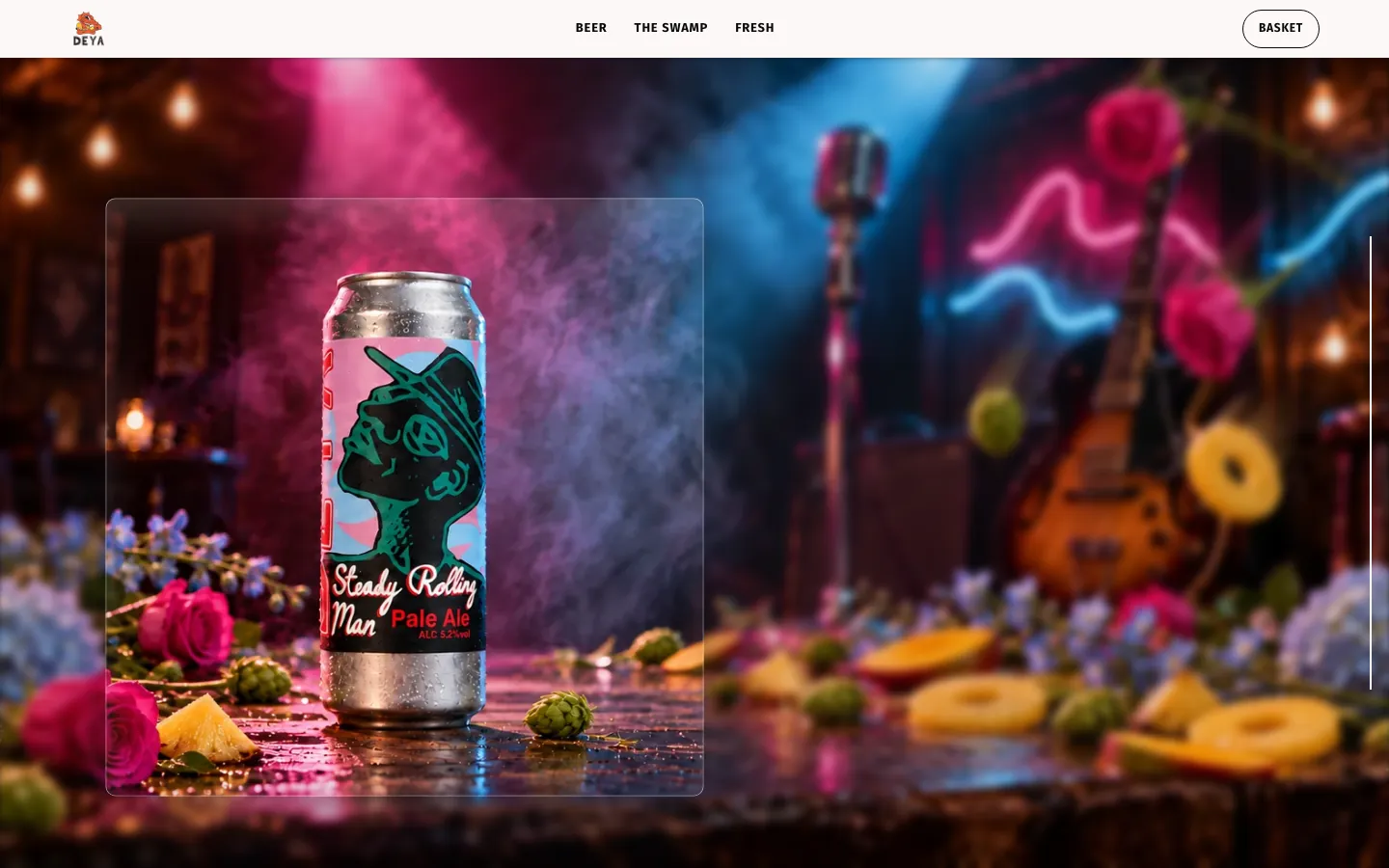
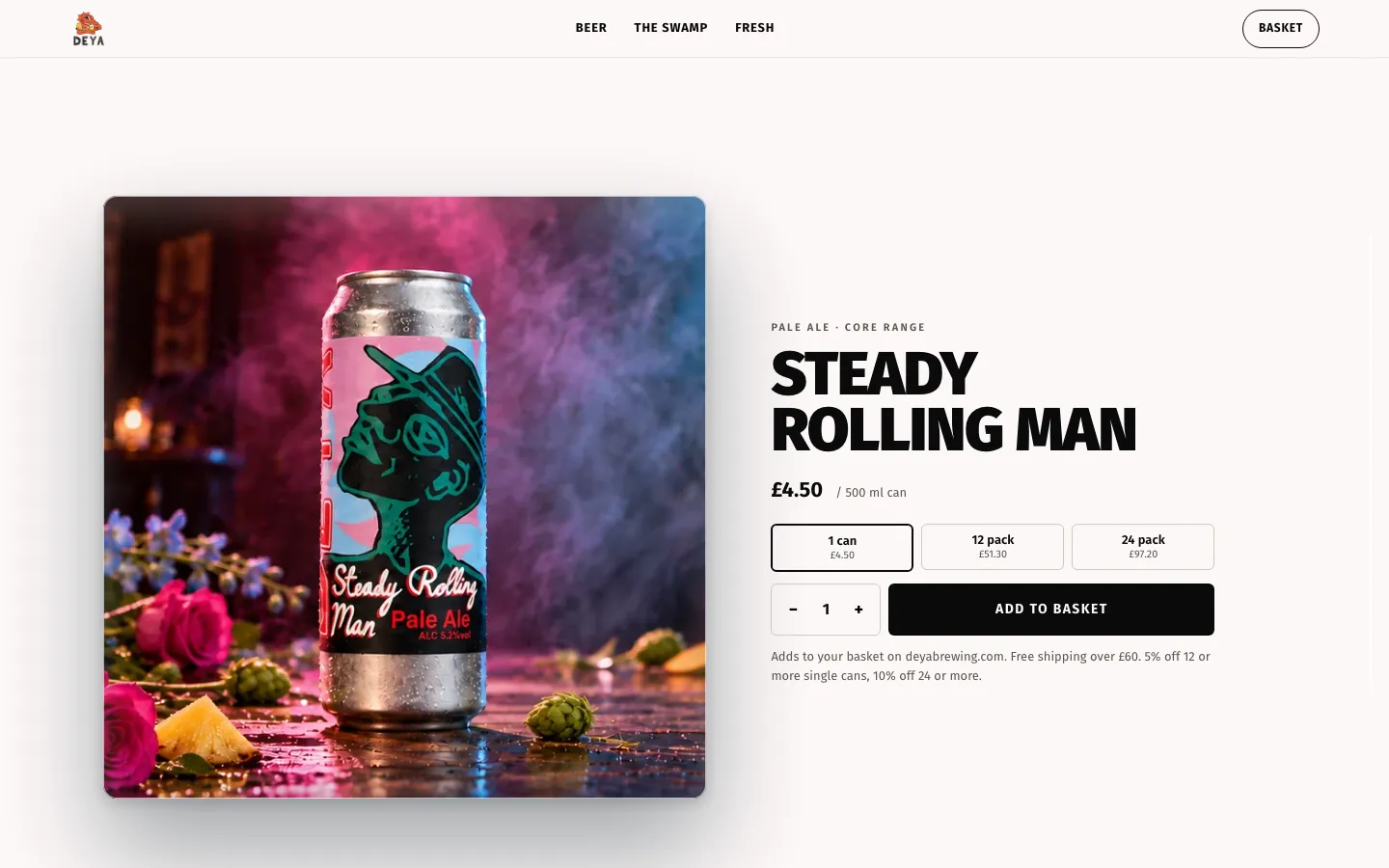
The flagship was the hardest to get right.
My first Steady Rolling Man was the can in a bed of pink roses. On brand, and far too soft for the beer DEYA calls its OG. So I made four bigger worlds, each designed around one big move from the first frame to the last.
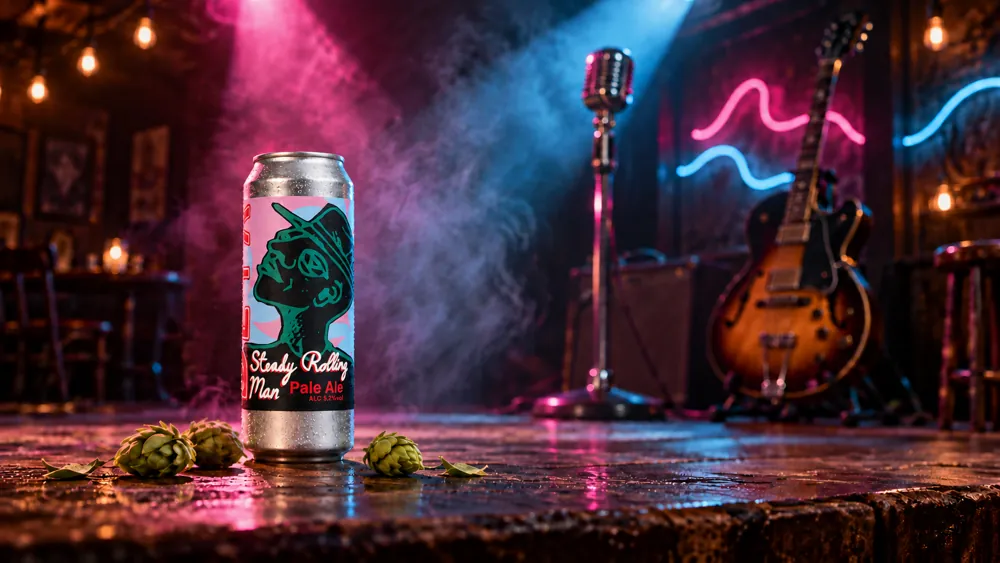
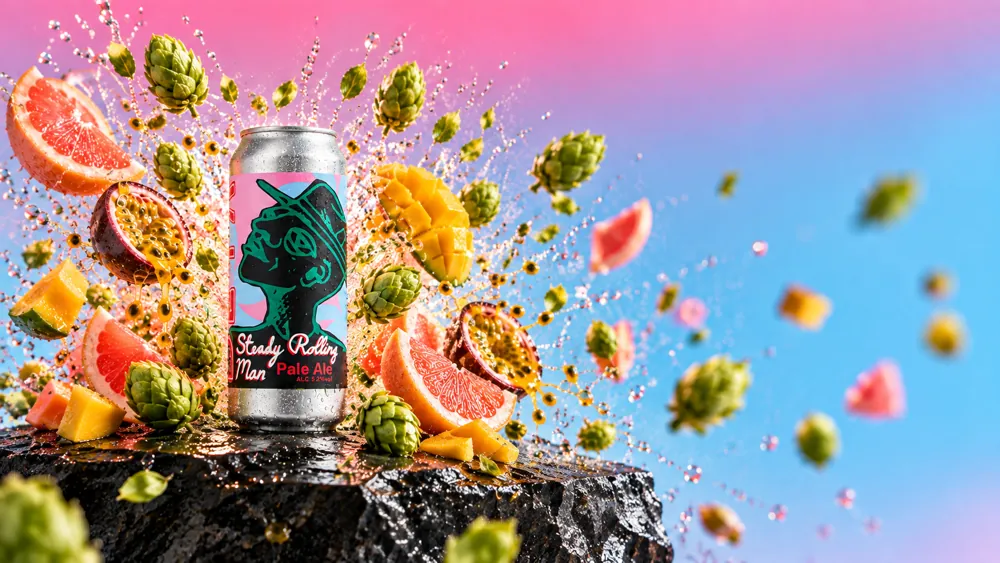
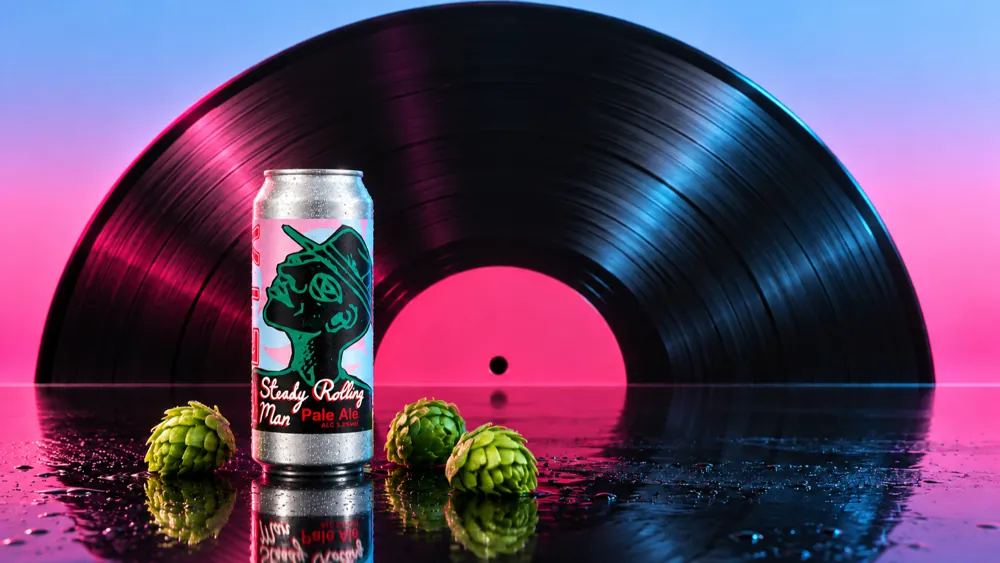
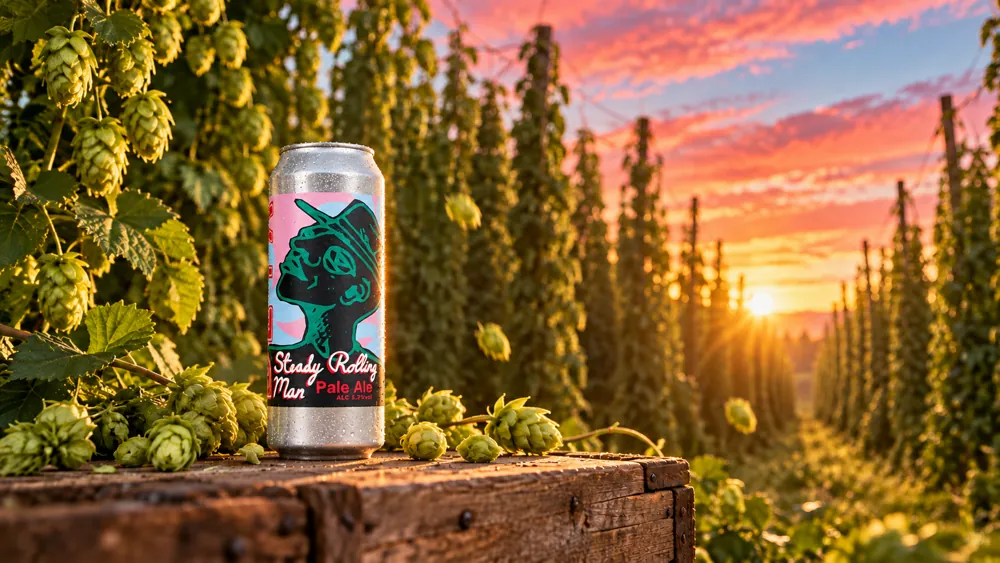
The one that stayed combines two of them: the juke joint, because DEYA brewed this beer to blues records, and a crowd throwing flowers and fruit on stage at the end of the set. The fruit comes from DEYA's own description, pineapple and mango. The label has no flowers, so the roses and hydrangea are its two colours, pink and sky blue.
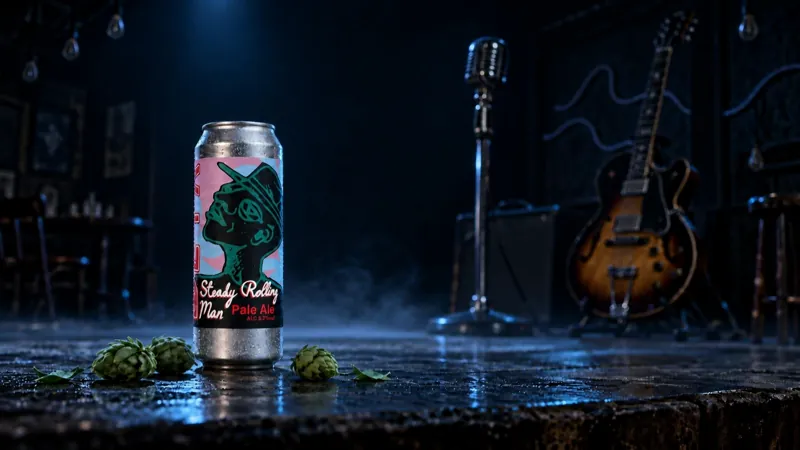
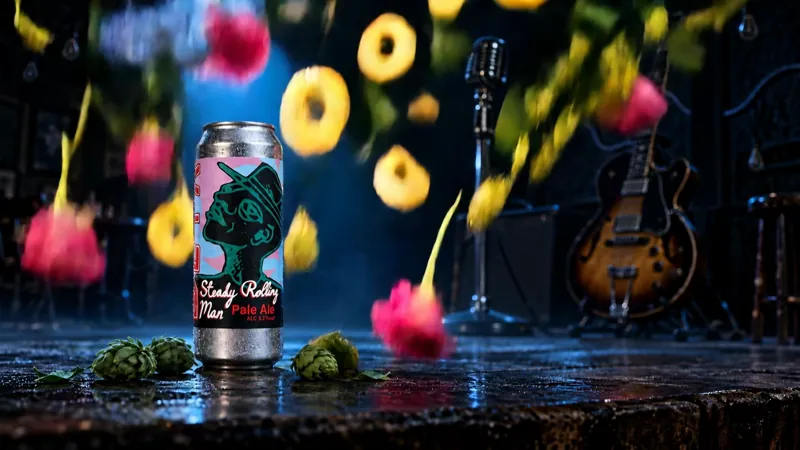
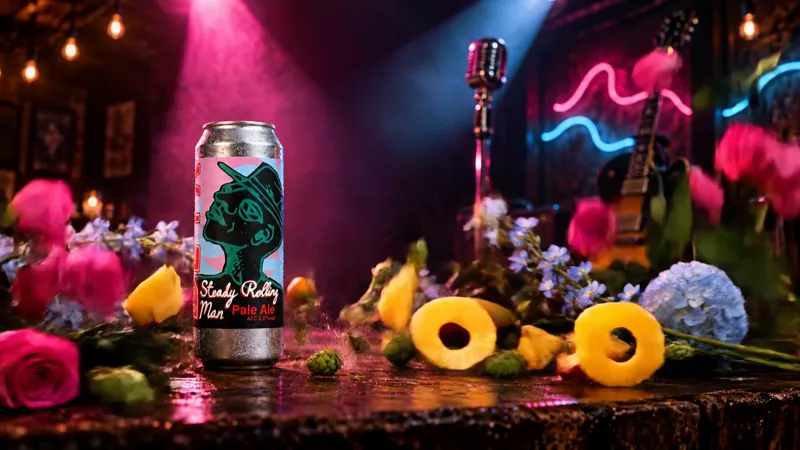
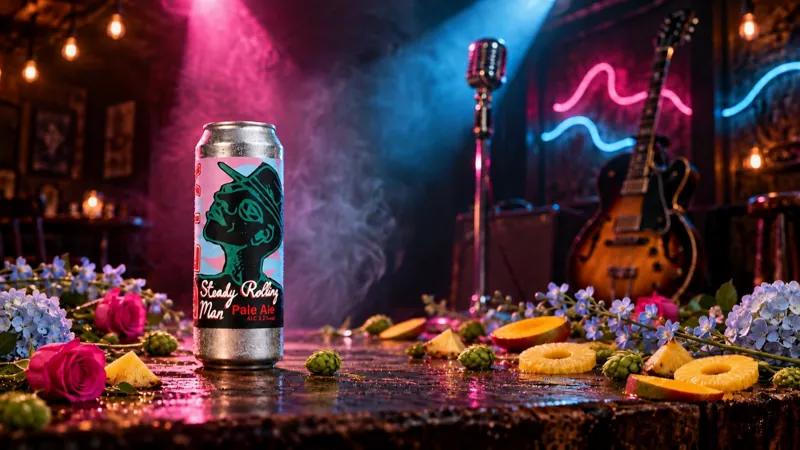
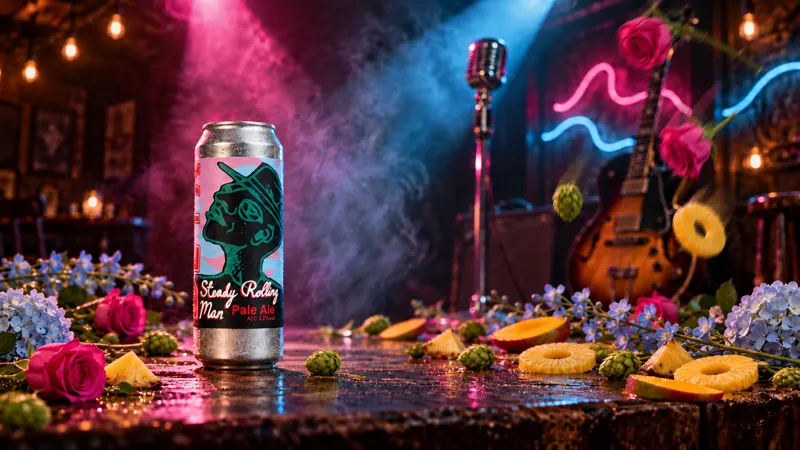
The can moves zero pixels between the dark stage and the finished one, because both are edits of the same picture. One take, $0.56.
The drawing is theirs. The generated one is a stand-in.
Most of the landing page is DEYA's own material. The loader is their logo, traced to vector so it draws itself on and flies into the nav. The lettering is their hand lettering. The line drawings between the rows are Thom Hobson's crocs from DEYA's page for The Swamp, their taproom, traced so they draw themselves too. The Swamp photos and the subscription animation are DEYA's own.
The opening scene is the exception: a generated illustration in the style of DEYA's own animation. Every can, mural and T-shirt DEYA has made was drawn by one artist, Thom Hobson. A real version of this page would open on his drawing, with his permission.
When I checked Cloudwater, Beavertown and Verdant, none ran a loader or any scroll-driven motion. All three are standard Shopify stores, which leaves the space open.
It started as a set of photographs.
In August this was a reference-to-final study: DEYA's flat catalogue packshots turned into art-directed product photography through a repeatable pipeline in BrandFlow Studio, then assembled into a concept shop. A few of those photographs survive as rows on the new landing page. The films are what came next.
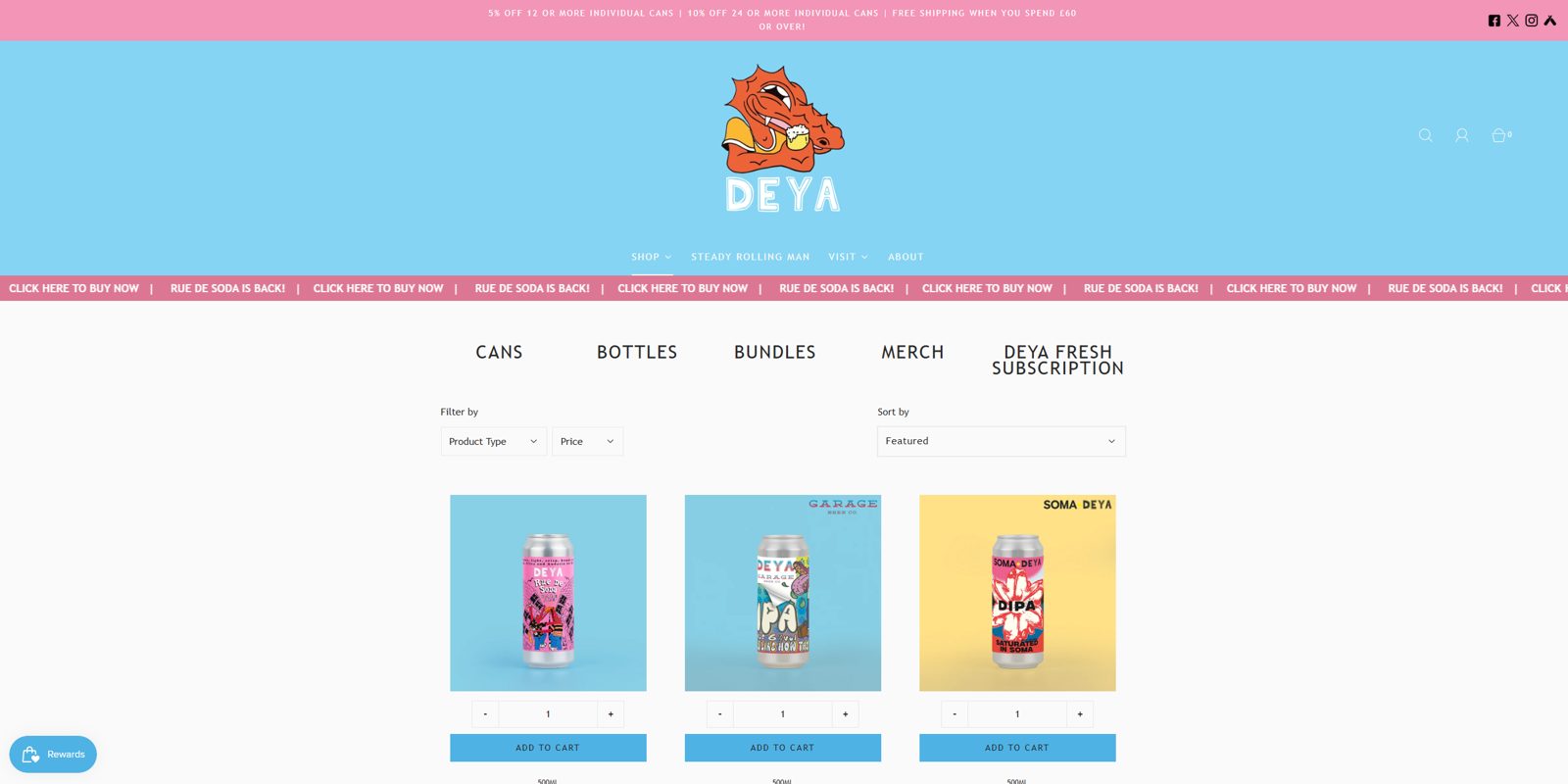
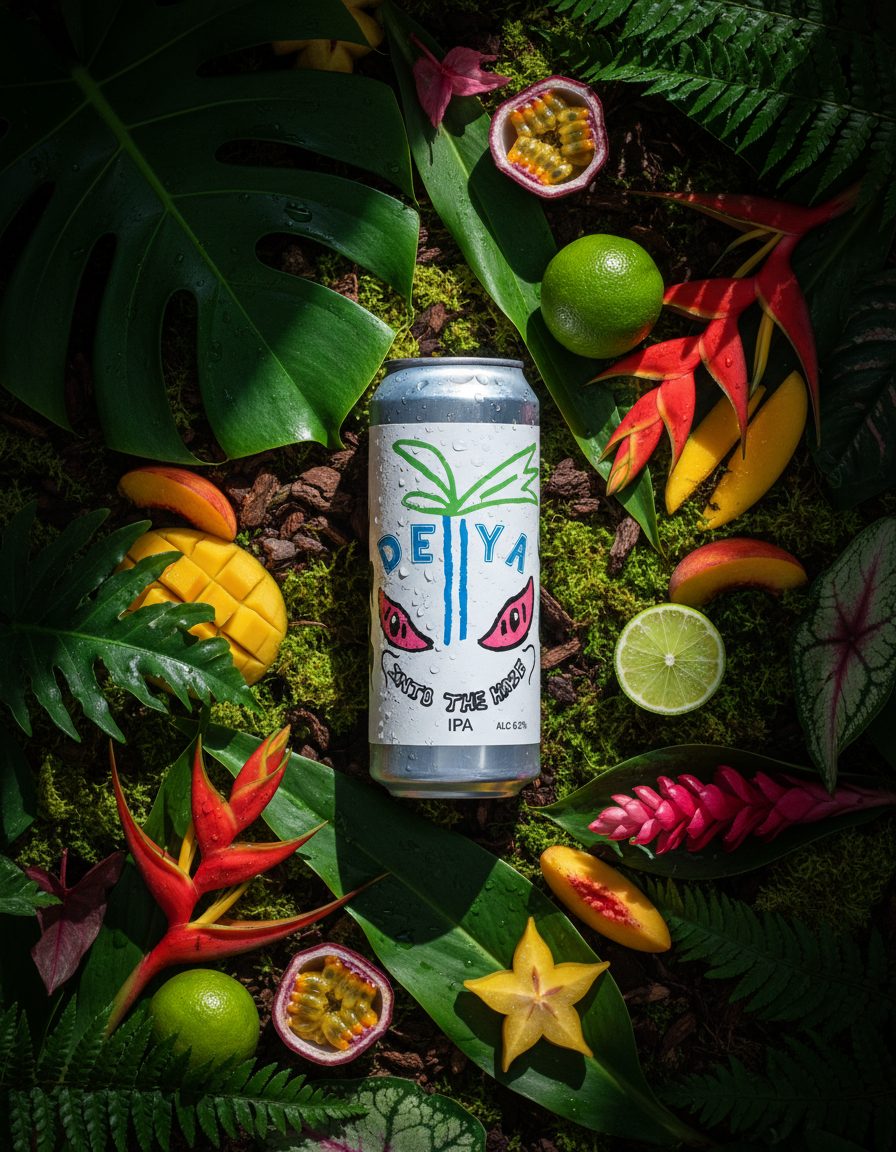
An earlier version of this page called Tappy Pils an invented product. It's DEYA's house lager, £3.80 a can.
What's real, and what isn't.
- Prices, pack sizes and product IDs from DEYA's own shop
- Add to basket, which opens DEYA's cart with the beer in it
- Product descriptions drawn only from DEYA's own text, lightly trimmed
- The logo, the lettering, Hobson's crocs, The Swamp photos, the animation
- The film worlds: generated, with the labels checked against DEYA's packshots
- The opening illustration: a stand-in for Hobson's art
- Endorsement: DEYA didn't commission this and hasn't approved it