I forecast the future of work in 2021. Here's the marking.
Written from a bedroom in the second lockdown, when nobody knew whether the office was dead or just closed. It surveyed eighty people, split them by introversion, and ended on a proposal: modular relocatable workspaces, biophilic interiors, and an AI assistant that watches your stress and tells you to go for a walk. Some of that aged well. Some of it did not.
What is an office for, if everyone has a desk at home?
That was the question underneath it. In early 2021 the answer was genuinely unknown, and the confident takes were all over the place, the office is finished; the office is coming back exactly as it was; we will all meet in virtual reality.
I plan to explore attitudes and beliefs about working from home, analysing the way in which the pandemic has created a new paradigm around work.
The approach was to stop arguing about buildings and look at people instead. If the office was going to be justified by anything, it would be by what it does for the person using it, so the research variable became personality, specifically where someone sits on the introvert–extrovert axis, on the theory that the same empty spare room is a sanctuary to one person and a cell to another.
Eighty people, and one finding that held up.
A Qualtrics questionnaire, distributed by convenience sampling: 80 valid responses, 25 who called themselves introverts, 26 extroverts, 29 neither. I have re-counted these from the raw export for this page rather than trusting my own 2021 write-up.
This is the chart the whole dissertation rests on. Both extremes lost. Only 13% wanted to be at home every day and only 19% wanted never to be, which means 68% of people wanted a mixture, at a moment when the public argument was still being conducted as though it were a binary. Hybrid was not a compromise position people settled for later; it was the majority preference before anyone had a word for it.
And the second finding pointed the same way. People rated themselves clearly more productive alone at home than together at home. That gap is the argument for what an office is for: not the desk work, which had just been proven to travel fine, but the part that needs other people in the room.
33 of the 80 respondents were students, and the sample skewed heavily under 25, it was distributed through my own social media, so it reflects my network rather than the workforce. The introvert–extrovert comparisons rest on 51 people once the 29 ambiverts are set aside, which is thin for the confident splits the original write-up made.
I would not publish the personality findings today without a better sample. The distribution and productivity findings above are robust to that criticism because they do not depend on the split.
Six panels of a future, drawn before it happened.
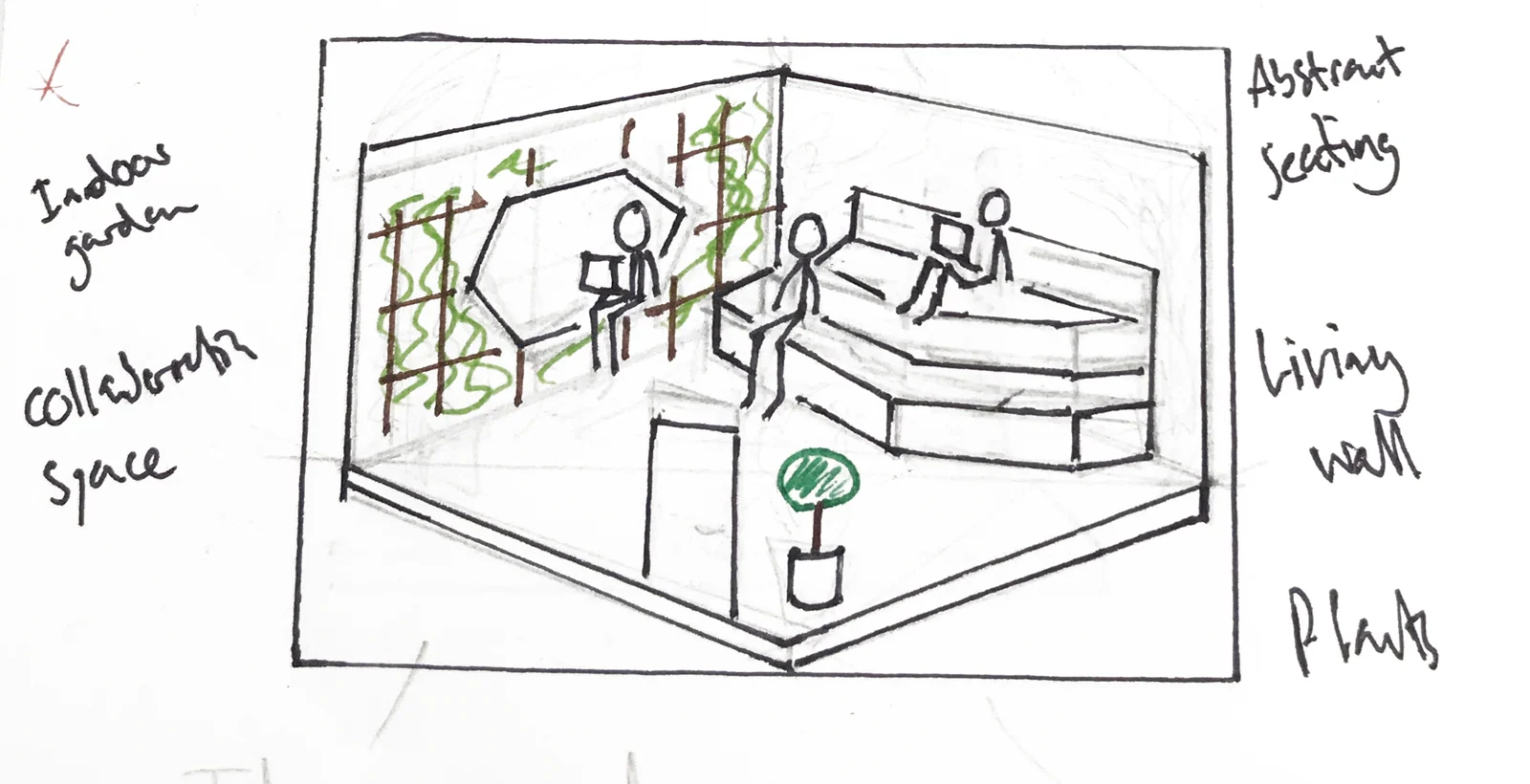
Before any of it was written up, it was drawn. The storyboard sets out six bets: automated commuting, modular space, hyperconnectivity, VR conferencing, an AI assistant handling scheduling, and, the one it kept coming back to, fulfilment and wellbeing as the actual point.
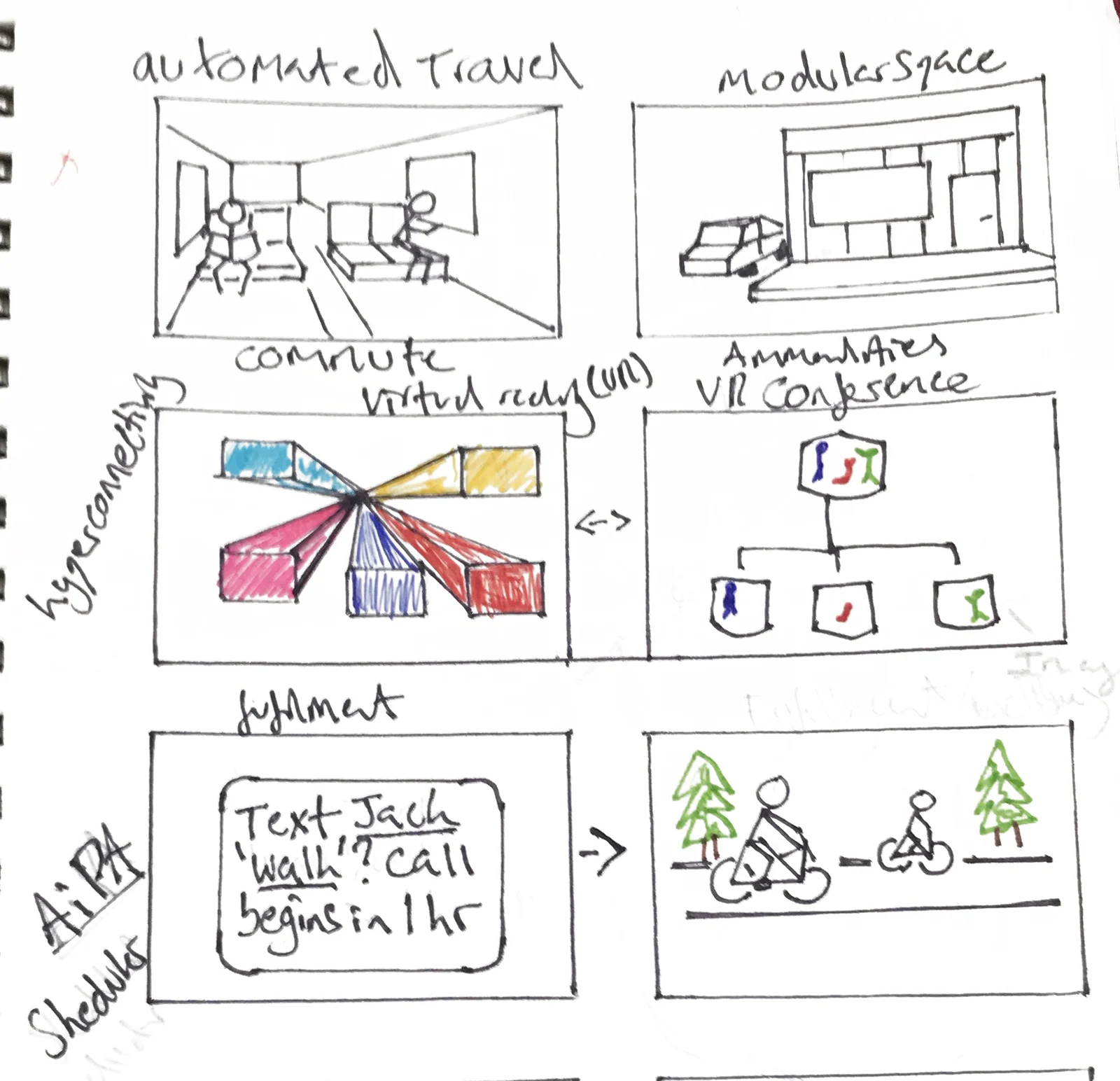
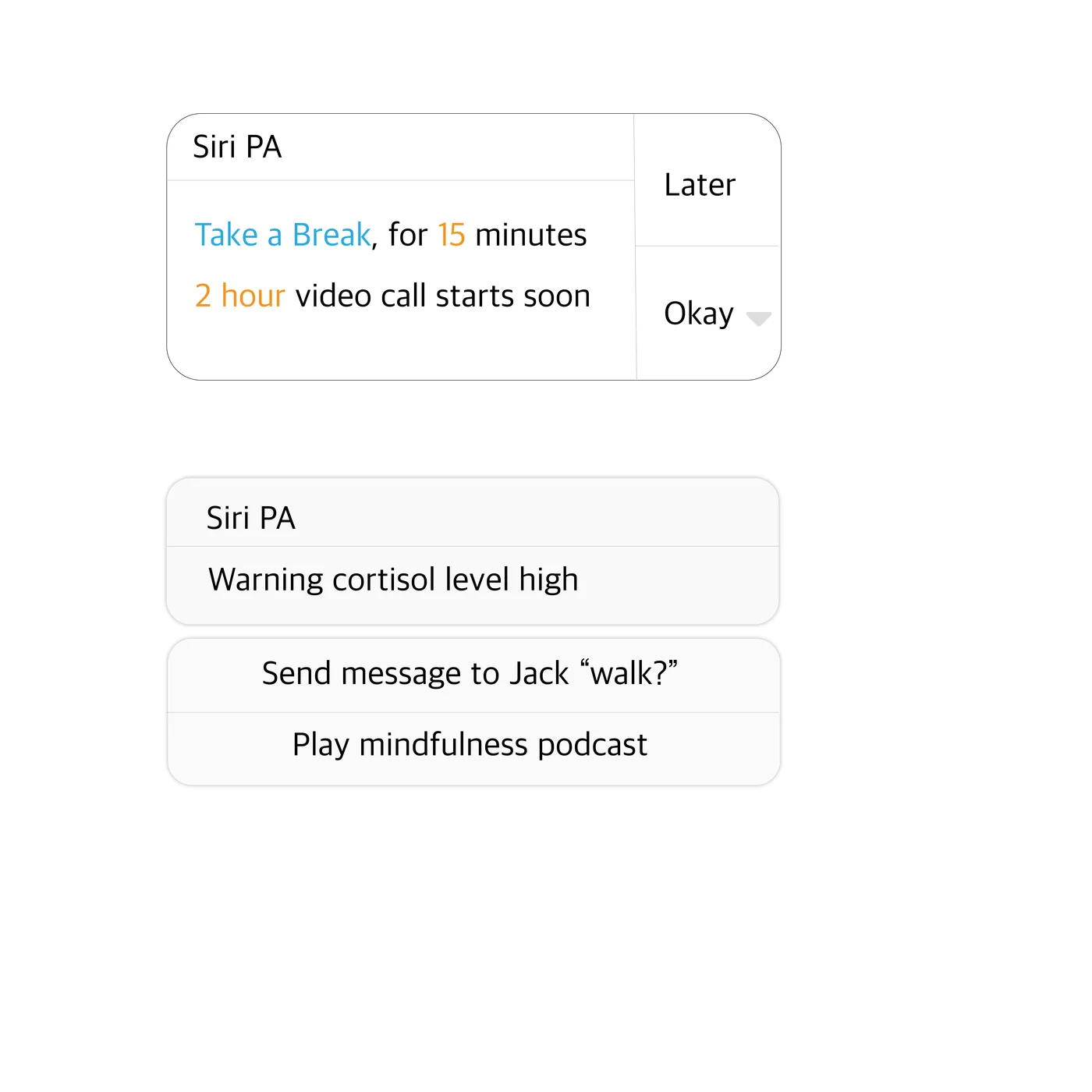
The AI-assistant panel is the one that reads oddly now. In 2021 it was speculative enough to need explaining: a scheduling agent that notices a two-hour call is coming, notices your stress is up, and texts your friend "walk?" on your behalf. The sketch treats that as science fiction. It is now roughly a Tuesday, and it is close to what I spend my working life building.
Where the ideas actually sat.
The piece of the dissertation I am still fondest of. Every idea in the project, twenty of them, plotted onto Newbery and Farnham's solution curve: product against solution on one axis, existing against emerging use case on the other.
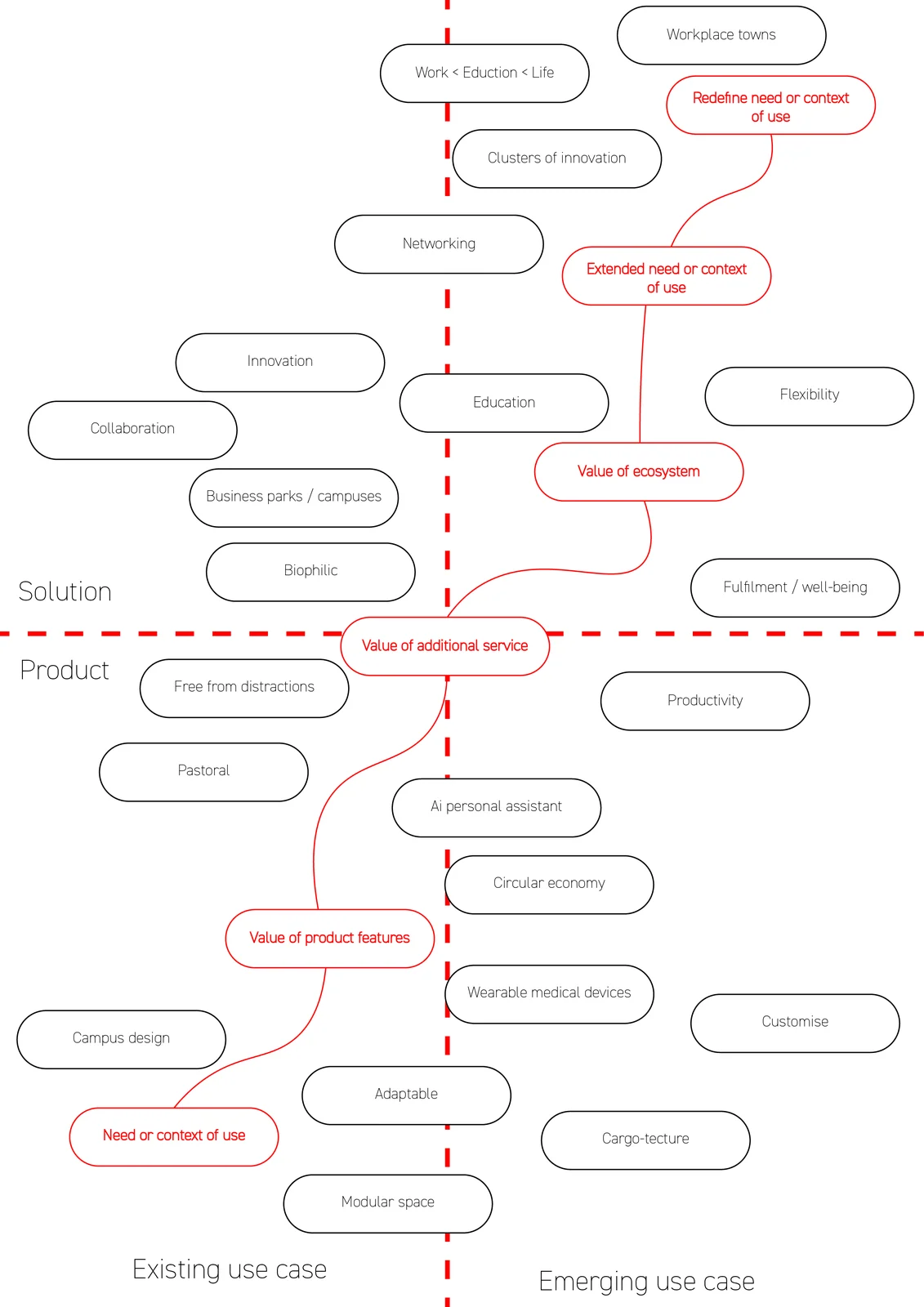
What the diagram is really doing is refusing to let the project stop at a product. Follow the red curve and it moves from need or context of use, through value of product features, to value of additional service, to value of ecosystem, and then out the far side to redefine need or context of use. Cargo-tecture and modular space sit low and early. Workplace towns, clusters of innovation and "work < education < life" sit at the top, in emerging territory.
I did not have the vocabulary for it at the time, but this is the same move I make now on every piece of service work: find the loop, not the object. The deliverable was never going to be a nicer shed.
Modular space, and an assistant that watches your cortisol.
The synthesis: relocatable workspaces built from shipping containers, sited in clusters near where people actually live, biophilic inside, and paired with a personal assistant handling the scheduling and wellbeing load that the home office had quietly dumped on everyone.
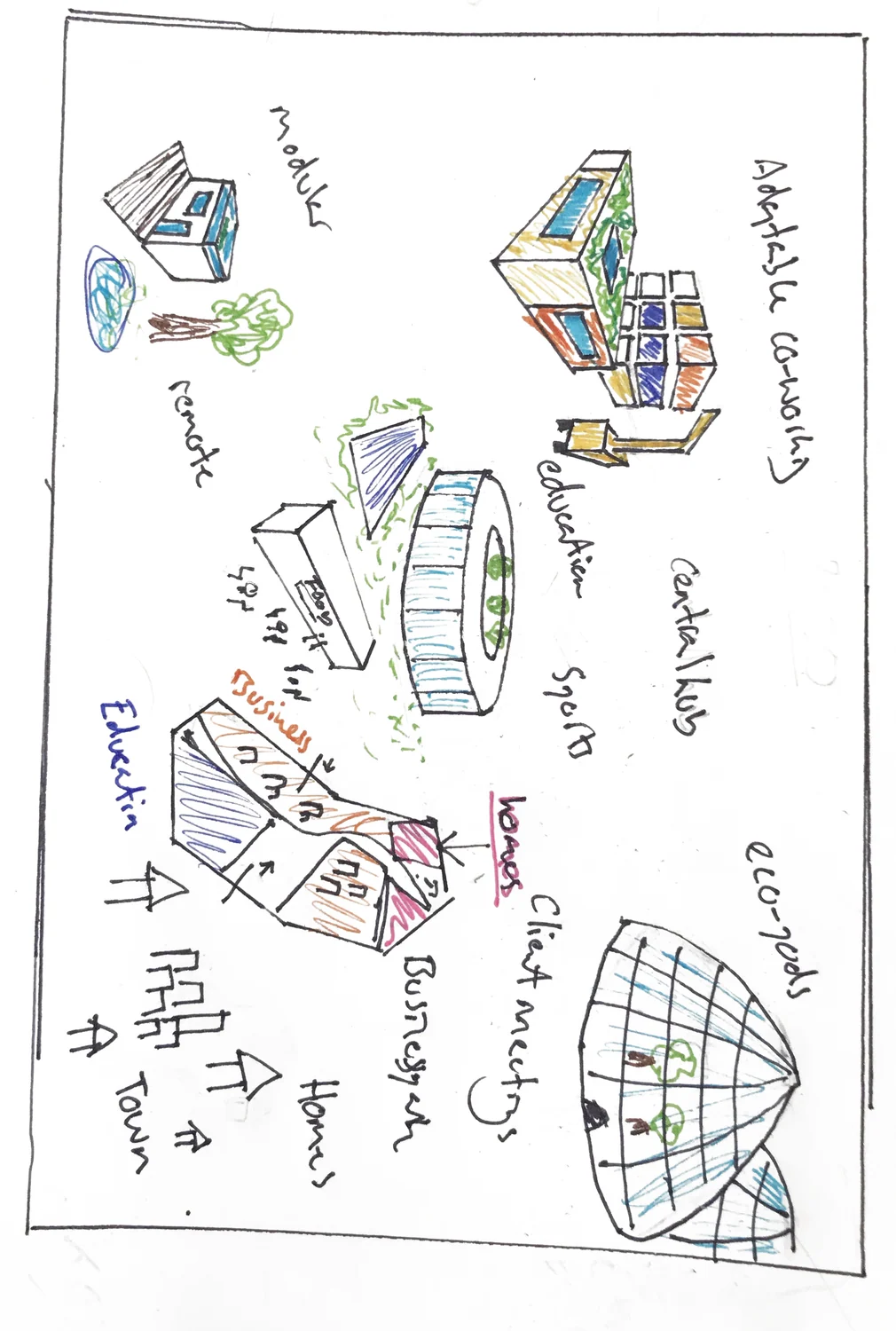
The site plan is the payoff drawing and it closes the dissertation. It is deliberately not a building: it is a set of relationships between homes, a town, education, sport, a central hub and workspace that can be picked up and moved. The argument was that if work is no longer a place you commute to, the interesting design problem moves up a level, to how a neighbourhood arranges itself around people who are now in it all day.
That framing, the neighbourhood as the unit rather than the building, is almost exactly where I landed again four years later on a circular-economy project at the RCA, from a completely different starting point. I did not notice the repetition until I built this page.
What the drawings were reaching for.
In 2021 these ideas could only exist as pencil. The tools to show them properly did not exist yet, which is part of why a spatial proposal had to be argued rather than seen. So in 2026 I fed my own sketchbook pages back through image models and asked for the thing I had been driving at.
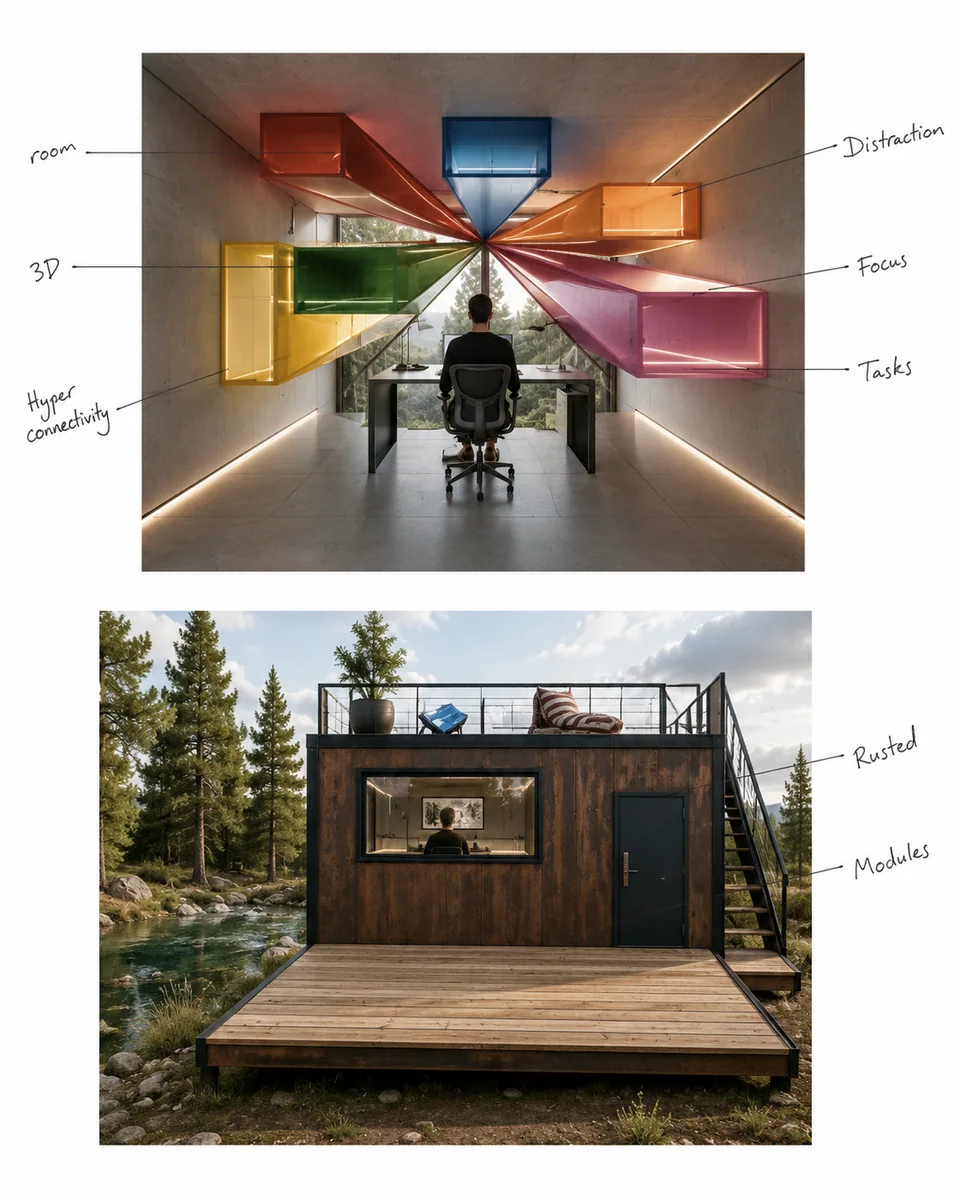
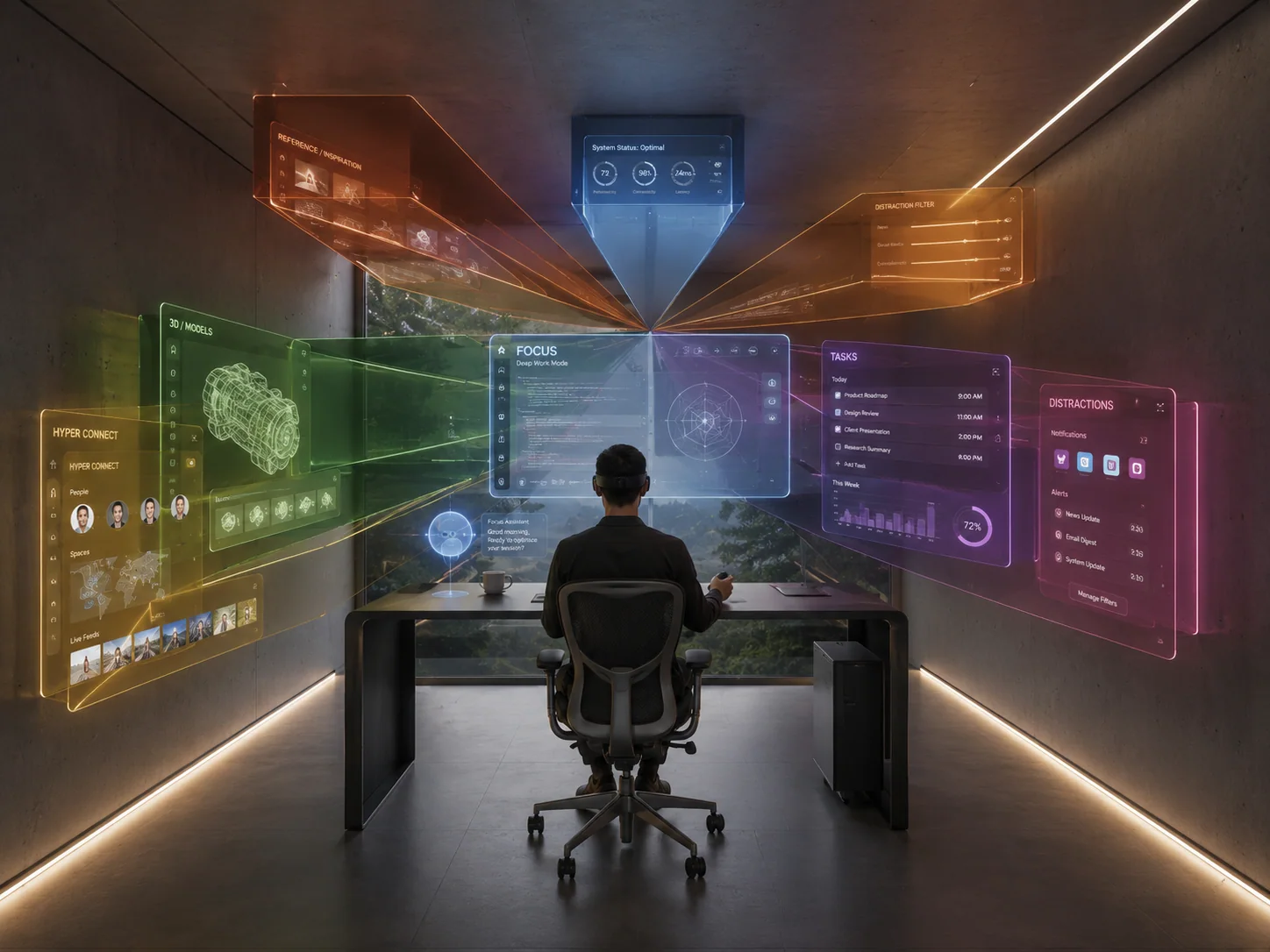
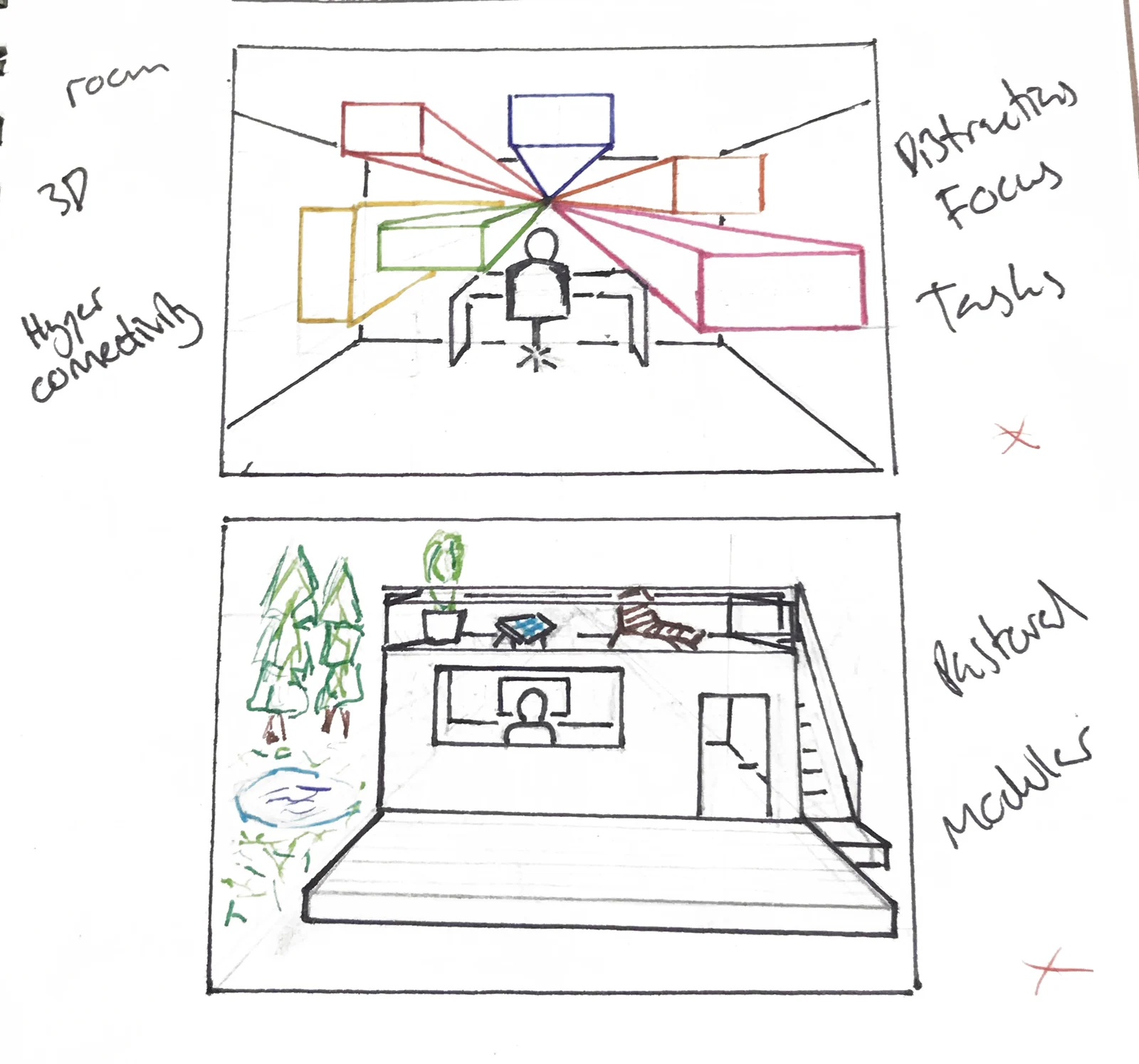
The coloured panels were the hardest thing to draw and the easiest thing to describe. That sketch was trying to say that the problem with working from home is not the desk, it is that everything arrives in the same place at the same volume: focus, tasks, distractions, other people. Rendered out, the argument is legible in a second.
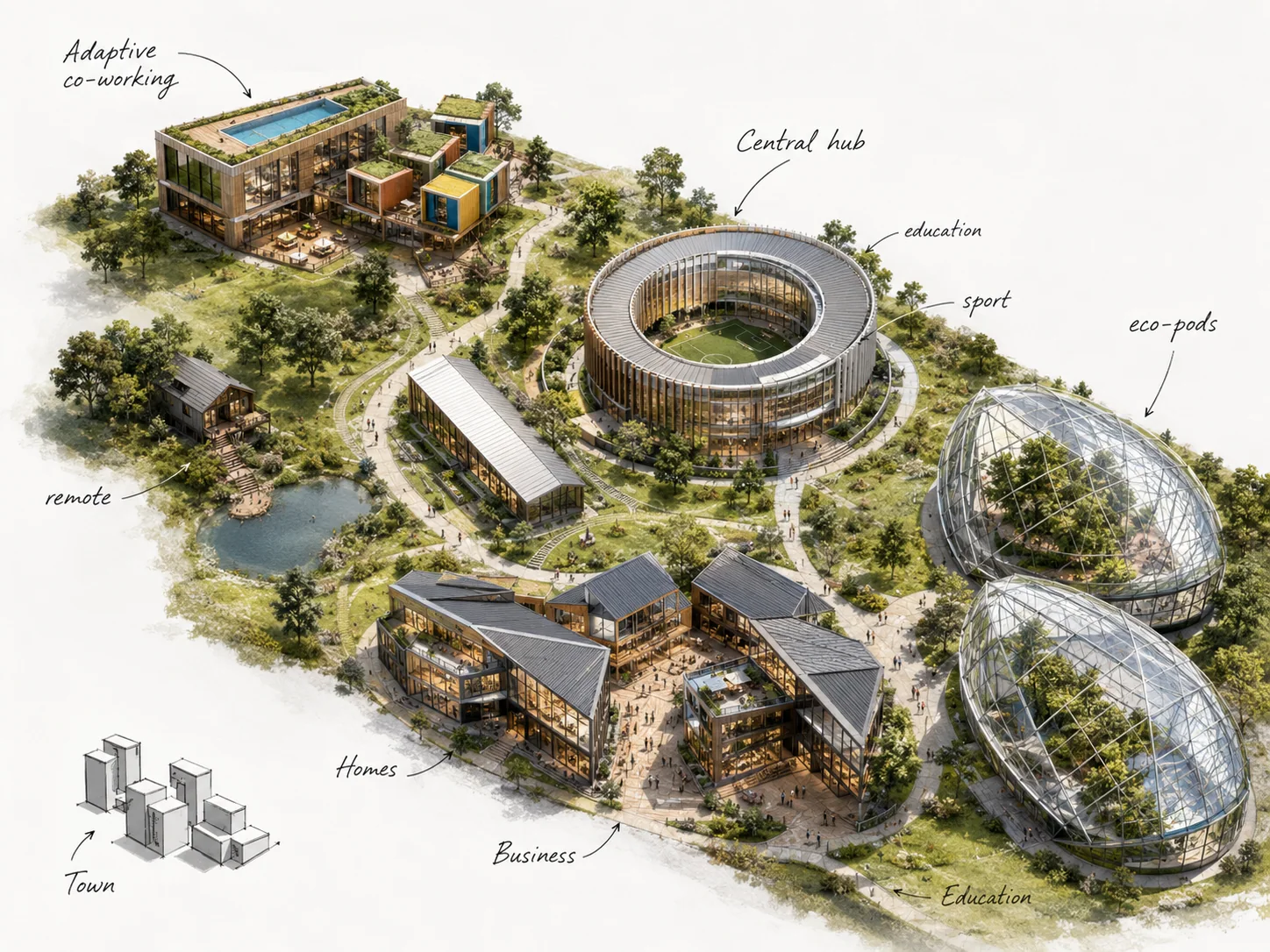
This is the one that matters, because it is the closing drawing of the dissertation. Same labels, same relationships: adaptive co-working, a central hub, eco-pods, education, sport, homes, and a remote unit off by the water. The pencil version asked you to take the argument on trust. This one just shows you a neighbourhood.
The part I could never draw.
"Modular and relocatable" was the load-bearing claim of the whole proposal, and it was the one thing the sketchbook could not show. A drawing of a building in a forest just looks like a building in a forest. The argument only works if you can watch it arrive.
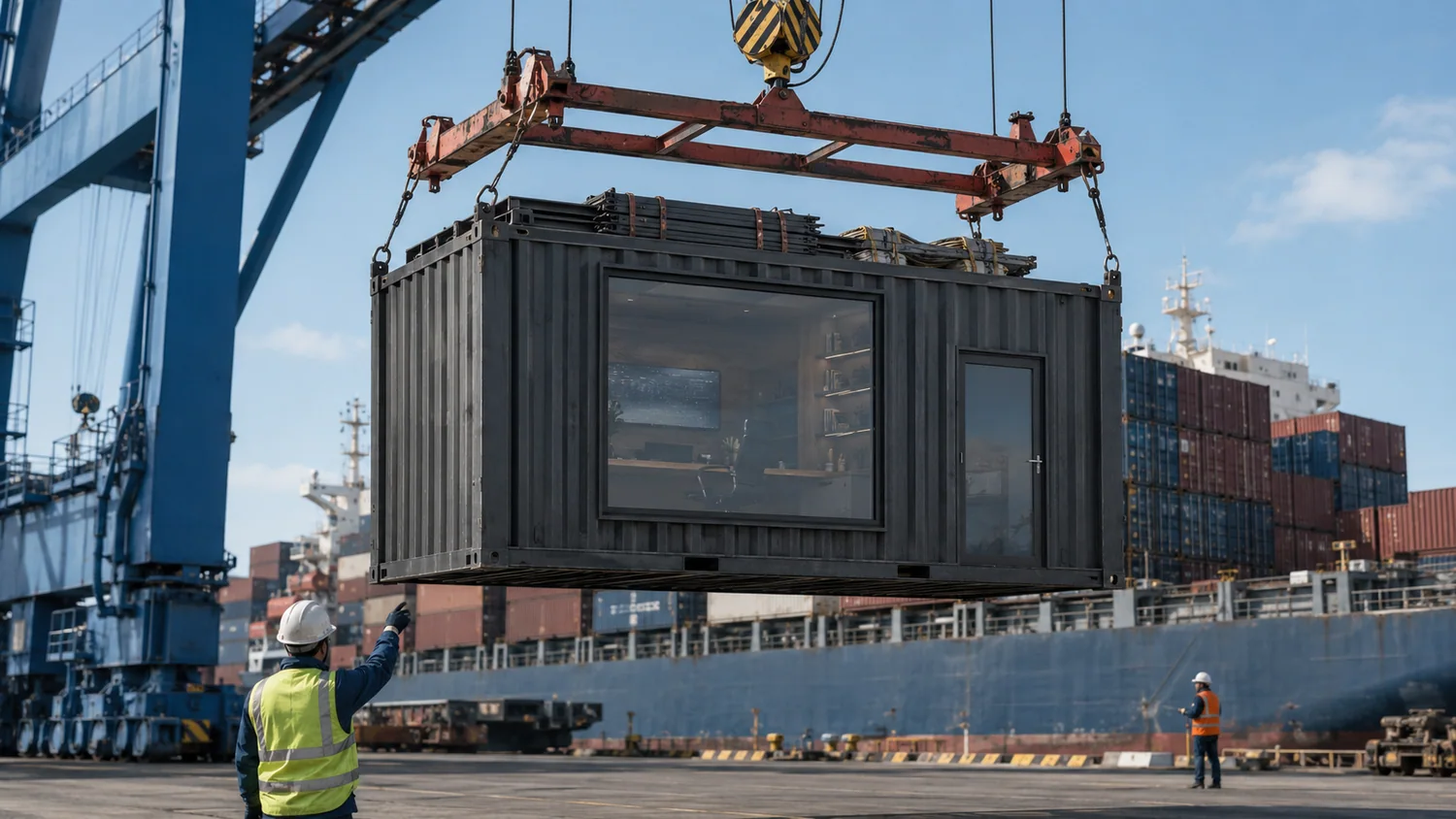
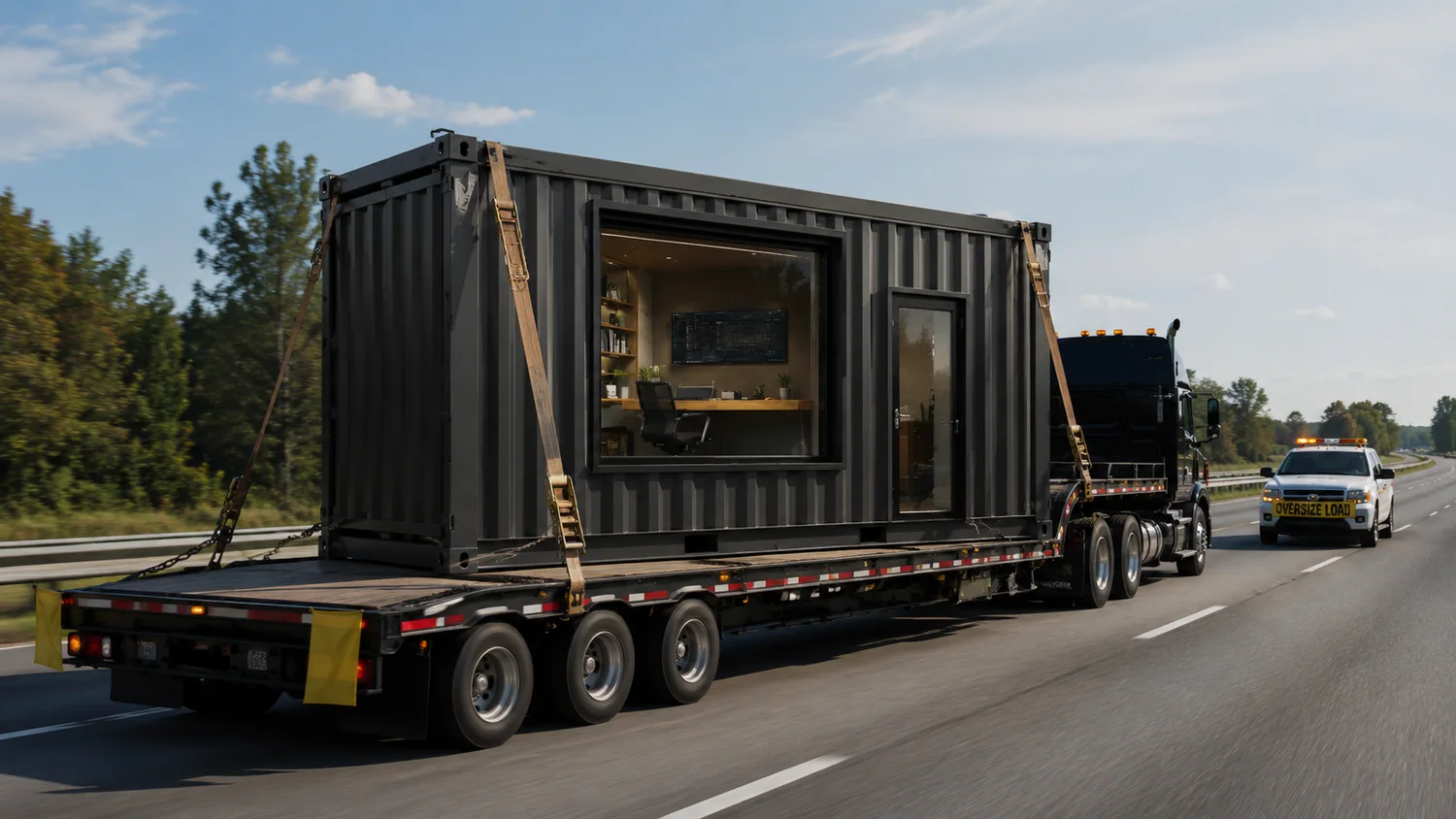
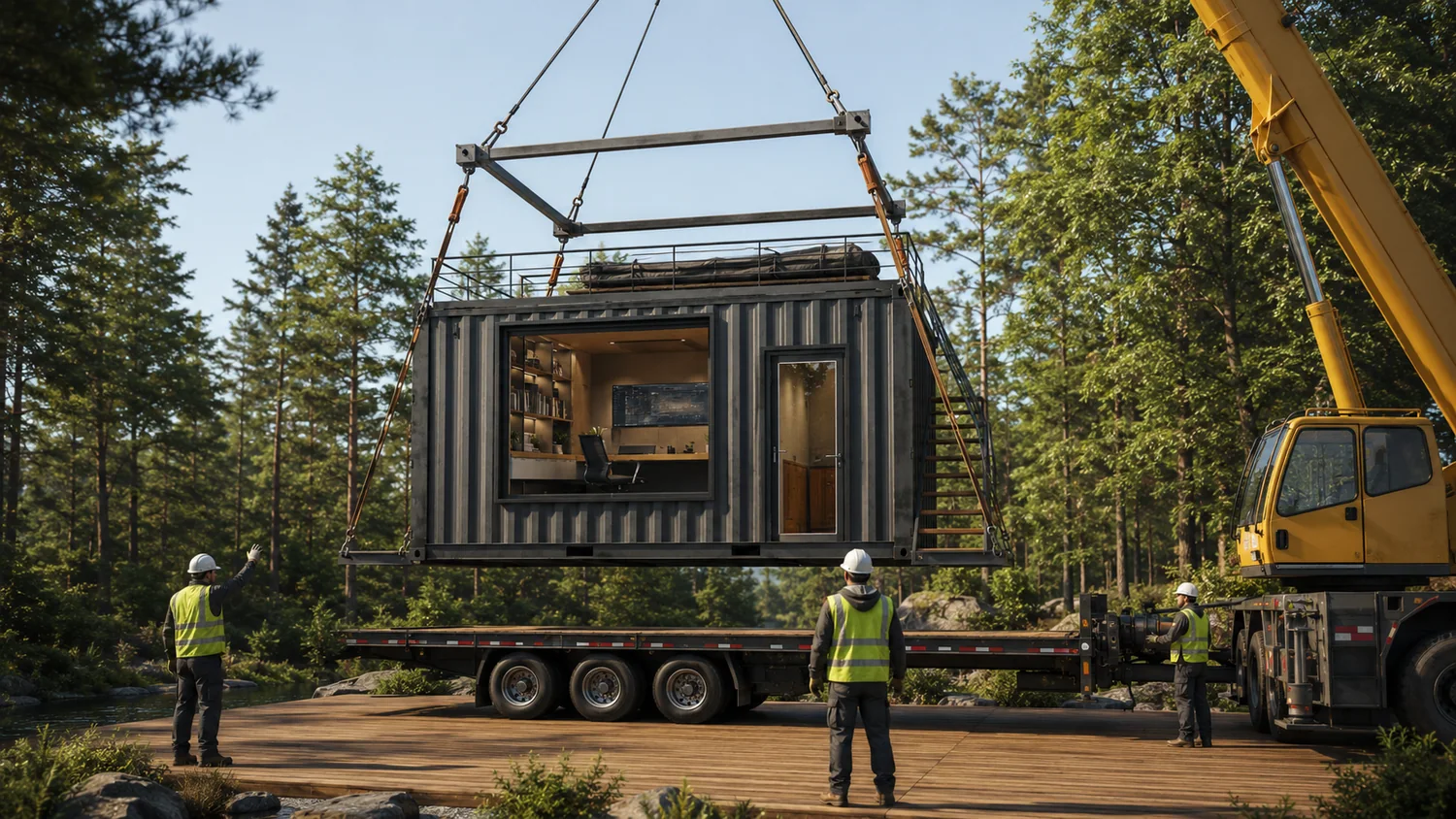
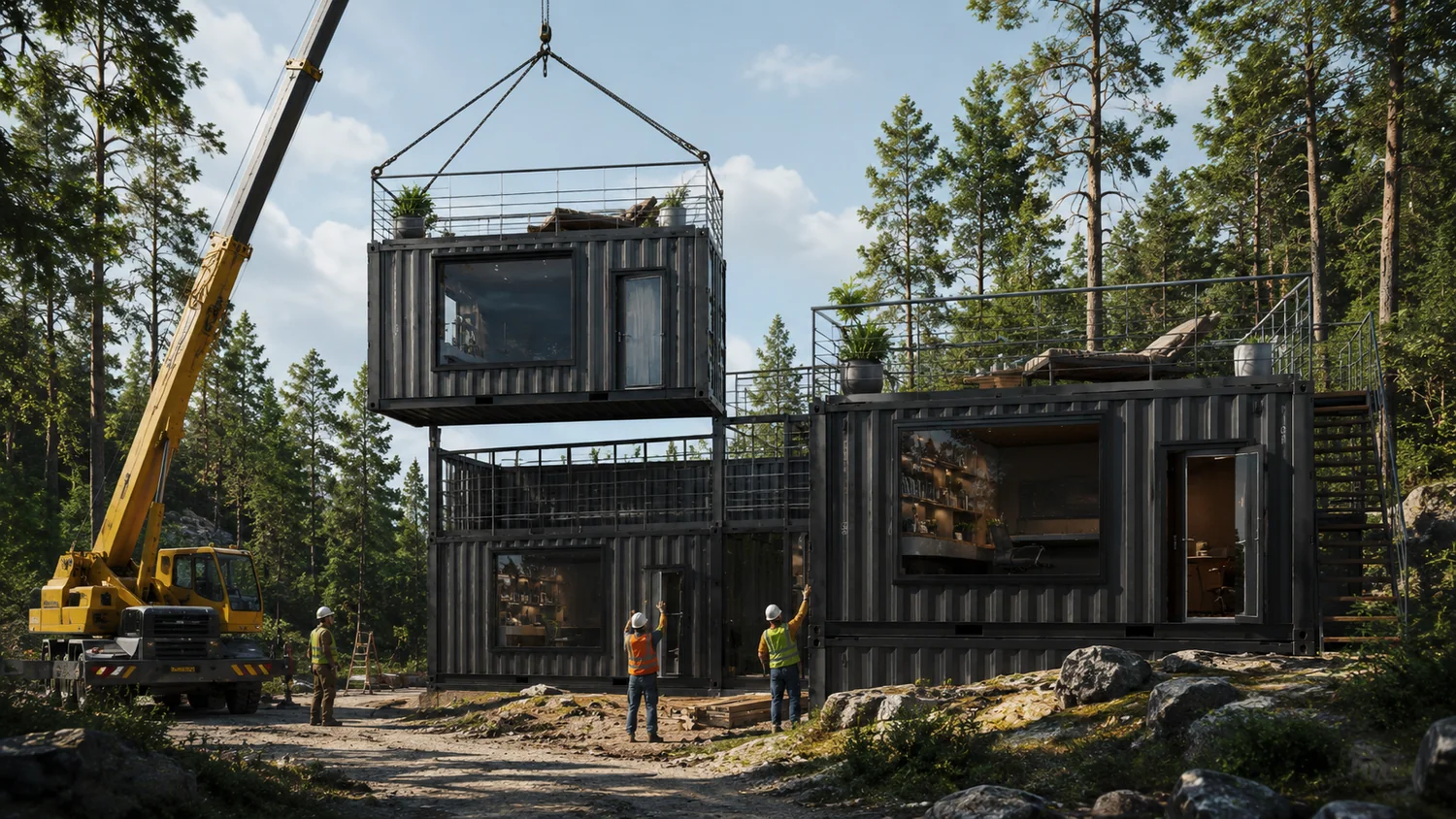
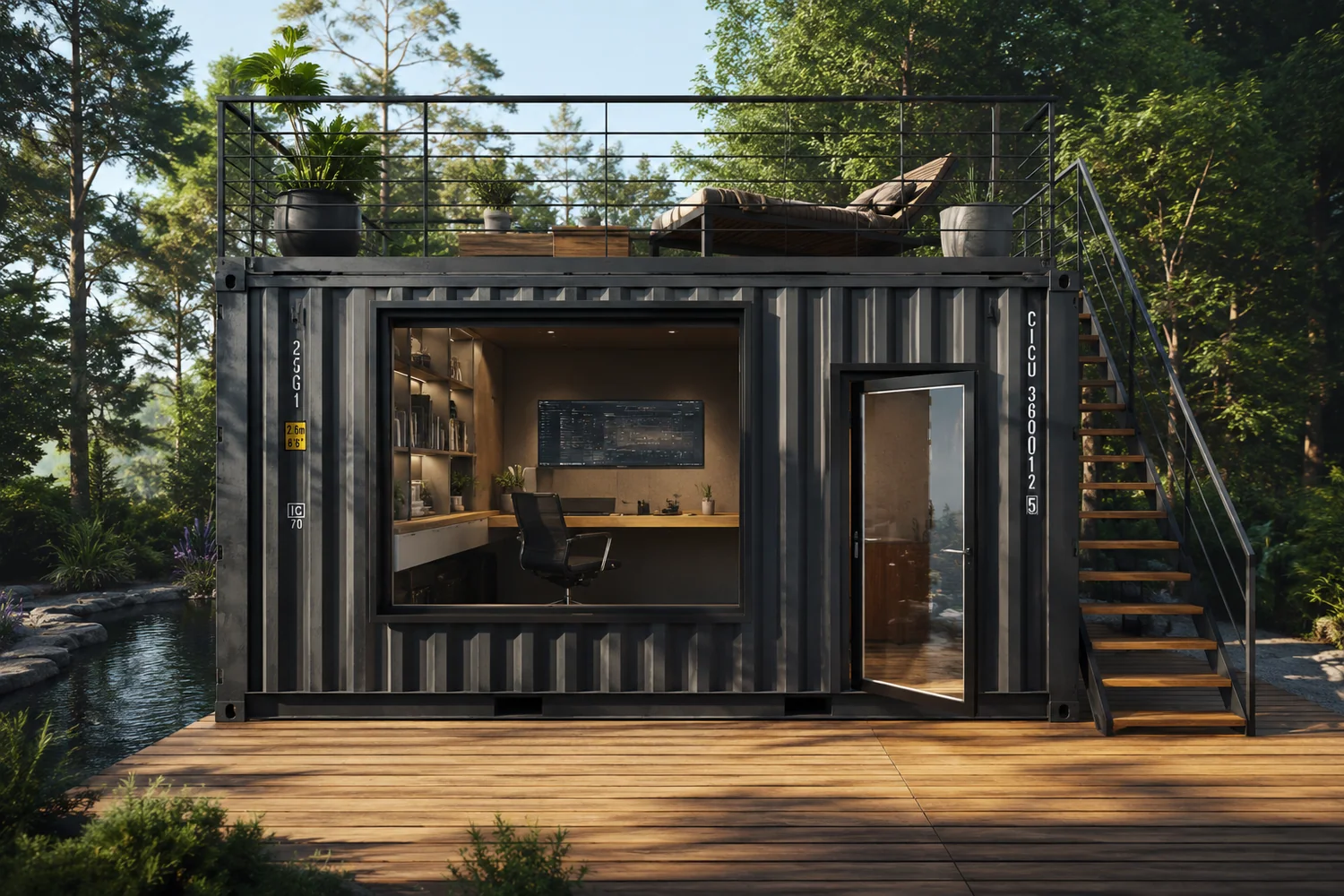
Laying the sequence out is also what exposes the weakness. Every one of those steps needs a crane, a haulier, a prepared foundation and somebody with a landowner's permission. That is precisely why the container-cluster prediction failed while garden offices boomed: a shed needs none of it, and a neighbourhood of relocatable modules needs all of it, repeatedly.
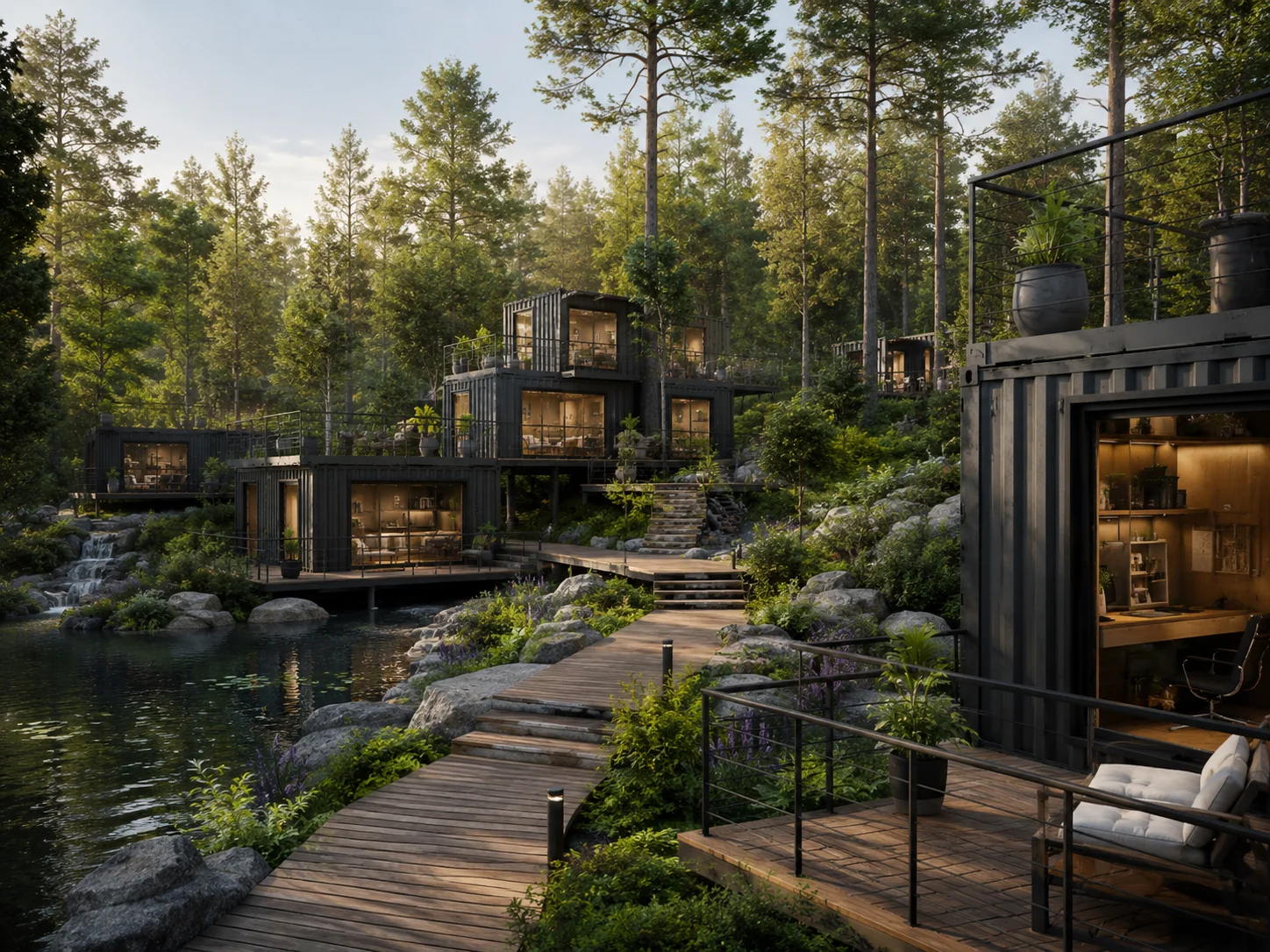
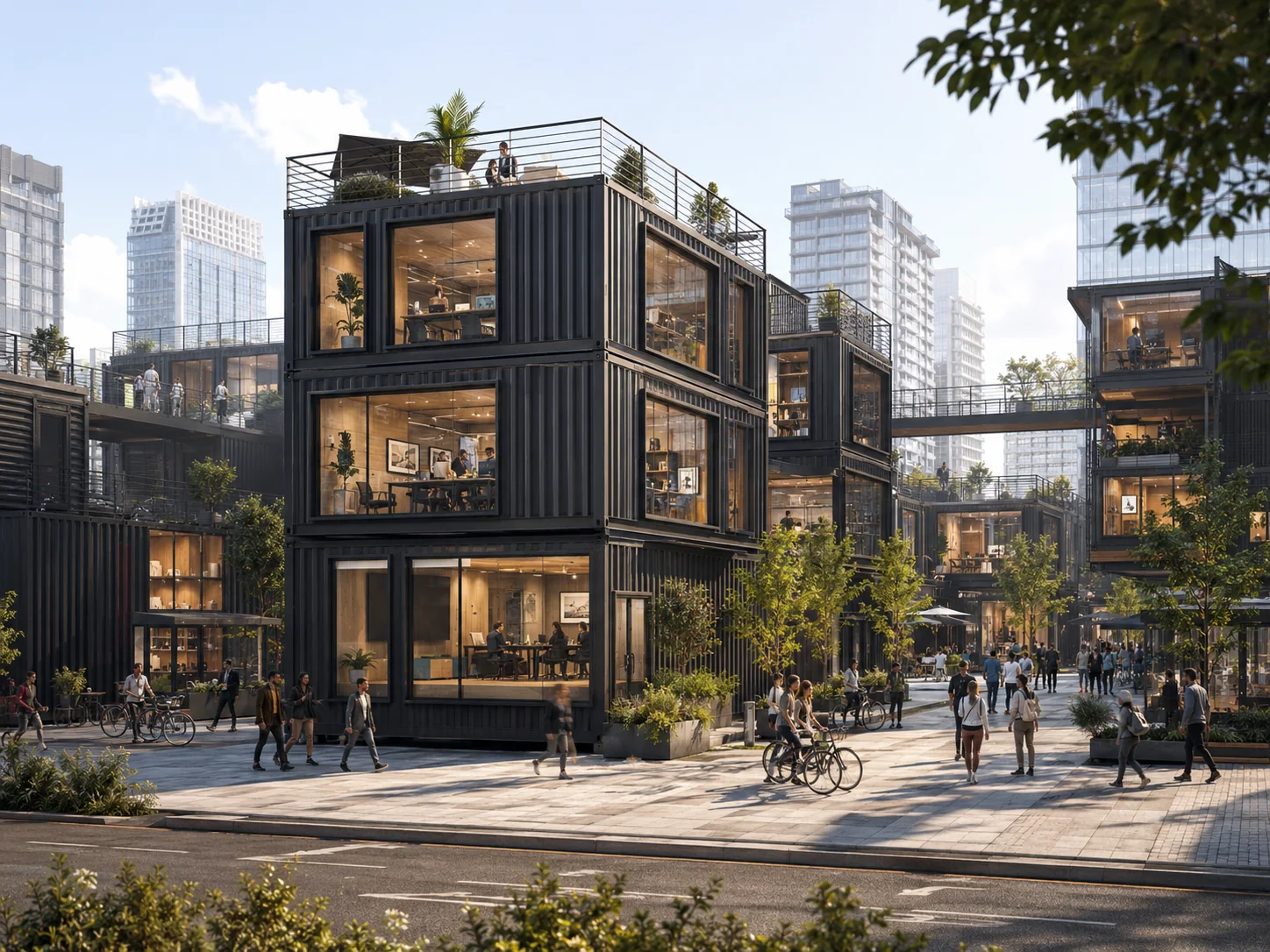
Two ends of one idea. The dissertation argued hard for the left-hand image and barely considered the right, which in hindsight was the wrong way round. The economics of relocatable space are far better in a city, where land is contested and temporary use is already normal, than in a forest where the entire appeal is permanence.
These images were made in 2026 from 2021 drawings. They are not evidence the proposal was right, and none of it was built. What they are is the presentation I could not give at the time, and a fair test of the ideas: several survived being made visible, and one of them visibly did not.
Marking my own homework.
A forecast is only worth anything if you go back and check it. Here is the honest scoring, in 2026.
Hybrid, not either/or
68% wanted a mixture before "hybrid" was standard vocabulary. That is now simply how professional work is arranged.
The office is for the group work
The productivity gap, 56% alone versus 38% together, predicted exactly the reason organisations now give for mandating office days: collaboration, not output.
The AI personal assistant
Sketched as speculative fiction, with a scheduling agent acting on your behalf. It arrived faster and more completely than the drawing dared, and it is now what I build for a living.
VR conferencing
Two of the six panels bet on hyperconnected virtual meetings as the default. It did not happen. Video calls stayed flat, rectangular and good enough, and the headset never left the enthusiast market.
Automated commuting
The first panel has people relaxing in a self-driving pod. Five years on that is still a demo in a handful of cities, not a commute.
Container workspace clusters
Modular garden offices boomed exactly as predicted. The neighbourhood-scale cluster with a shared central hub largely did not, people bought a shed and stayed put.
The pattern in the misses is worth naming: every wrong call was a bet on new hardware, and every right call was a bet on human behaviour. VR headsets and autonomous pods needed the physical world to change. Hybrid working, the value of being in a room together, and software that manages your attention needed only that people keep behaving like people.
That is a lesson I have kept. When I am forecasting now, for a client, or for my own work, I trust the behavioural argument and discount the hardware one, because I have a marked exam paper that says I should.
The temptation with an old academic project is to present the hits and quietly lose the misses. That would make this page useless. The forecast is more interesting because a third of it was wrong, and the pattern in what was wrong is the only genuinely transferable thing in here.