Art-directing DEYA packshots
How to turn a flat catalogue can into premium, on-brand product photography, repeatably, using the BrandFlow pipeline. Every prompt below is real and copyable.
01 Overview
DEYA's hand-illustrated cans are the brand. The job is to hold the can and its label completely intact, and put all the creative energy into light, background and composition. The whole method is one rule expressed as a system:
The can is a real photograph. Everything around it is the design. Never touch the label; always earn the background.
This guide walks the exact path a run takes: load the brand rules, compose a prompt from a template, derive the background from the beer's flavour, run it through guardrails, and check the output against a fixed gate. Do this and a non-expert can produce on-brand DEYA imagery without a photographer.
02 The brand pack
Before any prompt, the brand is loaded as machine-readable rules, so the pipeline enforces them rather than a person remembering them. The rules that matter most:
- Must keep: the red DEYA wordmark legible and undistorted; the 500ml can silhouette intact; the silver body visible at top and bottom of the label; the illustration rendered sharply.
- Palette policy: each SKU carries its own dominant label colour. The background should echo or gently complement it, never fight it.
- Never do: generate a new label, add slogans or third-party logos, imply driving or sport, or show a photoreal human drinking.
That last set becomes a literal negative list, applied to every run. It is covered in Guardrails.
You are generating marketing imagery for DEYA Brewing Company,
a UK craft brewery. Keep the DEYA wordmark and label art
untouched and legible. Treat the can as a real product
photograph, do not stylise the can itself. All creative energy
goes into lighting, background, and composition.
03 Prompt anatomy
Prompts are not written from scratch. They are composed from a template with typed slots ({{variable}}), so every image shares the same structural DNA and only the intent changes. Here is the hero-floral template:
Premium product photograph of a 500ml DEYA {{sku}} can,
dew-beaded, laid on its side amongst a dense bed of
{{floralPalette}} flowers and soft foliage. Natural diffused
daylight from the upper-left. Background stays
{{labelDominantColor}}-forward. {{mood}}. Shallow depth of
field but full label in sharp focus. 3:2 aspect. No added
text. No added logos.
| Slot | What it controls | Example |
|---|---|---|
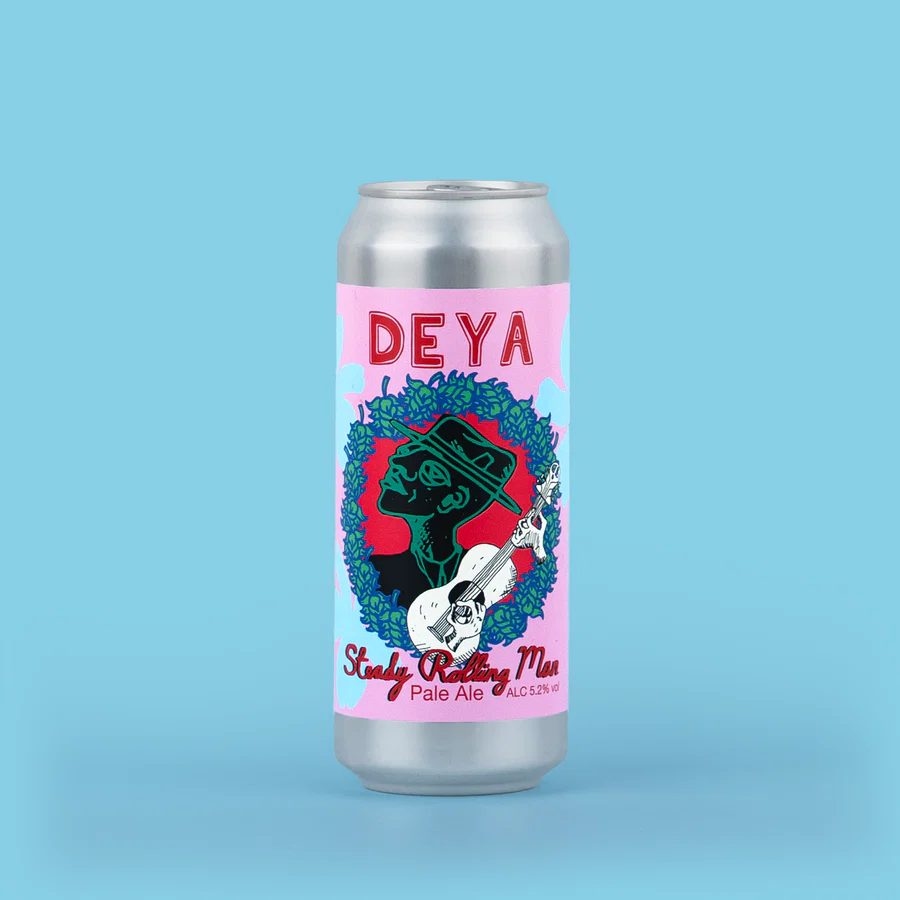
| {{sku}} | Which beer, and therefore which reference can | Steady Rolling Man Pale Ale |
| {{labelDominantColor}} | The colour the background must stay in key with | dusty-pink |
| {{floralPalette}} | The specific props, derived from flavour | pink tulips, white chrysanthemums, soft pink roses |
| {{mood}} | The emotional register of the light and styling | tender and spring-like |
The fixed parts of the template (dew-beaded, upper-left daylight, full label in sharp focus, 3:2) are doing quiet brand work. Keep them constant across SKUs so the whole range reads as one shoot.
04 Backgrounds from flavour
The single most useful move: read the background off the beer's own flavour description. The product copy is the brief; the setting is its visual translation. This is what stops the imagery being generic.
| SKU | Flavour reads as | Background |
|---|---|---|
| Steady Rolling Man | Soft, hazy, floral pale | Bed of tulips, chrysanthemums, pink roses |
| Boost | Rich, saturated, late-summer | Warm gerberas, dahlias, yellow chrysanthemums |
| Into the Haze | Tropical, juicy, complex IPA | Jungle floor: monstera, passionfruit, lime |
| Fruit-forward flatlay | Juice-bomb, orchard fruit | Sliced citrus, mango, figs, hops |
The palette policy does the safety check: whatever the flavour suggests, the dominant tone must still echo the label, never clash with it.
05 Recipes
A recipe is the template with every slot filled. These three are production-ready; paste them straight in.
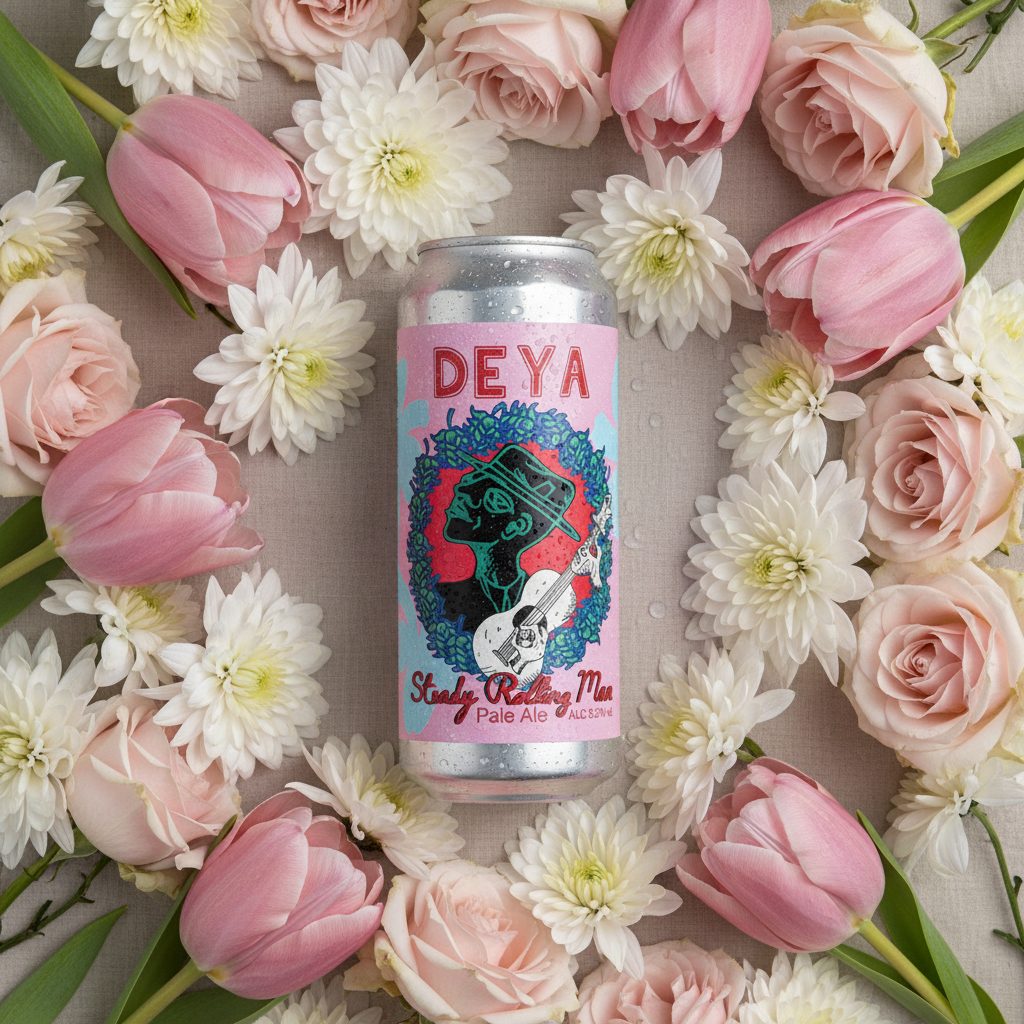
Steady Rolling Man · pink floral bed
Premium product photograph of a 500ml DEYA Steady Rolling Man
Pale Ale can, dew-beaded, laid on its side amongst a dense bed
of pink tulips, white chrysanthemums, soft pink roses. Natural
diffused daylight from the upper-left. Background stays
dusty-pink-forward. Tender and spring-like. Shallow depth of
field but full label in sharp focus. 3:2 aspect.
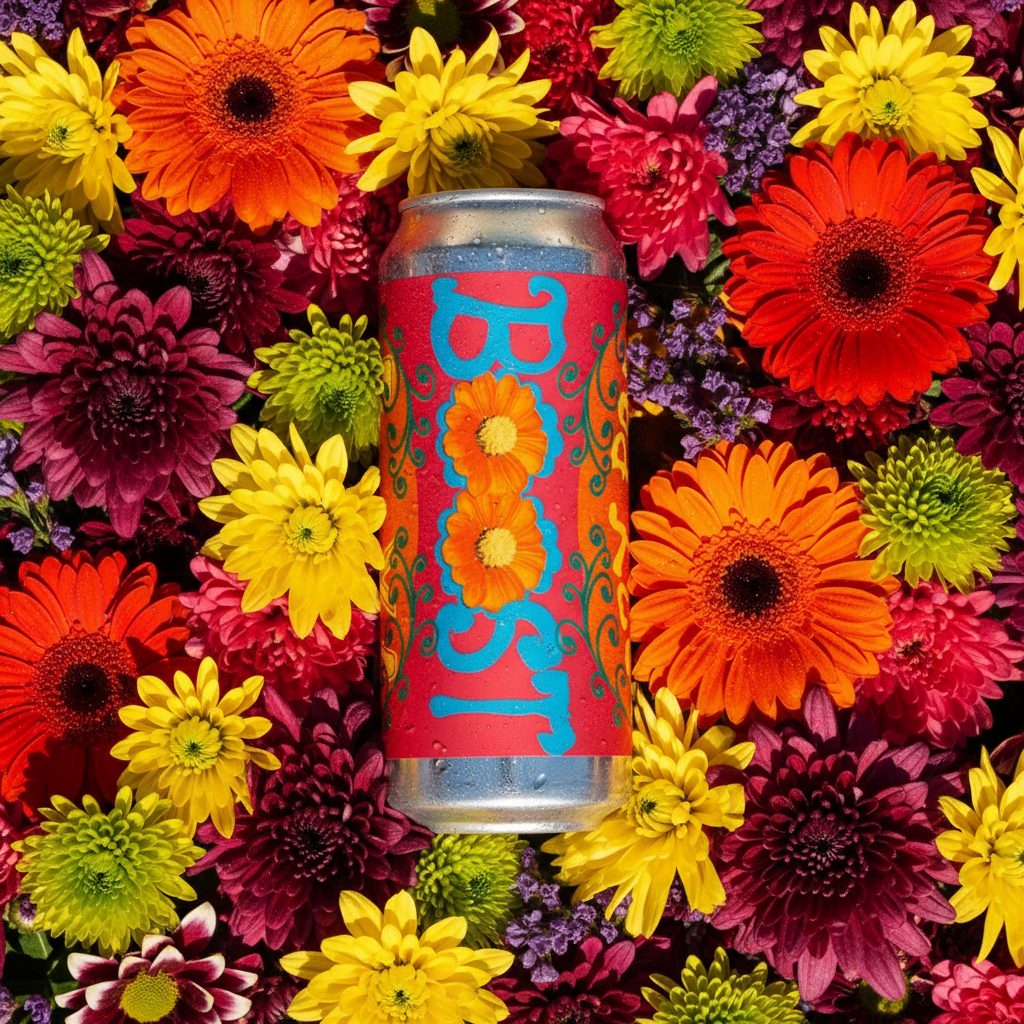
Boost · warm floral bed
Premium product photograph of a 500ml DEYA Boost can,
dew-beaded, laid on its side amongst a dense bed of orange
gerberas, red dahlias, yellow chrysanthemums, purple accents.
Natural diffused daylight from the upper-left. Background stays
red-orange-forward. Rich, late-summer, saturated. Shallow depth
of field but full label in sharp focus. 3:2 aspect.
Into the Haze · jungle floor
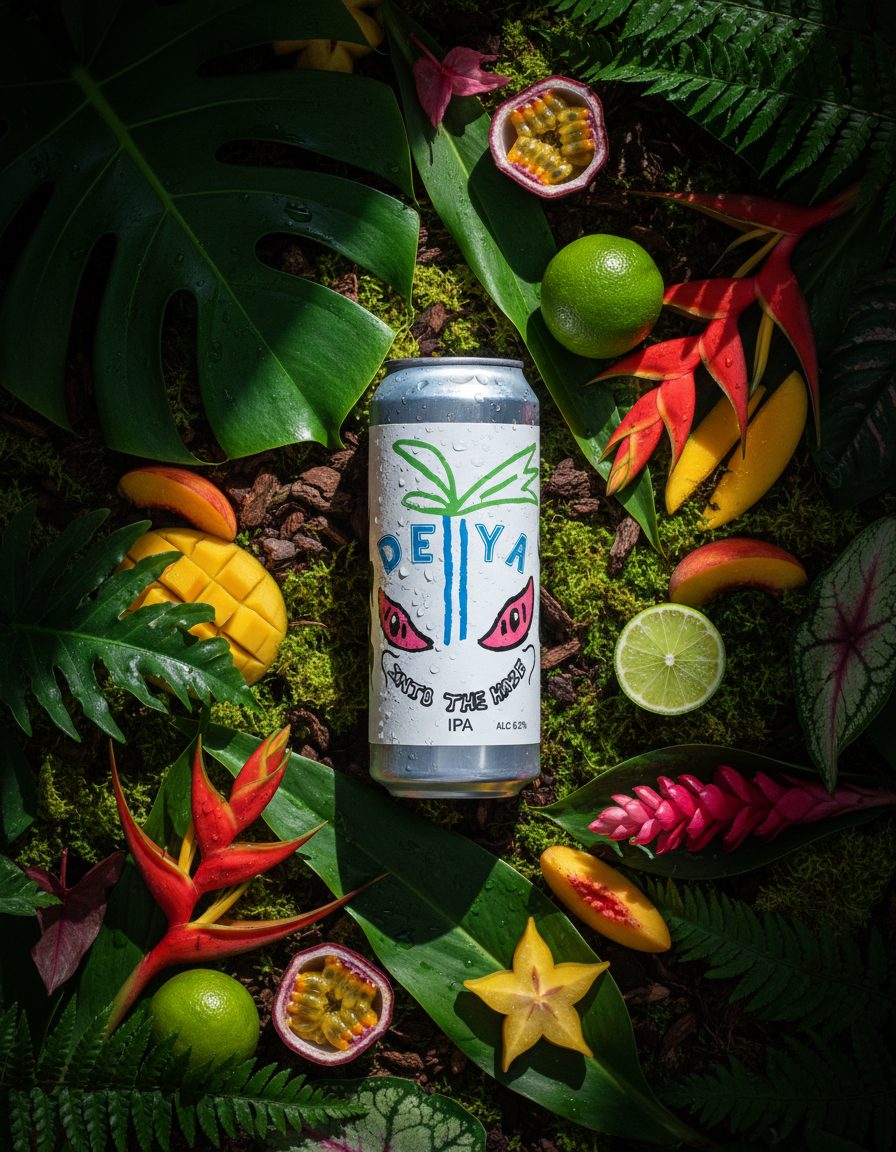
Premium product photograph of a 500ml DEYA Into the Haze IPA
can, dew-beaded, resting on a tropical jungle floor of monstera
leaves, passionfruit, lime and heliconia. Dramatic low side
light through foliage. Background stays green-forward. Lush,
humid, cinematic. Shallow depth of field but full label in
sharp focus. 1:1 aspect.
06 Guardrails
Before the prompt ever reaches the model, it is checked against a shared negative list. If a run would break a rule, it is stopped, not spent. This is the negative block appended to every DEYA prompt:
// appended to every DEYA prompt
no additional text on the can
no distortion of the DEYA wordmark
no alternative brewery names on the can
no glass bottles (DEYA only ships cans for retail)
no hard studio specular highlight across the label face
no AI-generated typography replacing the hand-drawn label
no clearly photoreal humans drinking on camera
no driving, sport-performance, or anti-brand contexts
The two that trip models most often are alternative brewery names (the model invents beer brands on nearby cans) and hard specular on the wordmark (a highlight blows out the red). Keep both on the negative list even when the scene seems safe.
07 The review gate
Every output is checked against a fixed brand-faithful checklist before it is kept. Review at 1:1, never on the thumbnail, the label is where it falls apart.
- ✓ DEYA wordmark undistorted and legible
- ✓ Label illustration sharp, not softened or garbled
- ✓ No added third-party logos or text
- ✓ Background palette complements the label, does not fight it
- ✓ Reads as a photograph, not a pastel painting
08 Iteration playbook
The lighting is easy; the model does it beautifully. The hard part is label fidelity, because DEYA's art is hand-drawn and specific. Expect to reject frames. When a run softens the label:
- Increase the weight on the product reference image so the wordmark holds.
- Reroll two or three times rather than fighting the prompt; label quality varies run to run.
- If the illustration still mushes, drop the depth-of-field blur; a fully sharp label survives better.
- Reject anything that fails the gate. Roughly one frame in four is a keeper, and that is fine.
Diffusion models cannot reproduce hand-drawn label art faithfully, only approximate it. The pipeline is built around that limit: hold the can with a reference, put the creativity in the background, and gate hard on the label.
09 Fork it for another brand
Nothing here is DEYA-specific except the pack. To run the same method for another brand, fork four things and leave the pipeline alone:
- The rules, the must-keep and never-do lists for the new brand.
- The palette policy, what the background must stay in key with.
- The templates, the structural DNA of the shot.
- The flavour map, the product-copy-to-background translation.
The guardrails, the review gate, the reference-hold and the iteration loop stay exactly as they are. That is the whole point: the taste is per-brand, the system is not.