A place that compounds what it makes.
RefiRegen is a local regenerative-economy service: loyalty and payments infrastructure owned by the place it runs in, rather than used to extract from it. It started as my RCA final project in 2023, drifted badly in 2025, and was rebuilt in 2026 around rails that actually exist. This is the idea I have chased since university.
Local businesses create local value. The infrastructure leaks it away.
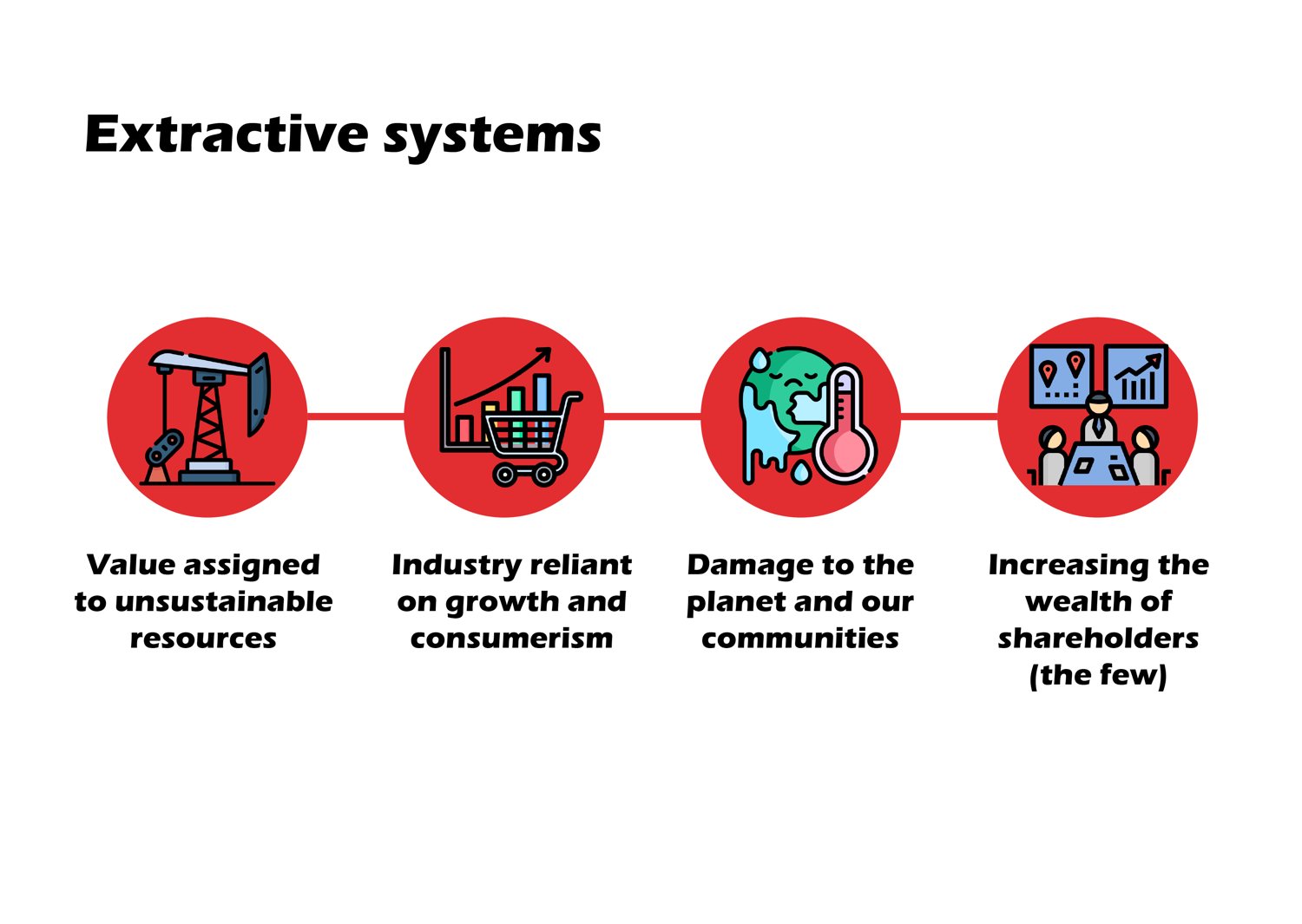
A pound spent in an independent shop does more for a town than a pound spent in a chain, but the financial, operational and behavioural infrastructure wrapped around that shop is all built to move value somewhere else. Card fees leave. Loyalty schemes belong to platforms. Customer data belongs to whoever built the app.
Small businesses need the same strategic tools big businesses use, loyalty systems, payments infrastructure, behavioural incentives, customer data, network effects, but owned by the local economy rather than used to extract from it.
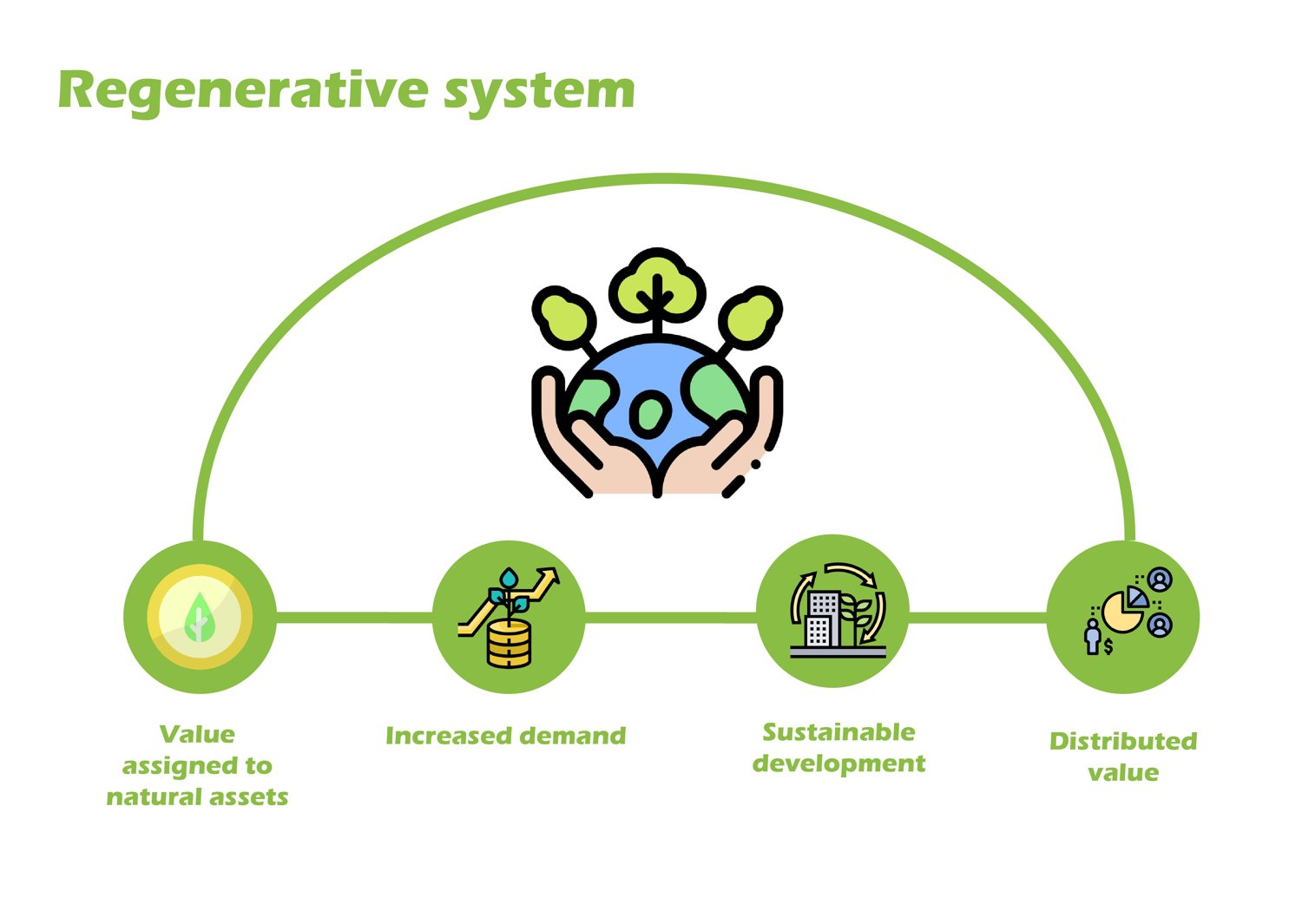
That reframes loyalty from a marketing tactic into civic and economic infrastructure. It is the same shape as everything else I am drawn to: aggregate the distributed, keep the value at the edge, let the place regenerate.
I got it right, then I got it wrong, then I fixed it.
Most case studies present a straight line. This one has a genuine misstep in the middle, and leaving it out would make the current version harder to trust rather than easier.
RCA final project. Real ethnography with Cheltenham independents, a place-based thesis on Bath Road, honest ad-spend testing, and a clear-eyed rejection of complementary currencies.
The public page led with blockchain, added eco-challenge framing, asserted impact metrics with no methodology, and dropped every bit of the research context. Strong taglines, thin substance.
Era 1's evidence plus a strategy that leads with margin and loyalty, on open-banking rails that make it legal to build now. Blockchain demoted to an optional backend.
Do not lead with blockchain. Lead with local margin, loyalty, collaboration, and payment savings. Blockchain optional. Regenerative finance essential.
The previous version of this page carried four asserted metrics, a 23% revenue increase, a 1.8× multiplier, a 40% cost reduction, 100% transparency. None had a methodology behind them. I have removed them rather than dress them up, because unsupported numbers are a credibility risk, not an asset. Everything quantified below has a source or a calculation you can check.
The barrier is not enthusiasm. It is isolation.
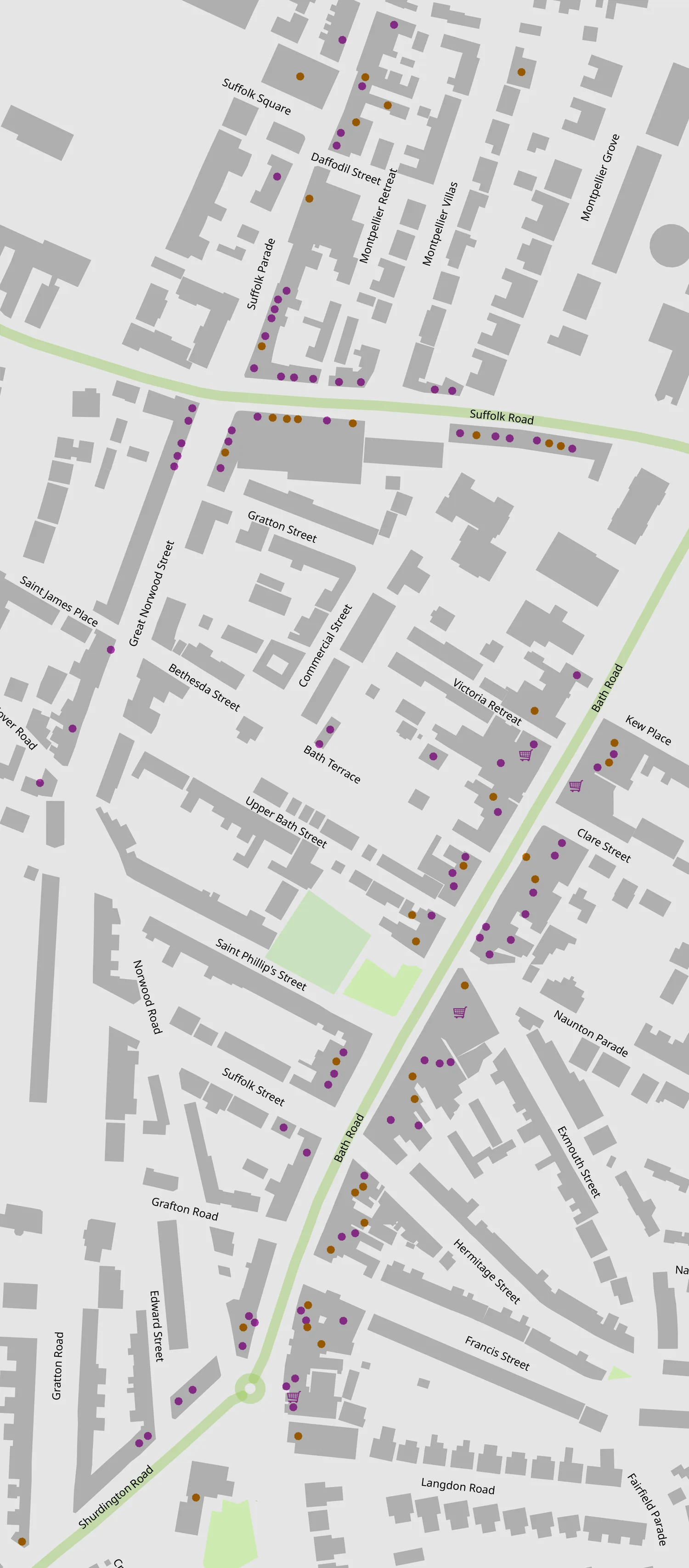
The 2023 fieldwork was conversations with independent business owners on and around Bath Road in Cheltenham. What came back was not "we don't care about the local economy". It was that nobody had the time, the forum or the incentive to act on it together.
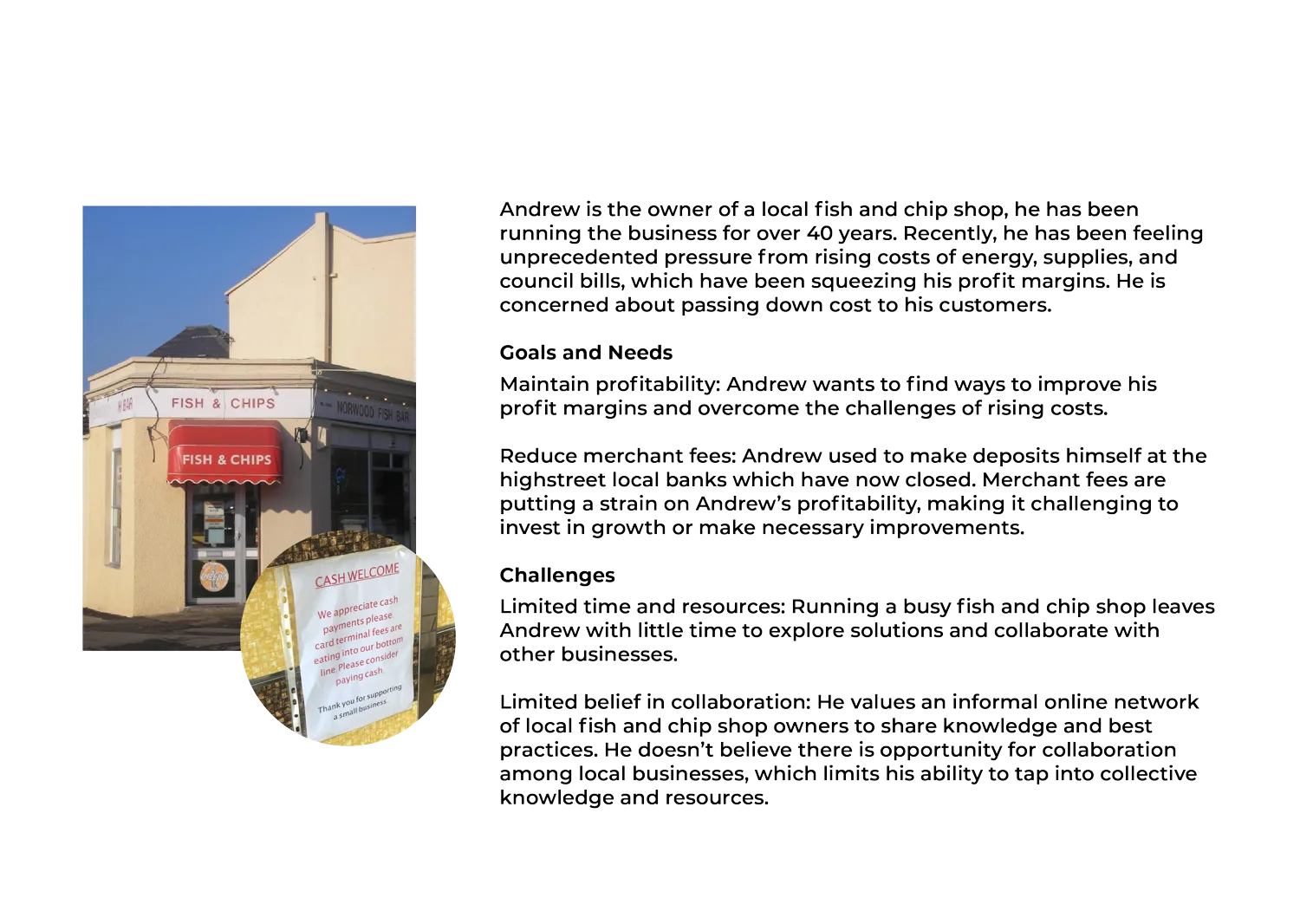
Andrew is the persona the whole project was calibrated against, and he is a real person with a real shopfront. He wants to protect his margins and stop passing costs on to customers. He has no time to go looking for solutions. And critically, he has limited belief in collaboration, he values an informal network of other chip shop owners, but does not think there is real opportunity in working with the businesses either side of him.
- Overwhelmed, complex, systemic problems and no capacity to work on them
- Disconnected, no meaningful dialogue between businesses facing identical challenges
- Powerless, no representation, no collective bargaining, no shared voice
- And the line that framed the whole project: "We just don't have enough in common."
- "How's it funded?"
- "Margins are too tight."
- "I don't offer promotions or deals."
- "Where's the power behind it?"
- "Heard it all before."
- And the one that matters most: egos get in the way of businesses associating with each other
That last column is the reason this is hard, and it is why I keep it visible. Any version of this that requires merchants to feel warmly about each other before it works is a version that does not work.
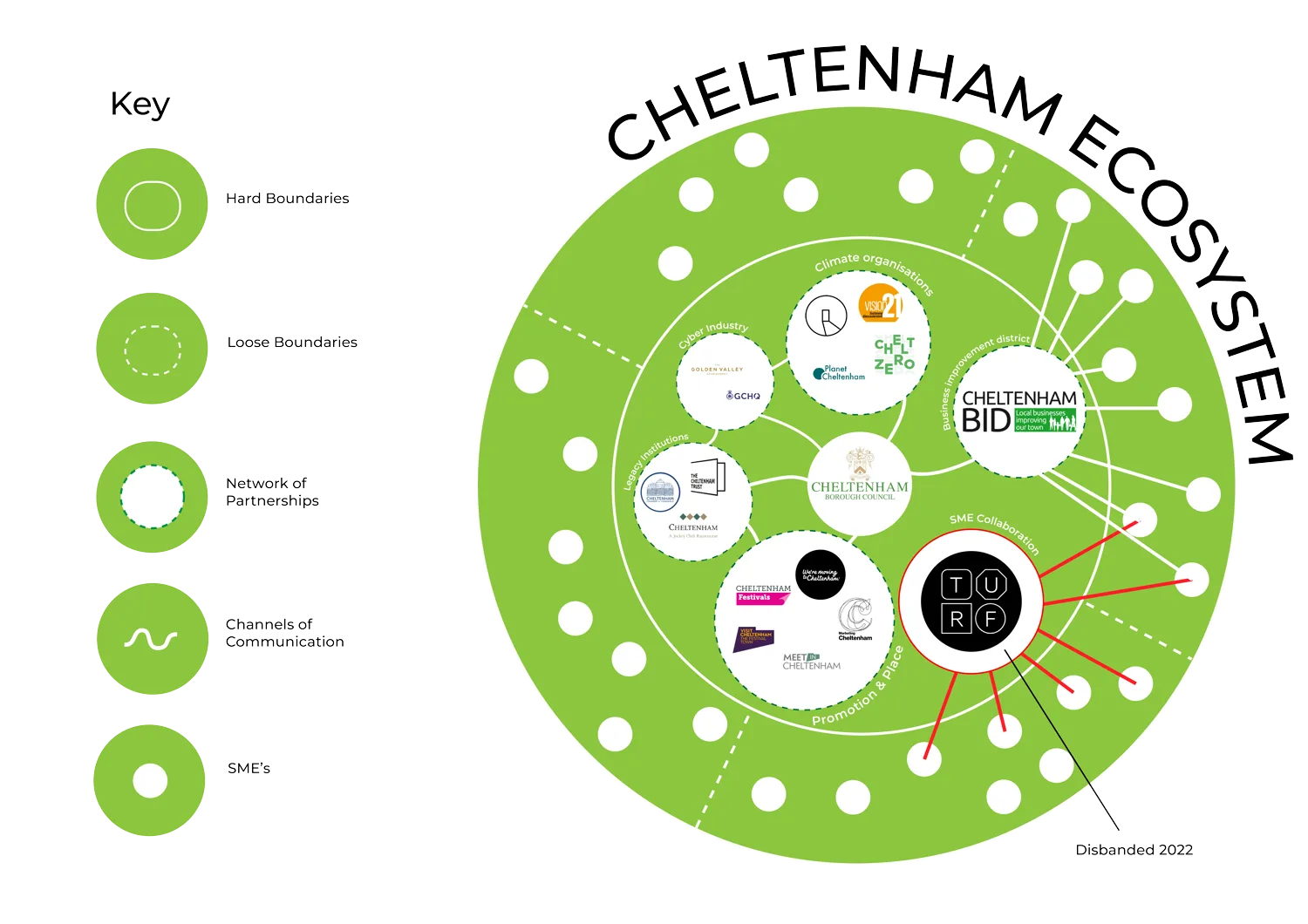
TURF, the local SME-collaboration body, annotated "disbanded 2022". That is a real institutional vacuum this could fill. It is also hard evidence that local-business collaboration bodies fail. Understanding why TURF died is a prerequisite, not a footnote.
You cannot explain Doughnut Economics on a poster.
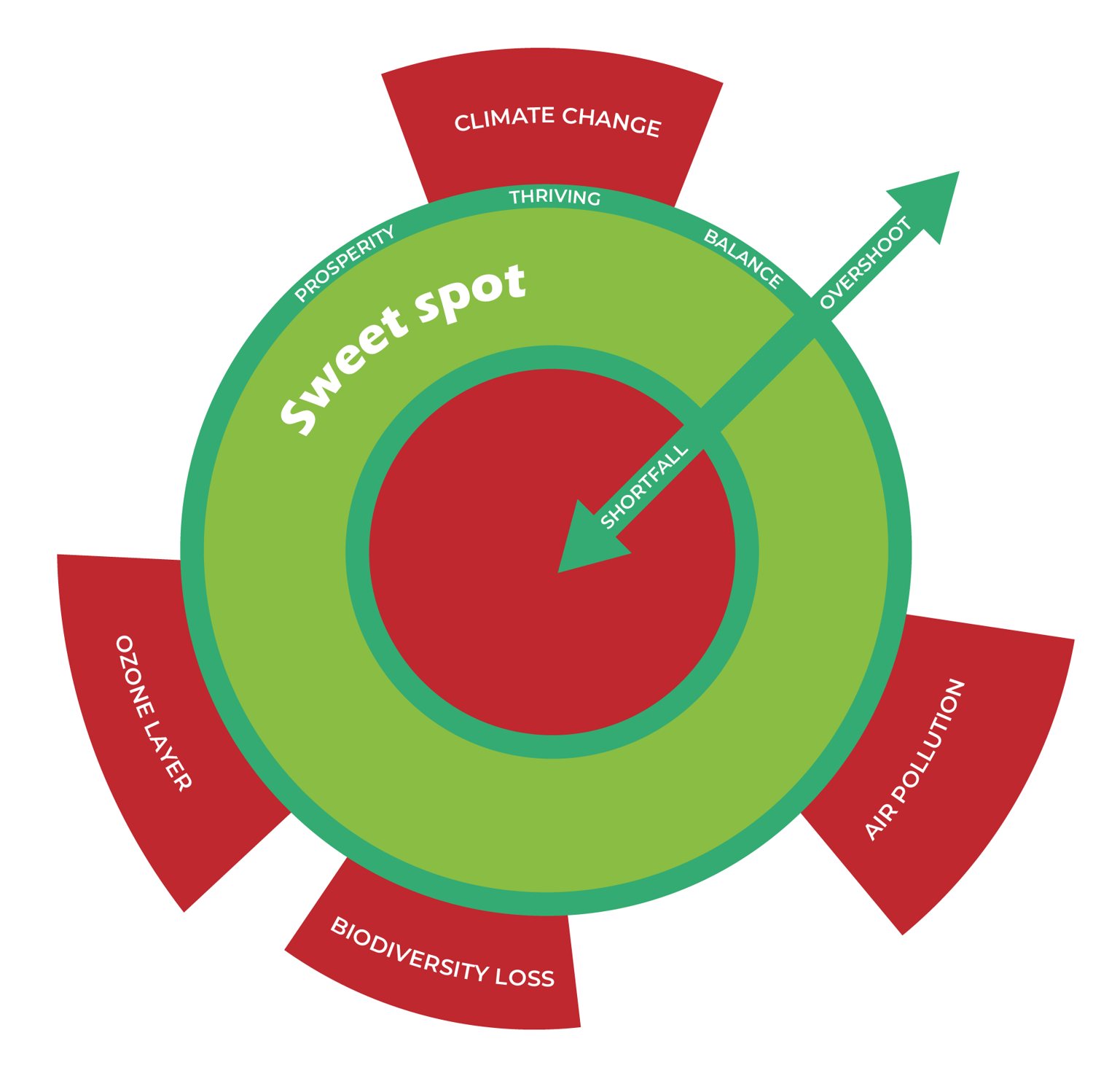
The whole project sits inside one model: a ring where everyone's needs are met without overshooting what the planet can take. Fall short into the hole in the middle and people go without. Push past the outer edge and the ecology goes. It is a good model, and it is a genuinely hard thing to put on a wall and expect a stranger to absorb in ninety seconds.
So at the RCA final show I built it as a game instead. A cardboard doughnut, balanced on the fingertips of two people, with ping pong balls that have to be placed in the sweet spots around the green ring. Let a ball drop through the middle and that is human need unmet. Let one roll off the outside and that is the ceiling breached. Neither person can win it alone, which is the argument of the model, made physical.
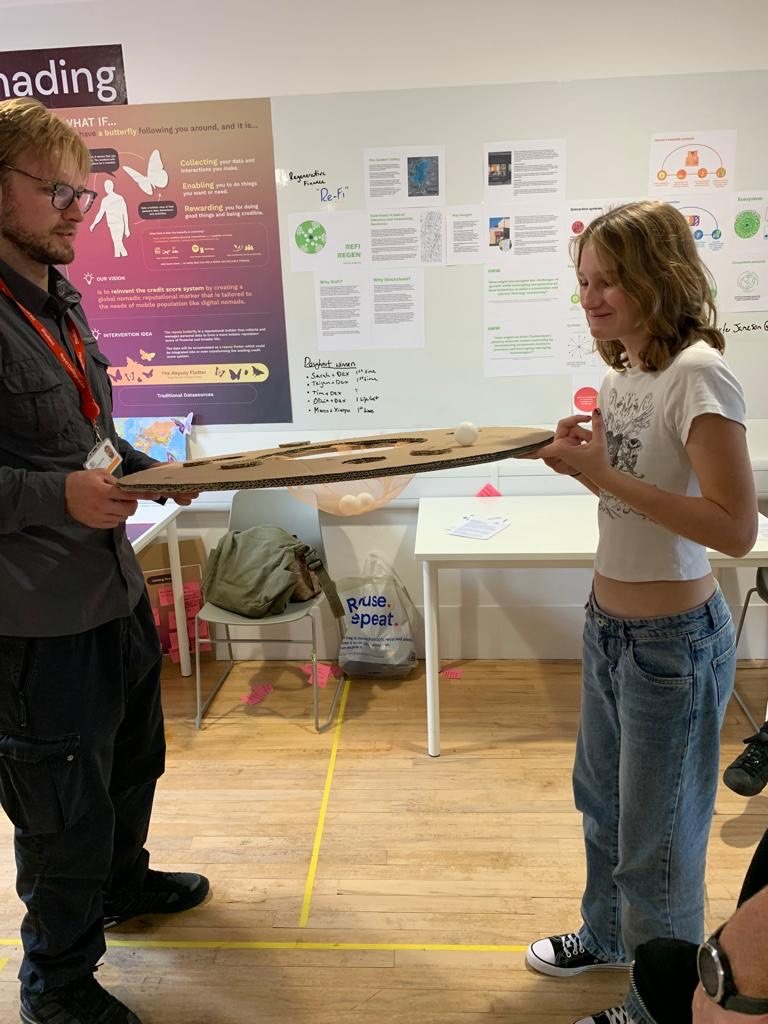
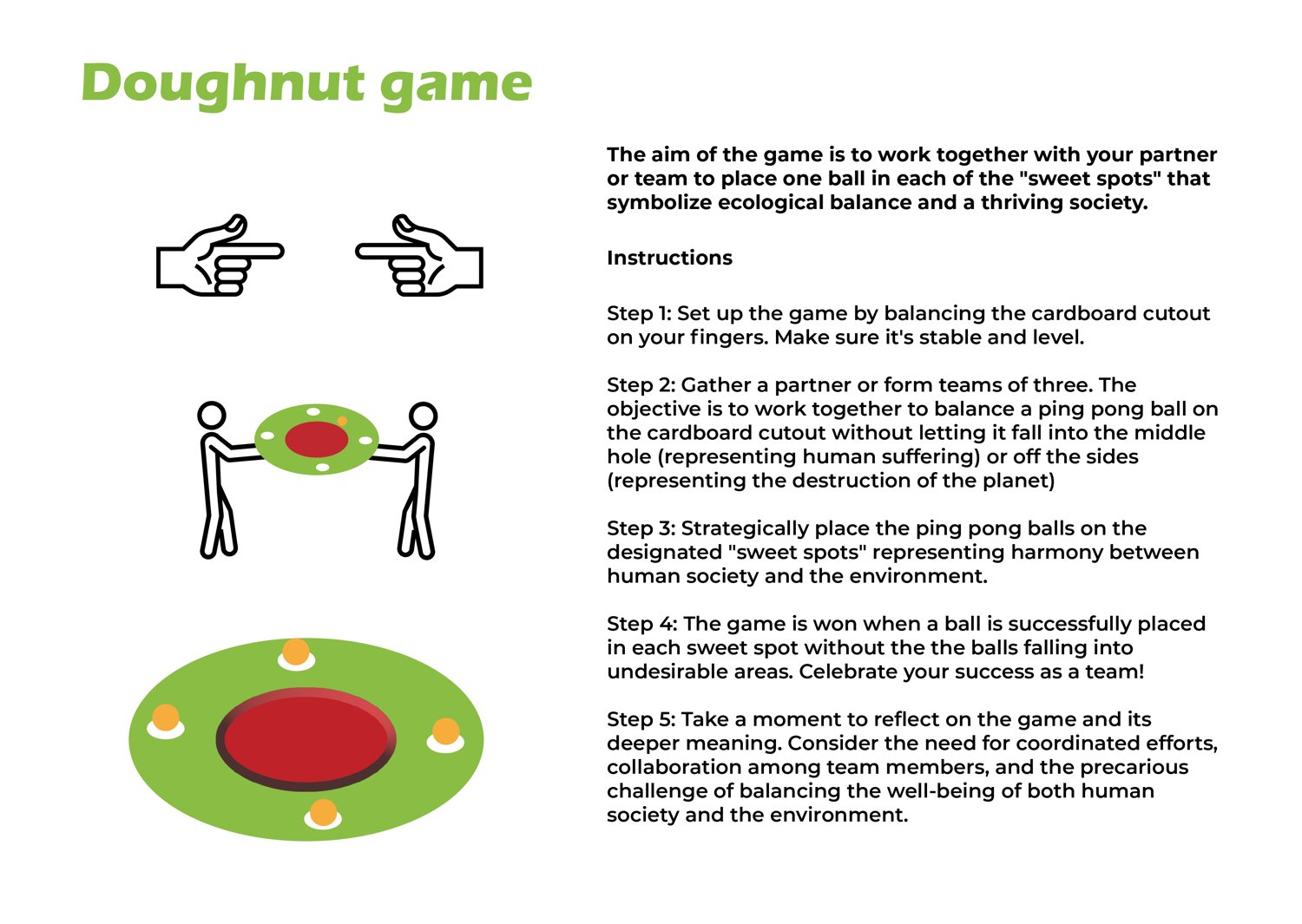
The last instruction on the sheet is the only one that is not about the game. It asks players to stop and think about what they just did: that keeping the ball in the safe ring took coordination, that neither of them could hold it level on their own, and that this is the actual difficulty with the thing the project is trying to fix. A stand full of boards explains a system. Two people wobbling a piece of cardboard between them makes you feel why it is hard.
Three years on, the venture has moved onto open-banking rails and none of the 2023 mechanics survived. The game did. It is the clearest thing I have made for explaining a systems idea to somebody who has no reason to care yet, and that problem has not changed. It is the same job as an onboarding screen, done in cardboard.
Why this is not a local currency.
The obvious answer to "keep money in the town" is a local currency. I looked hard at the precedents and concluded they fail for consistent, structural reasons, not for want of good intentions.
- Usability, unintuitive for both staff and customer, at the till, under time pressure
- Incentives, reliant on altruism; the customer gets nothing concrete
- Viability, money moved 2–3× faster, but with no evidence of actual localisation
- Density, a currency without enough places to spend it is a novelty, not infrastructure
- Points for customers, simple, familiar, immediately legible at the till
- Reduced fees for businesses, a hard commercial reason to join, not a moral one
- Local credit for network-only value, where the closed loop genuinely earns its complexity
- A community-fund allocation, so the regenerative claim has an actual mechanism
That keeps the customer experience at "tap to earn" while preserving the regenerative depth underneath. The complexity sits in the backend, where it belongs, rather than in the ninety seconds someone is queuing for a coffee.
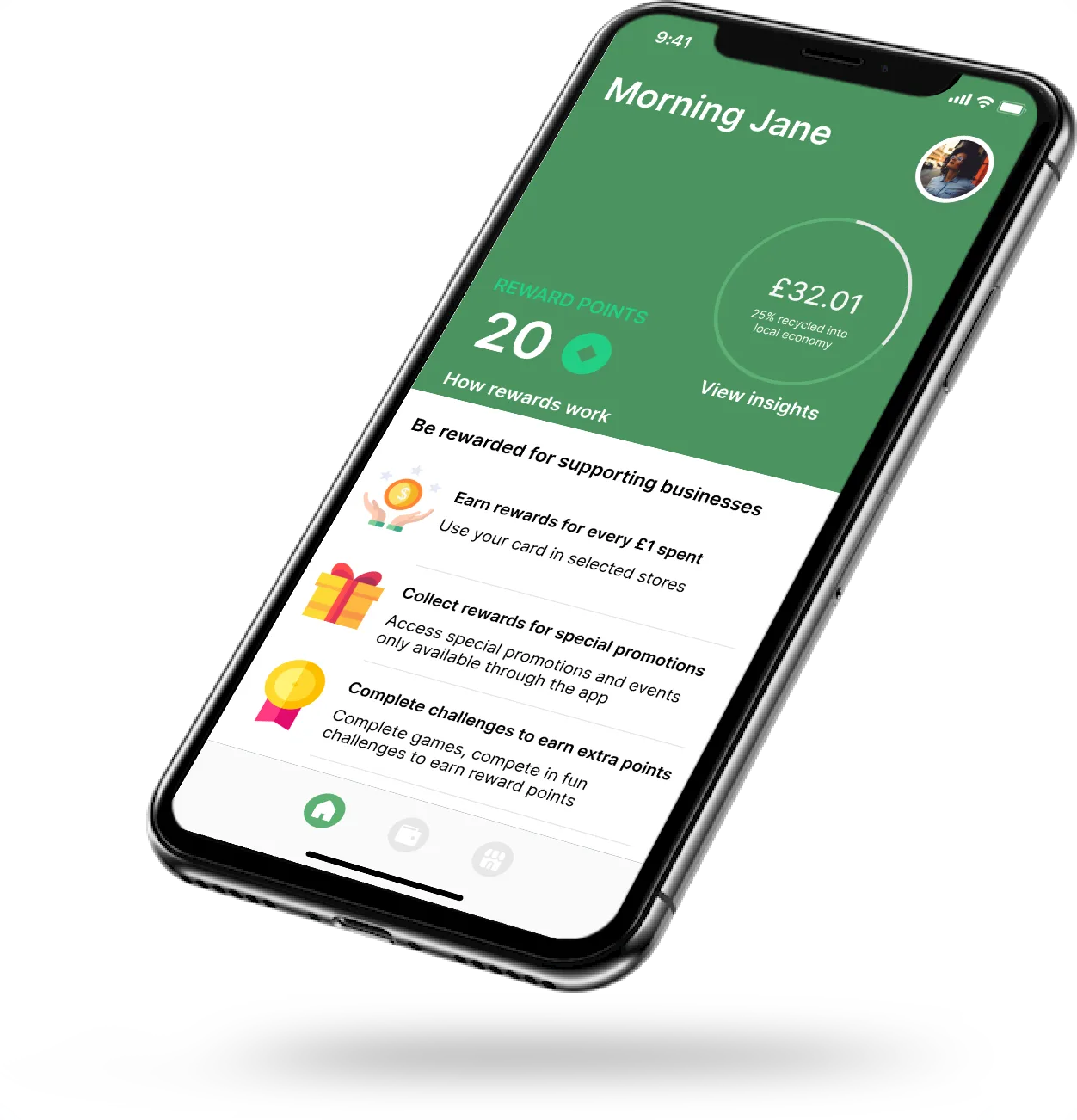
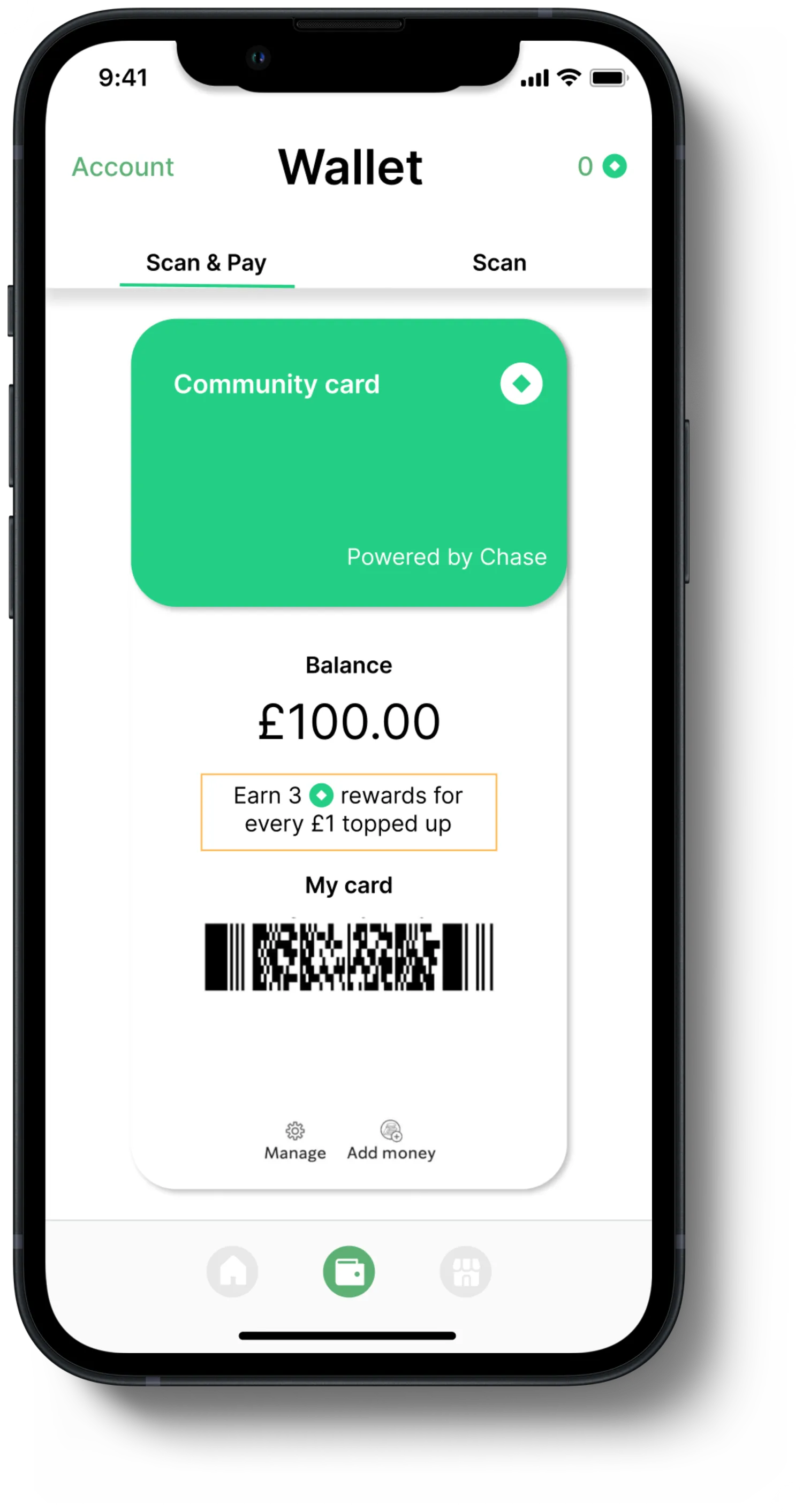
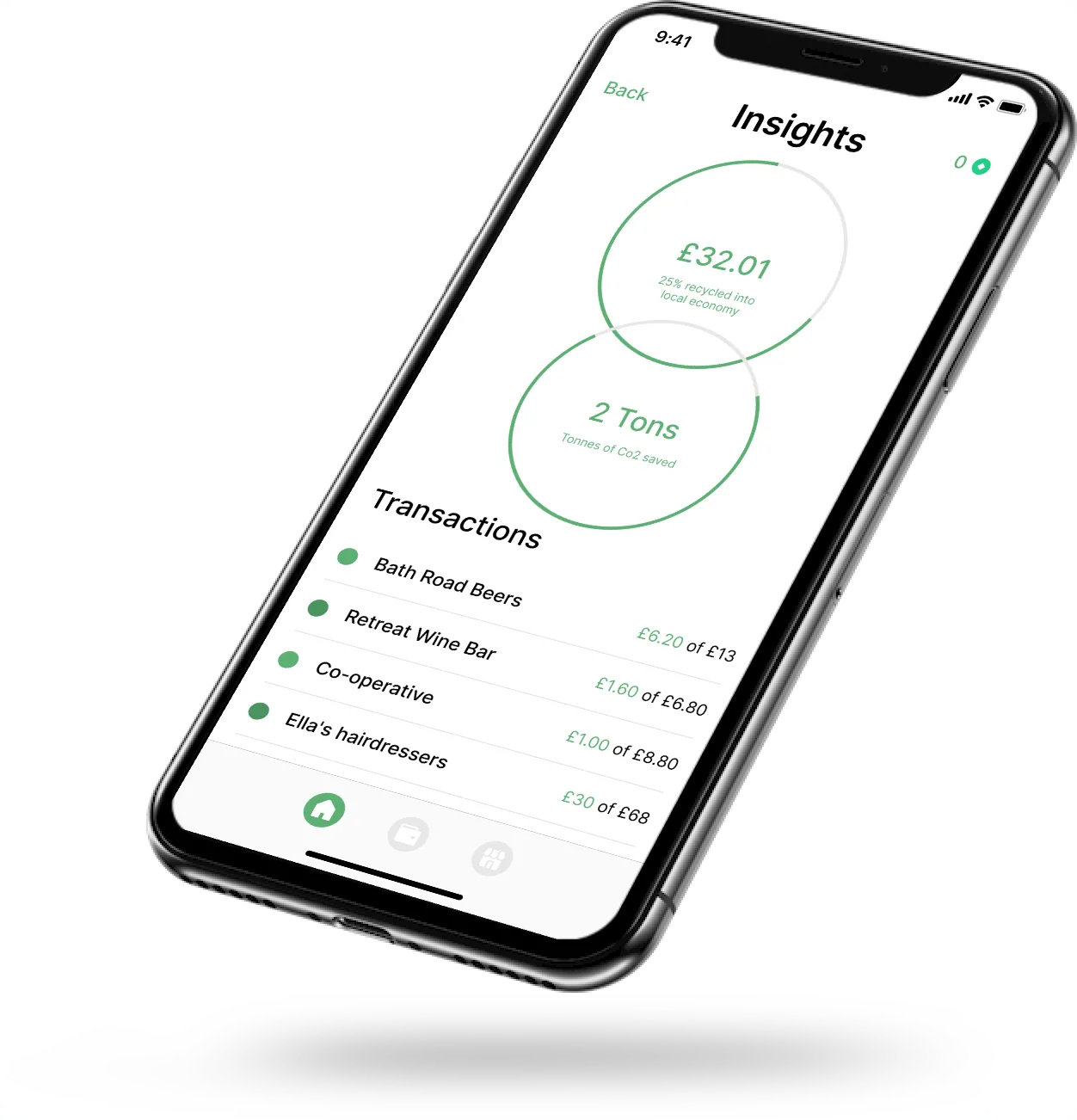
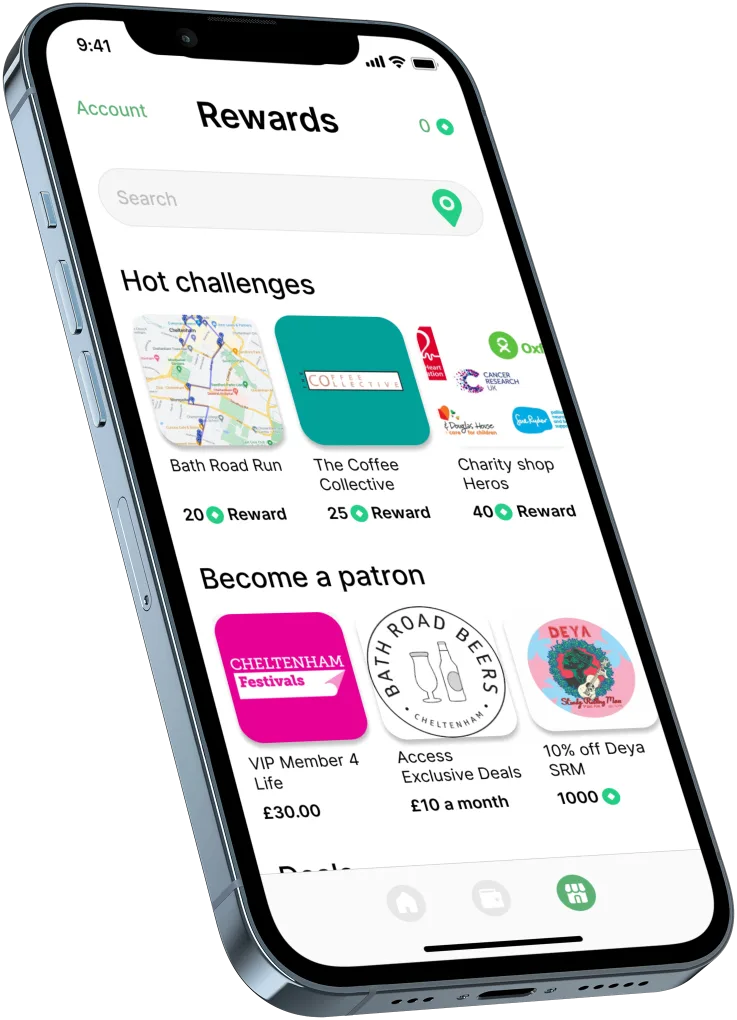
These screens are useful now mainly as a record of what to drop. The wallet with a stored balance is exactly the top-up model the 2026 feasibility work rules out. The gamified challenges lean on the same altruism I criticised complementary currencies for relying on. What survives is the insights view, making local spend legible, and the physical card, which returns as NFC.
The unlock: never touch the money.
The reason this stalled for years as a concept is that every version of it looked like it needed a financial licence. The 2026 feasibility work found the path that does not: account-to-account payments over open banking, riding an authorised provider's licence, plus a points ledger that is explicitly non-monetary.
The headline structure is not the risk. Three details need a lawyer's sign-off before real money moves, and the qualification in "pass (qualified)" is doing real work. This is a green light to build a prototype, not a green light to take deposits.
Where the margin actually is.
Card fees are percentage-based. The open-banking rail is a flat cost of roughly 20–30p. That spread is the entire commercial engine, and it tells you exactly which transactions to chase and which to leave alone.
| Transaction | On card (~1.75%) | On the A2A rail | Merchant outcome |
|---|---|---|---|
| £80 round Pub, restaurant, mid-ticket retail |
£1.40 to the card network | ~25p rail cost; charge the merchant ~70p | ~50% saving, ~45p retained |
| Sales above ~£12 | Scales with basket size | Flat | ~40% off card fees, capped at £4 |
| Sub-£12 coffee | Cheap, percentage of a small number | The 20p floor bites | Card still wins. Don't fight it there |
The beachhead falls straight out of the arithmetic: pubs, restaurants and mid-ticket independents, where basket sizes are large enough for a flat fee to beat a percentage. Cheltenham Race Week, at a cashless racecourse, is the obvious pilot window.
Tap to earn. Never say "open banking".
A2A payments have been tried at the UK point of sale before, Zapp, Pingit, Payit in store, and they failed. Not because the rail was bad, but because they offered merchants lower fees and offered customers nothing at all, with worse UX than the card they already had in their hand.
The reward is the consumer pull that A2A always lacked. Lead with "tap to earn"; hide the rail.
- A physical NFC card, roughly 40p each, so a merchant can hand them out without thinking about it
- Customer presents the token, merchant reads it, resilient to bad wifi, which matters in old buildings
- Decide locally now, settle the money later. The reward lands instantly even if the rail is slow
- One name, one gesture. The customer never learns a new concept
- The frictionless auto-pull behind the tap, card taps and you have paid, no app, is not legal for UK retail yet
- So v1 is tap-to-earn, not tap-to-pay. The reward reflex is the product
- The hardware does not need to change when that becomes possible. The upgrade path is designed for
This is the part I am most confident about, because it is the part that respects what is already true: people have a working way to pay, and no appetite to learn another one. The behaviour I need to create is not a new payment habit. It is a new collecting habit.
The bottleneck is demand, not design.
I have a validated thesis, a regulatory path, a rail, an interaction model and a beachhead. What I do not yet have is fifteen signed-up merchants, and everything on this page is supply-side comfort until that exists.
"Would you put your card behind the bar for a shared Race Week rewards campaign this season?" beats "Do you like this idea?"
- 15–20 structured conversations with Cheltenham independents, aimed at a commitment rather than an opinion
- Run merchant validation in parallel with the technical build, not after it
- Target the beachhead the economics point at, not whoever is friendliest
- Merchant admin is risk number one. Small business owners are already overloaded, if the system creates admin, it dies
- Network density, not enough places to spend it and it is a novelty, not infrastructure
- Naming, this project has had four names and three positionings. A revival has to collapse that to one of each
This is a live venture at Phase 1, not a finished case study. I have written it as the current state of my thinking rather than as a success story, because it is not one yet, and because the discipline of publishing what is unproven is what stops a project drifting into the version I had to correct in 2025.