00 / Sam Boyle · Painter · Artist site · 2026
Step into the painting. Then see it on the wall.
Four paintings by Sam Boyle, each rebuilt as the place it was painted from. Each opens on a low glance across that place. Scroll, and the camera arrives where the painter stood, the world falls away, and the canvas hangs on the wall.
Open the site →The reel
Four worlds, one canvas, and the painting always on top.
Filmed frame by frame on the live site, on a phone-sized screen. Nothing here is a mock-up.
01 / The idea
A painting is a view from somewhere.
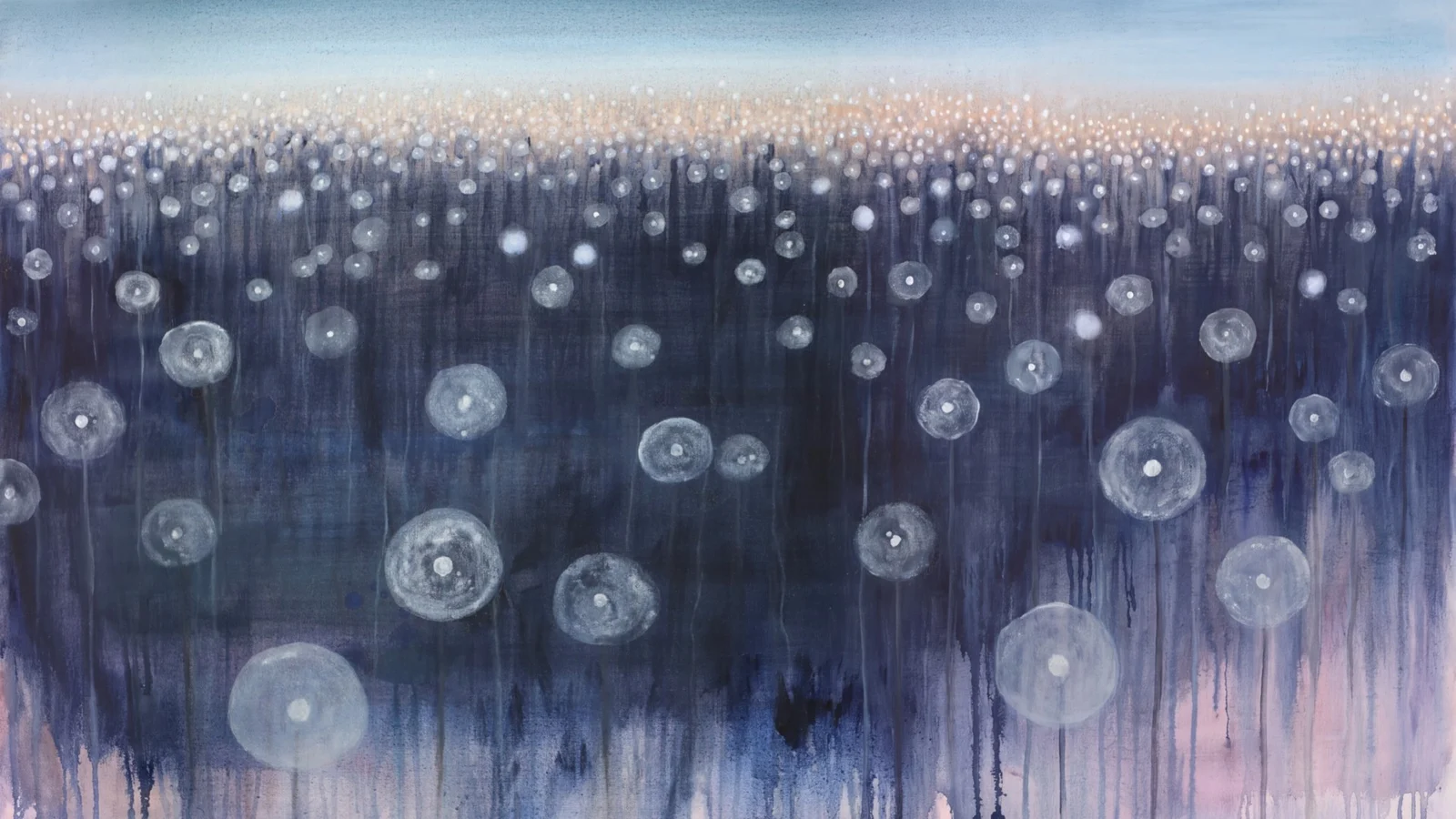
Sam paints ponds from above and a field at night from the ground. Each painting was made from a place and a height. Shown as a flat photograph, that viewpoint is gone. Rebuild the place, and a visitor can stand where the painter stood before the painting becomes an object again.
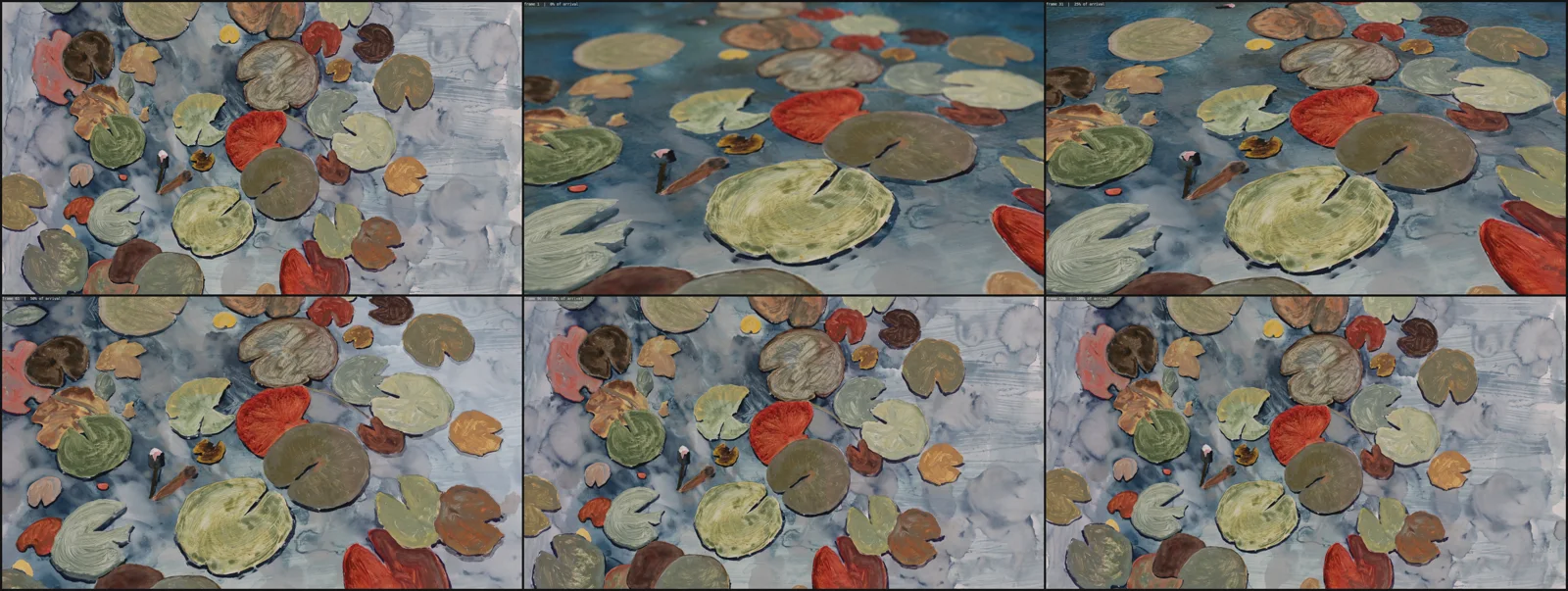
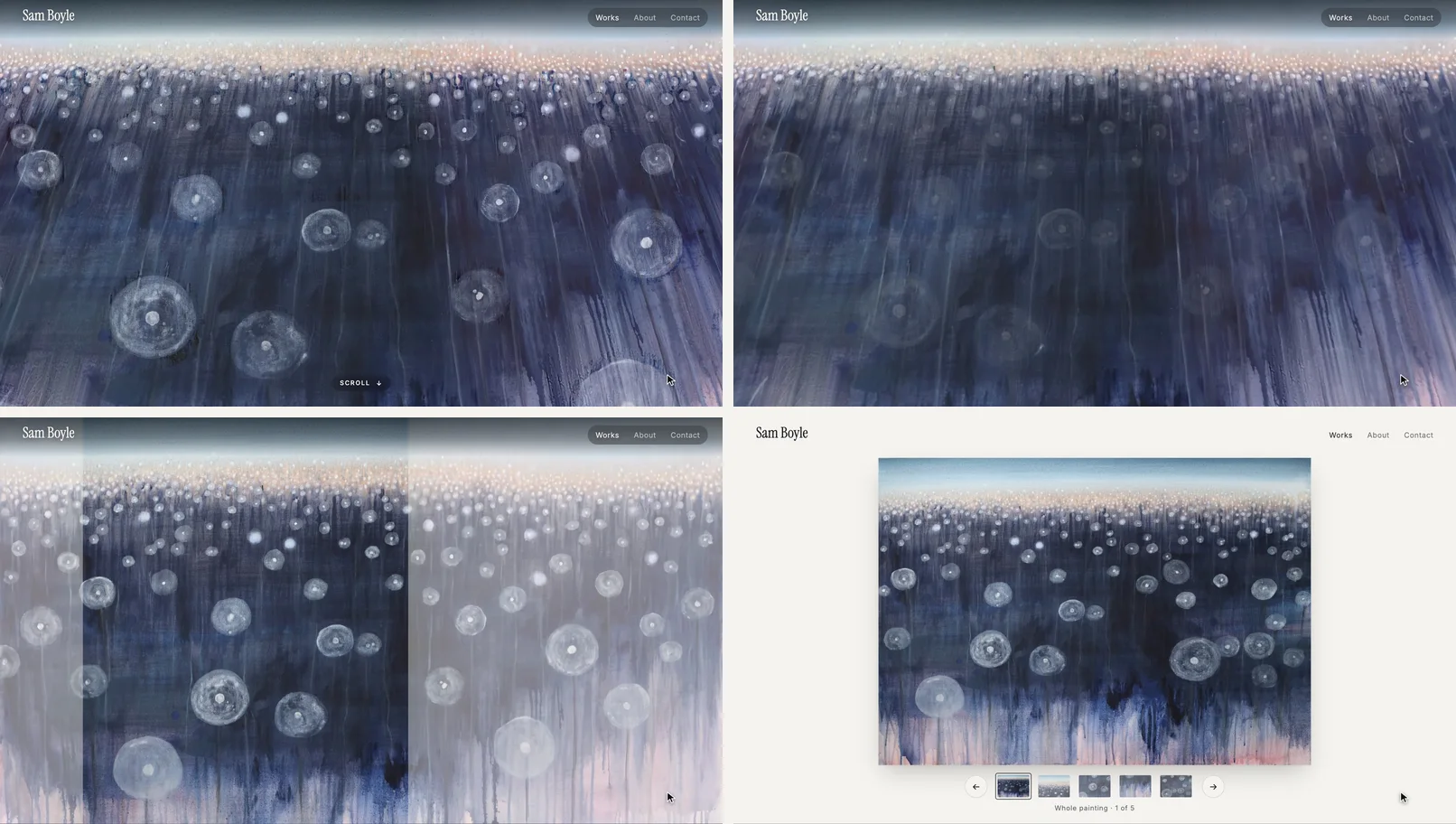
So the site has two moves. The landing is a run of worlds you can look around, each seen from the start of its arrival: a low glance across the water, or through the field. A work’s own page carries on from there. As you scroll, the camera arrives where the painter stood and the world turns back into the painting.
02 / The rule
Sam’s file is always the top layer.
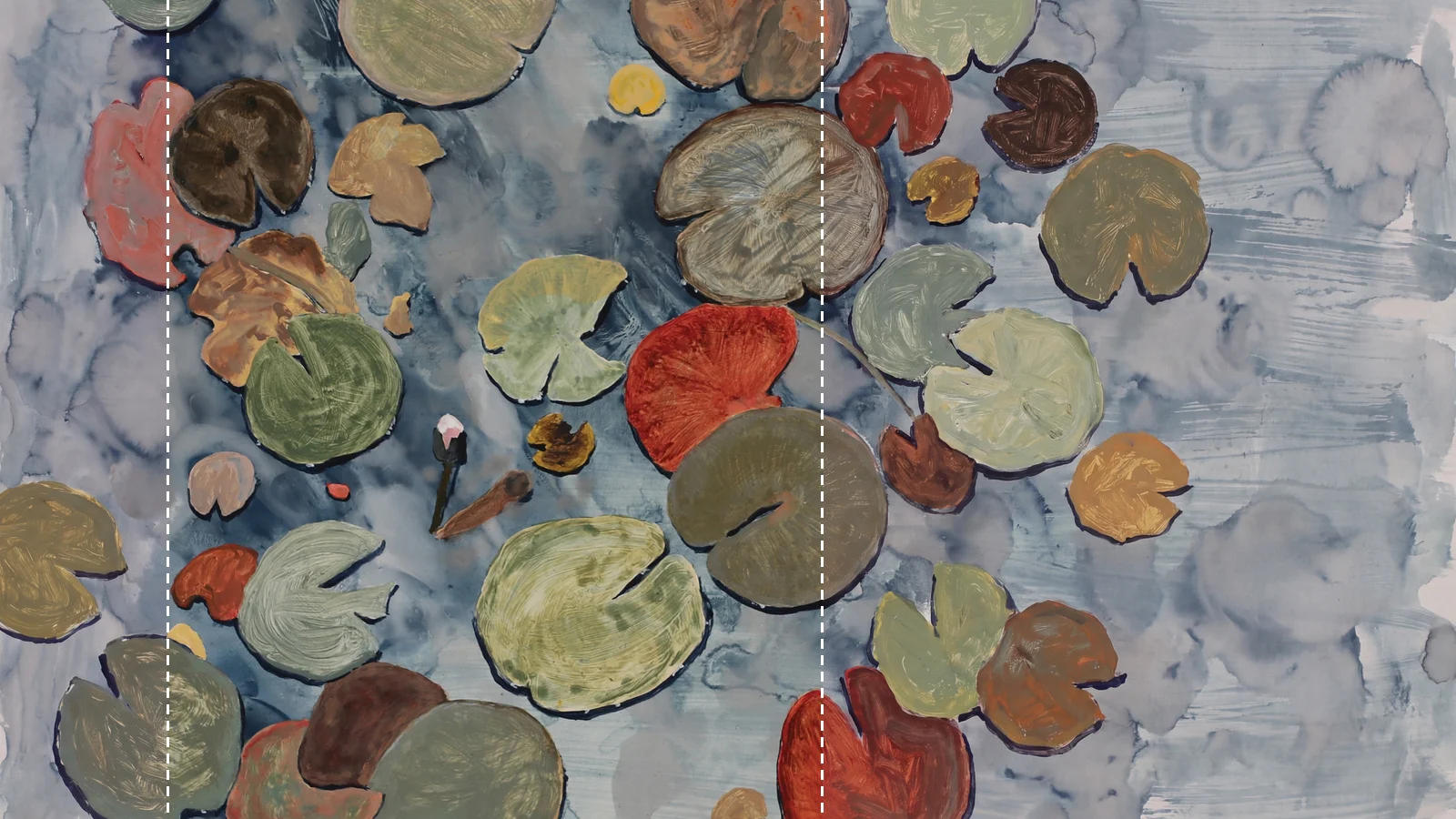
The world beyond each canvas edge is generated. Gemini 3 Pro Image painted one to four versions per painting, and I picked one from a contact sheet. Sam’s original is then pasted back byte for byte, and both seams are measured against the painting’s own brush marks.
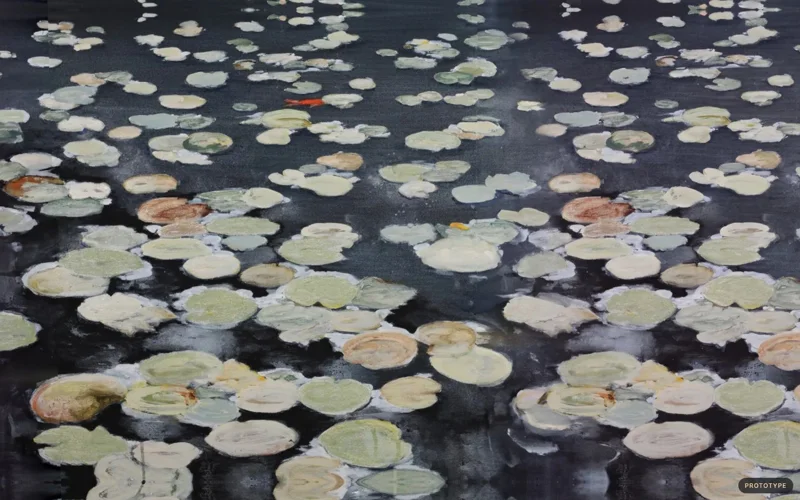
At the painter’s view the page lays Sam’s own JPEG over the window, so what you see there is the file, not a render of it. A test compares the screen with the file, below the header: a mean difference of 0.00 out of 255.
03 / The camera
Find where the painter stood.
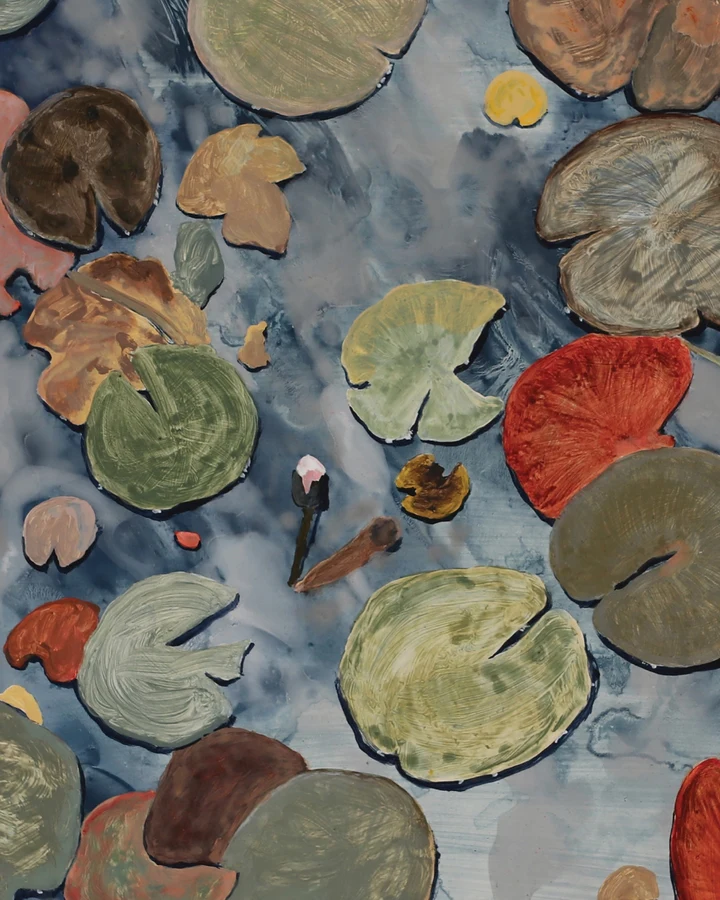
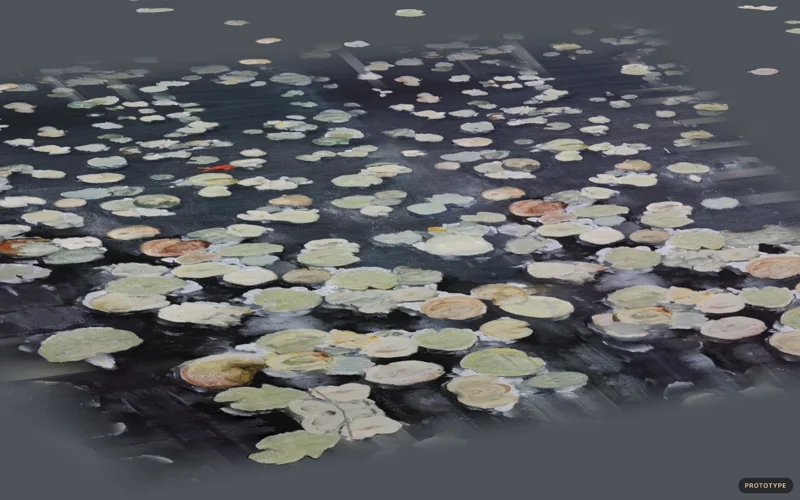
Each painting sets its own camera. Blue Lilies and White lilies look straight down. Dark pond looks down at 27 degrees through a 64 mm lens, measured from how the painted pads flatten as they recede. Poppies stands level in the field.
Every pad and seed head is cut from the painting and stands on its own card in a Blender scene, so the depth is real rather than a warp of a flat image. A script rebuilds each scene from data and checks it: 13 or 14 tests a work, including that the landing frame sits within a colour difference of 1.11 of the world image. The final renders took between 61 and 84 seconds a work.
04 / Looking around
Look around, but never past the edge.
The worlds run live in the browser, from the same scene data as the Blender renders. The first limits were fixed angles, each tuned on its own. Pushed into a corner, turned, tilted and leaned back at once, they showed flat grey past the pond.
Now every move is tested by casting the screen’s four corners onto the painted world. If any corner would land off it, the view eases back towards the painter’s. That is strict: about 4 degrees of turn at the painter’s view on a laptop, 13 once you lean in. I would rather the world be small and whole than generous with a hole in it.
So the site does its looking around somewhere else: from the arrival’s first pose, the low glance Blender built each world to be seen from. There a turn of the head has room, about 8 degrees either way, and less towards the horizon, where the ponds run out.
05 / The page
One canvas, and it sleeps when nothing moves.
A single WebGL canvas serves the whole site. Only the world on screen draws, and only when something changes. Left alone, it draws nothing at all, which is what keeps a phone cool. Opening a work keeps the camera exactly where you left it. Scrolling then plays the arrival: the 120 Blender frames, scrubbed by the scroll rather than played as a video, because a video stutters when you seek it. A frame still loading is stood in for by the live world at the same point on the camera path. Then Sam’s file lands on top, the world fades to paper and the painting settles on the wall with a soft shadow. Scroll back and it all runs in reverse.
On a phone the crop slides from the frame’s centre to the painting as the camera arrives, with a lens shift, so the perspective stays the camera’s. The landing’s four live worlds weigh 5.0 MB; each work’s frames, 10 to 12 MB, load only when it is opened. 28 automated checks cover the journey end to end.
06 / Next
Built around the work. Next, with the artist.
Titles, sizes and prices are placeholders, outlined on the page until Sam confirms them, and the close-ups are crops of a scan. The next pass belongs to Sam: photographs of the canvas in raking light, a note on each painting, and a say in which details deserve a close-up.
What I would do differently: ask for those before the first render, not after the last. Every technical question here had a test. What the paintings are for was never mine to decide.