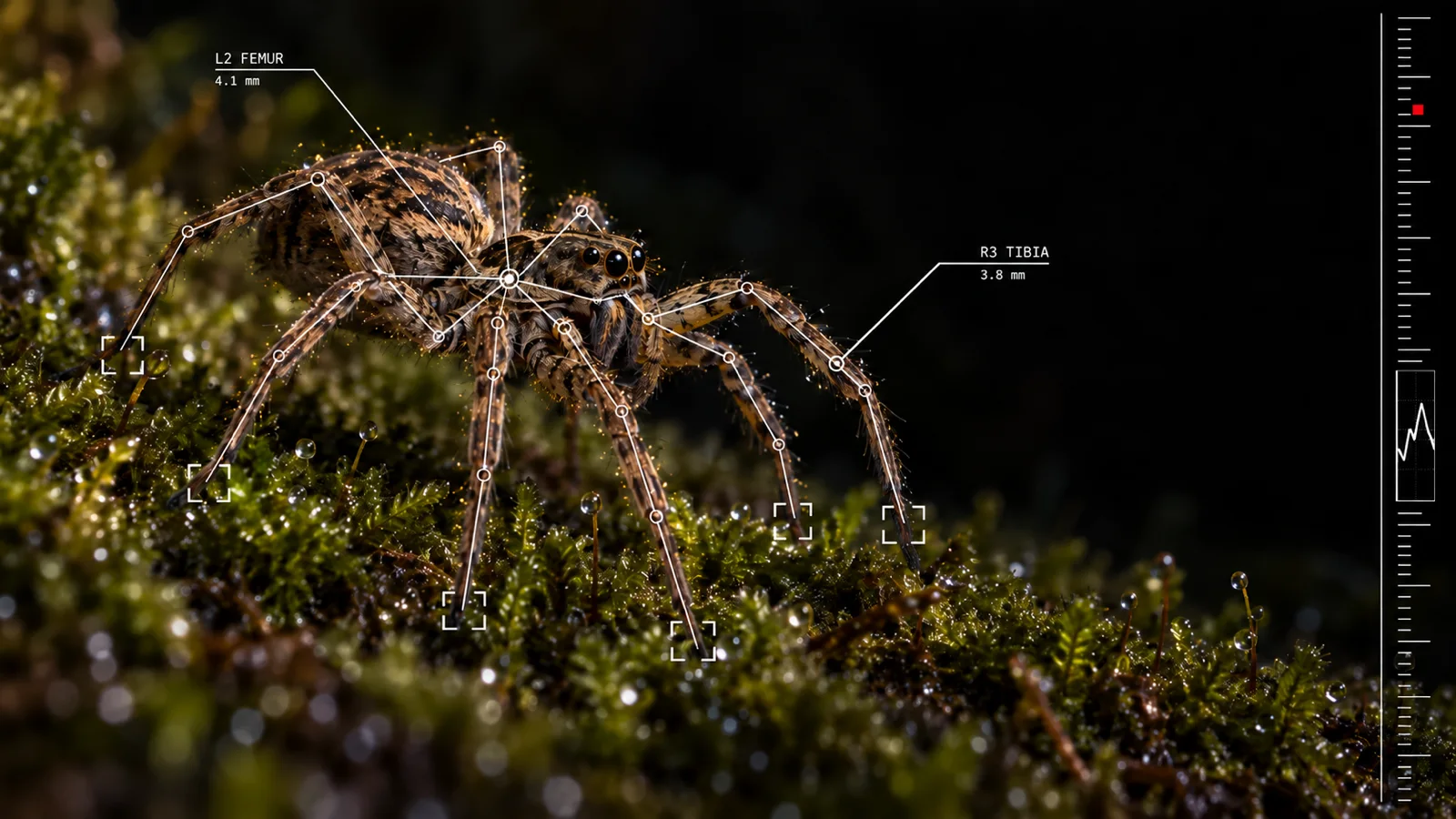
00 / Specimen Studio · Self-initiated · 2026
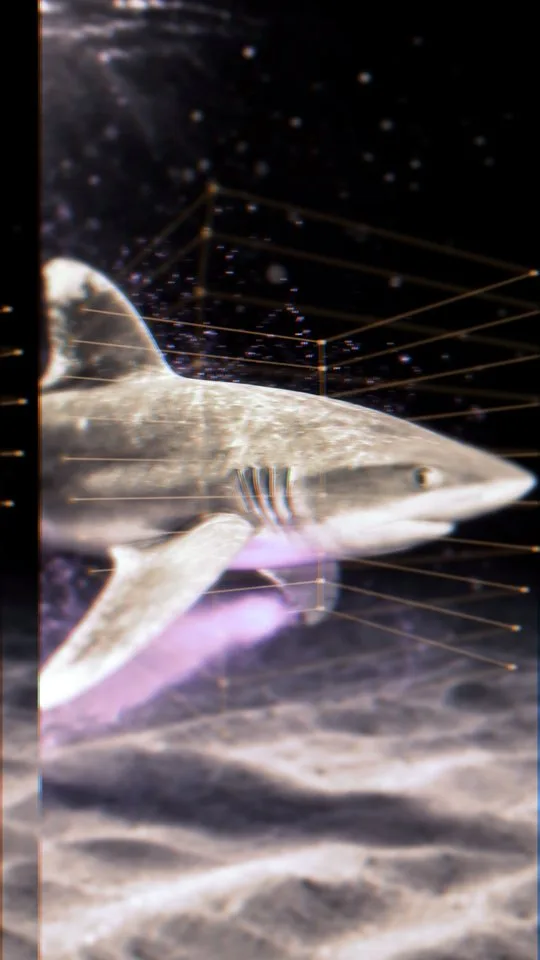
Geometry over animals, cut to the beat.
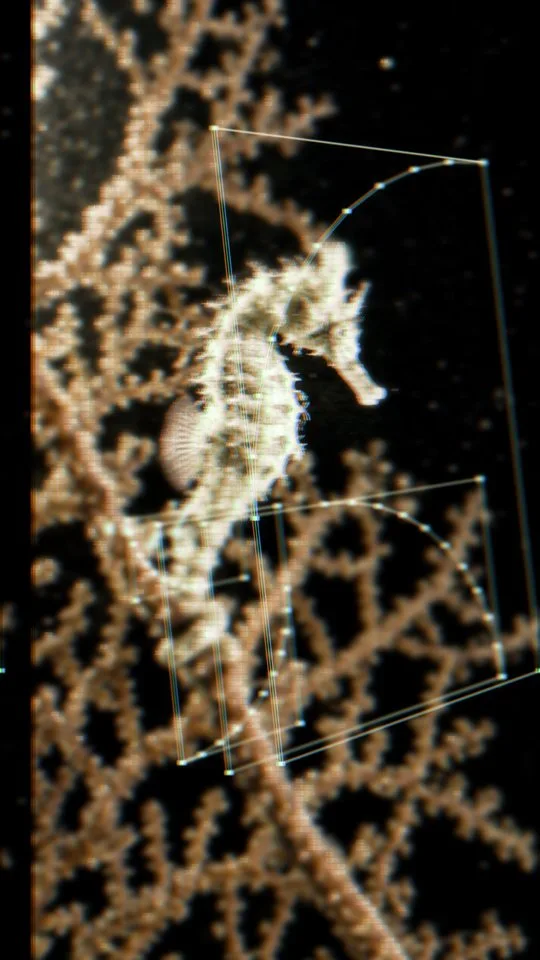
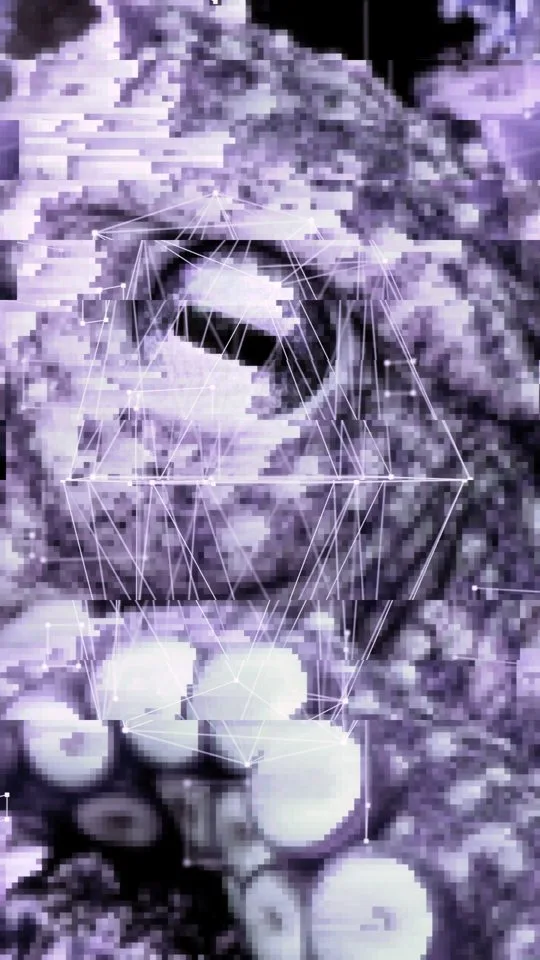
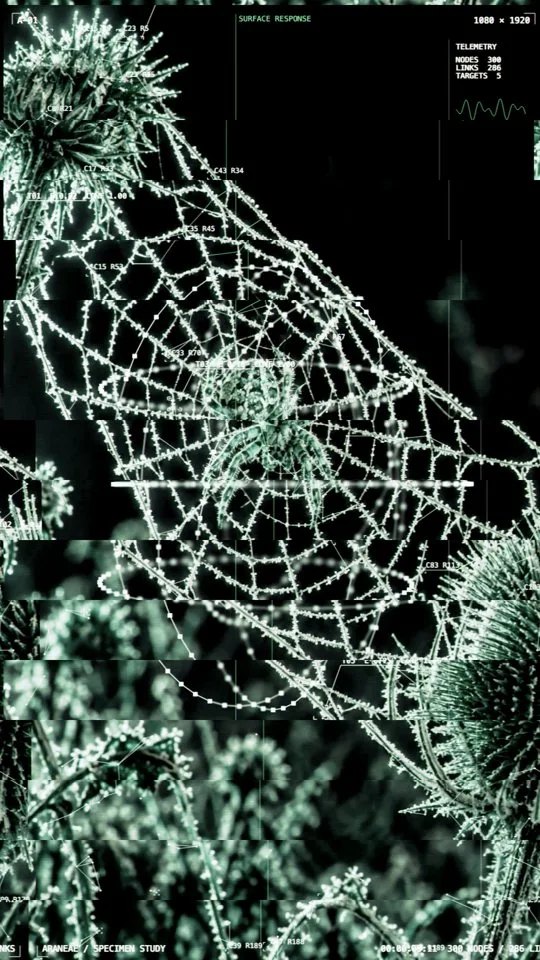
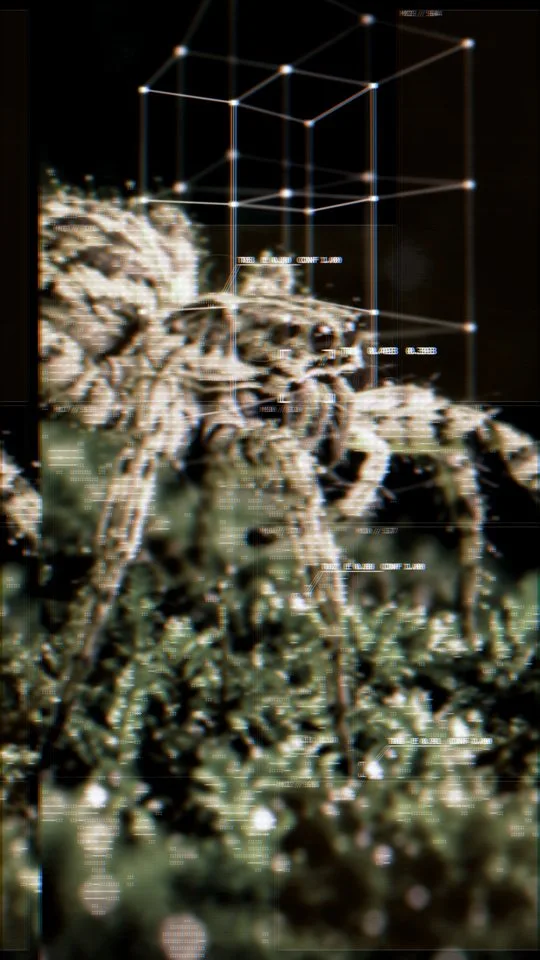
A one-file studio that draws tracking geometry over animal footage and cuts it to music, every kick on its frame. Two days, one person, directed from a contact sheet by number.
The reel
Twelve cuts, eight animals, twenty-two seconds, every look chosen by number.
Muted here. Colour steps on each kick and snaps back every two bars; the frame slides on the kick and tears on the snare.
01 / Rules
Set rules you can check every frame against.
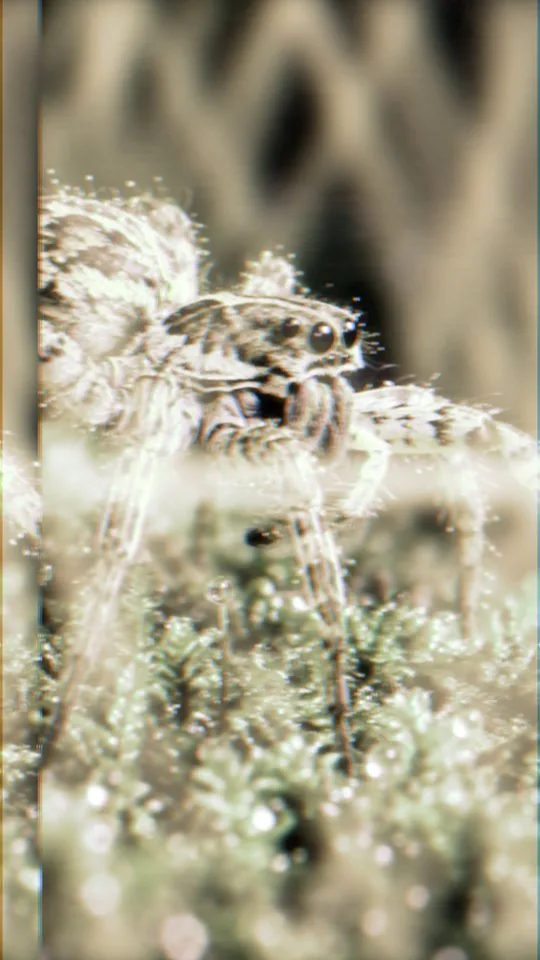
Four, before anything was made. Geometry or tracking. It must move. Spiders first. The animal and its habitat stay paramount; the machine looks on. Every still and every render since has been judged against those four and nothing else.
02 / Alignment
Align the eye on stills before anything moves.
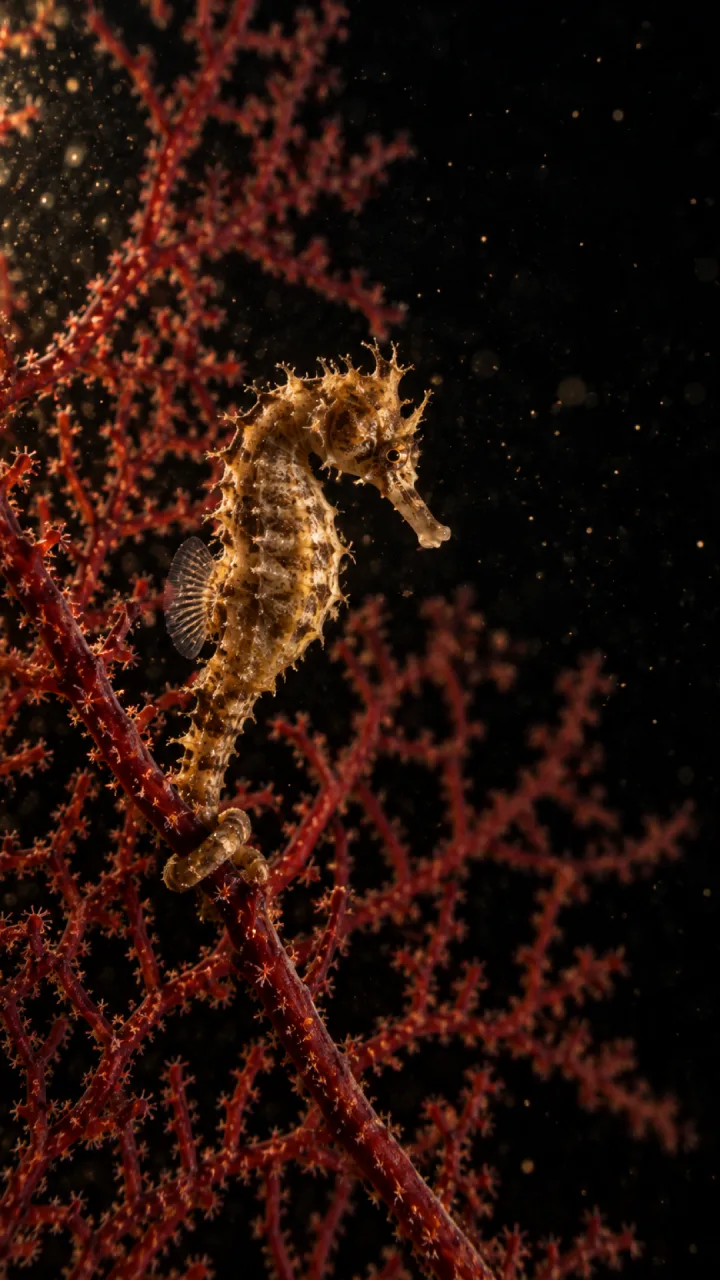
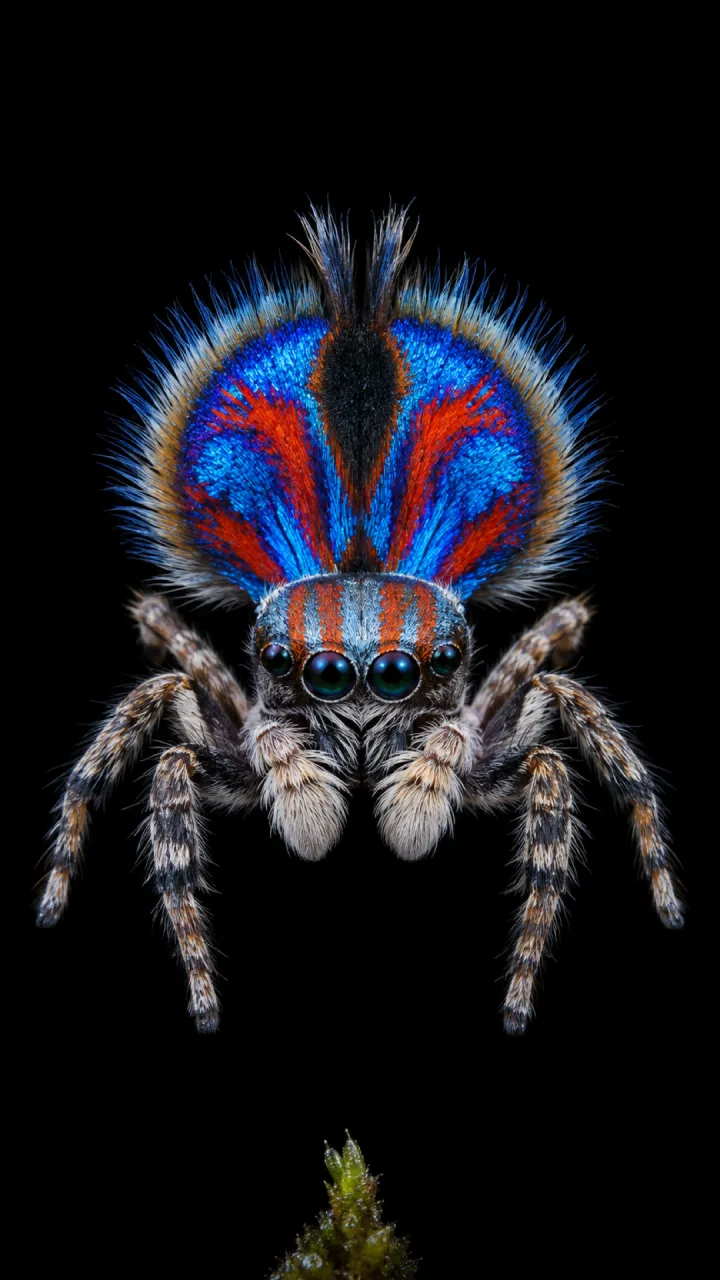
Thirteen rounds of free image generation, six stills a round, a verdict on each. Round six went minimal and was rejected in a sentence. Rounds three and four set the look: a real animal, wet moss, one low light, deep black beyond. Only then did eight stills become clips, for US$2.80.
03 / The tool
Build the tool you need, and nothing else.
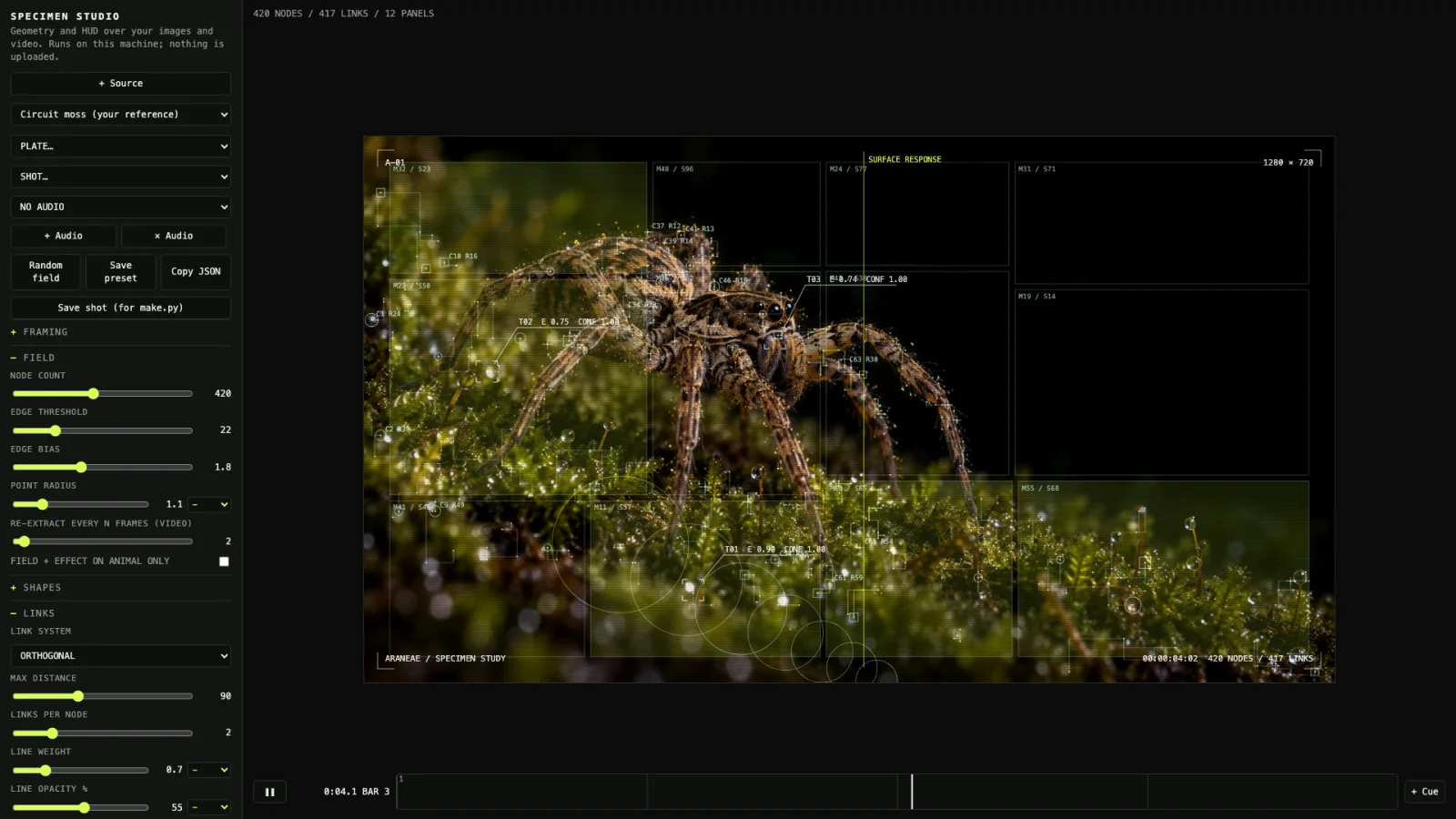
The two tools I wanted (geometric-art.com, Ladybug) could not be scripted. So: one HTML file with the parts I needed. Edges become points, points become links and shapes, a HUD sits on top, and any slider can answer to bass, mid, high or a hit.
04 / Rendering
Make every render reproducible, then test it.
A shot is a JSON file; a render is one command in a headless browser, timed by frame number, not the clock. A test fails the render if any kick lands more than a frame out. The first engine failed it. The rewrite passes.
05 / Review
Review by number. Edit to the music.
Every plate crossed with every look on one contact sheet, forty-eight stills, each with a number. The notes come back as numbers and a few words (“37 is a no”, “the crystal should be huge and blurred”, “snap back occasionally”) and each one becomes a control. Then the reel is just a list of bars and numbers: two-bar cuts to open, one-bar cuts to close. One video per look is a library nobody watches.
06 / Next
Reuse the loop: a track, some plates, a list of bars.
A music video is the same job at length; the gap is plates, not tooling. A live event is the harder version: beat detection on the incoming signal, a camera on the stage as the plate, the real-time build in TouchDesigner. What I would do differently: bring the audio in on day one. Every rule about the geometry changed once it had a beat to answer to.