I pitched it in 2023. In 2026 I built it, for myself.
At the RCA I designed a participatory platform for the Fishguard & Goodwick Tapestry, a Welsh coastal town's community memory, turned into something you could actually navigate. It stayed a concept, because the technology to build it did not exist at a sane price. Three years later it did, so I pointed it at my own archive instead.
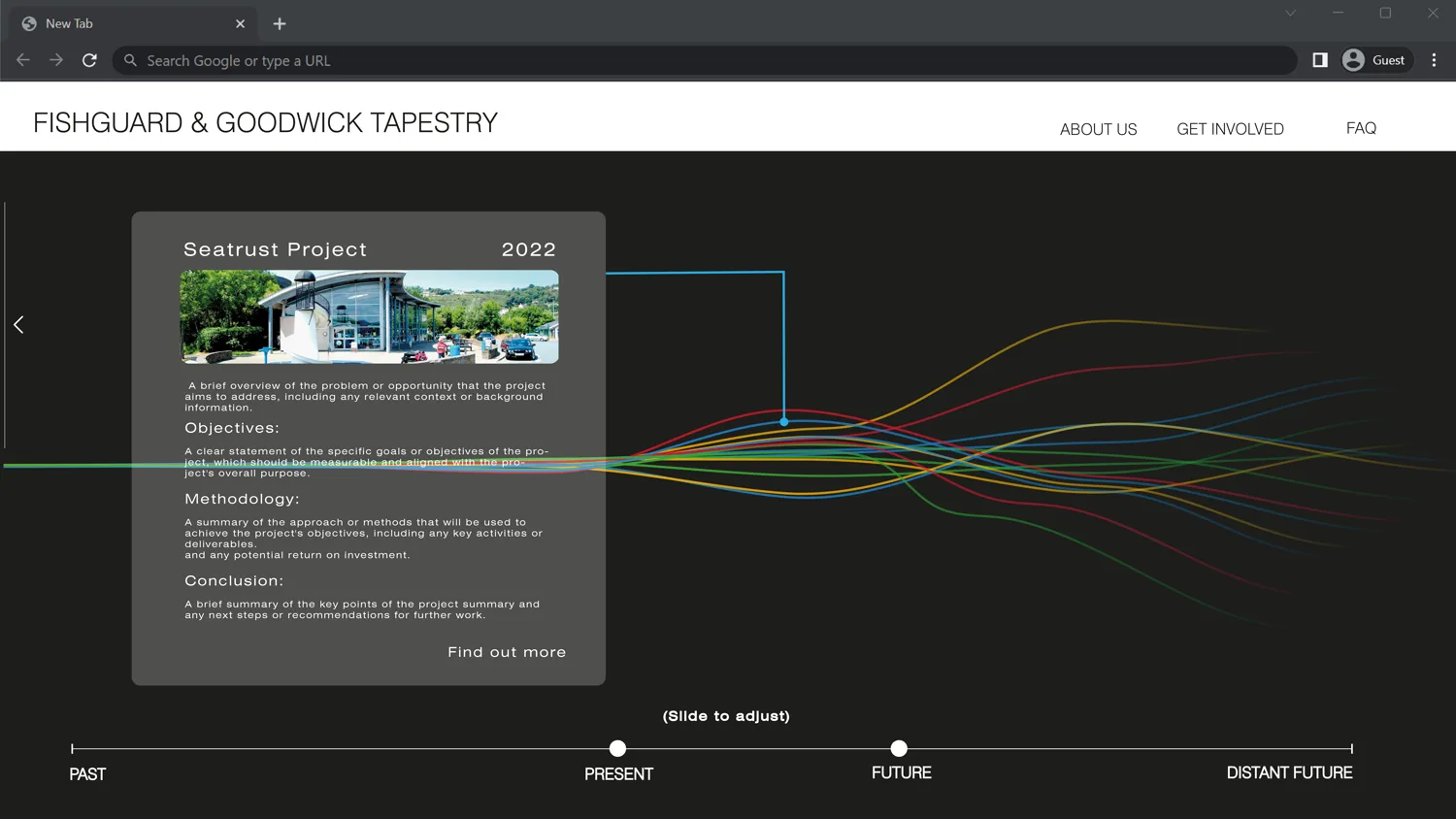
A tapestry is already a database.
Fishguard and Goodwick have a community tapestry, a physical, stitched record of local history made by local people. The insight the project was built on is that a tapestry is not just a picture. It is an archive with a structure: threads that run continuously, events pinned to positions, many hands contributing to one surface, and meaning that only appears when you step back.
That is a remarkably good description of a well-designed information system. So rather than build "a website for a tapestry", the project used the tapestry as the interface metaphor itself, threads you could follow, a timeline you could slide through, and community projects like the local Sea Trust attached to the moment they belonged to.
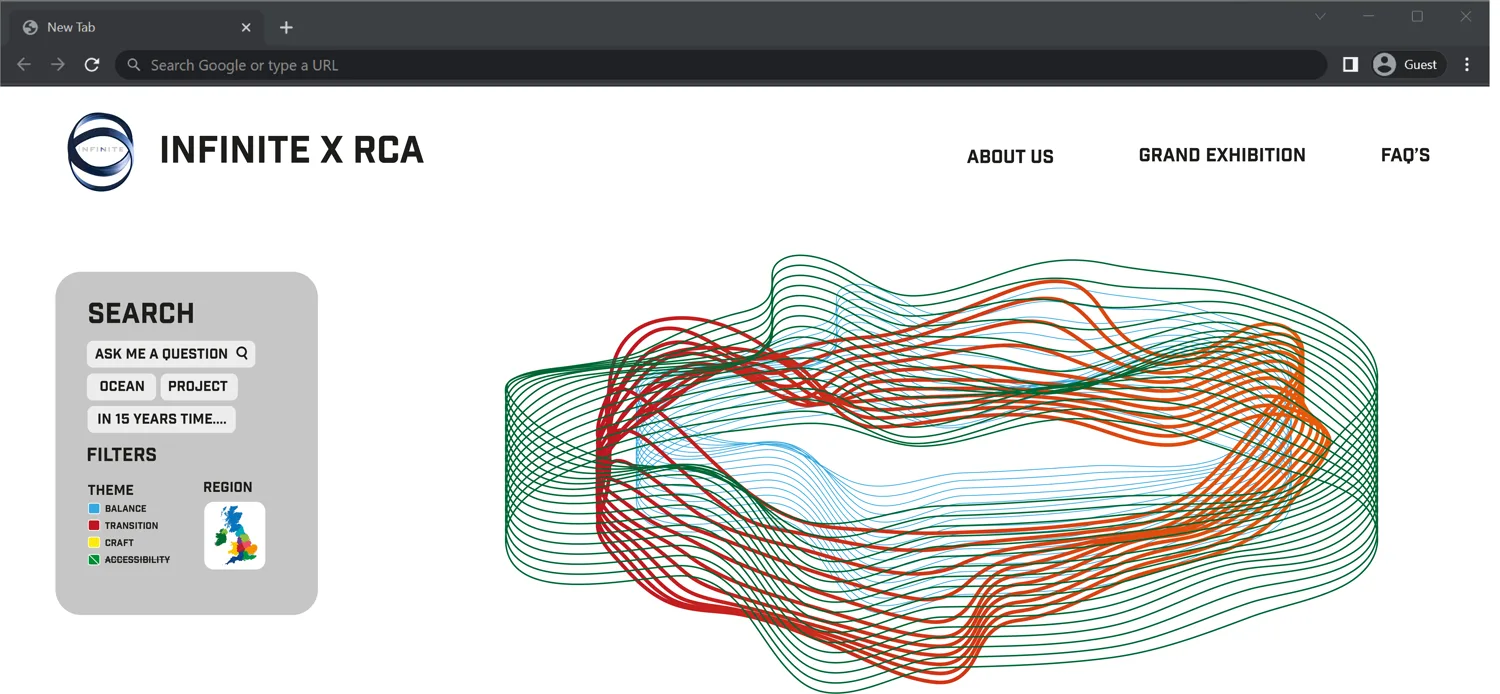
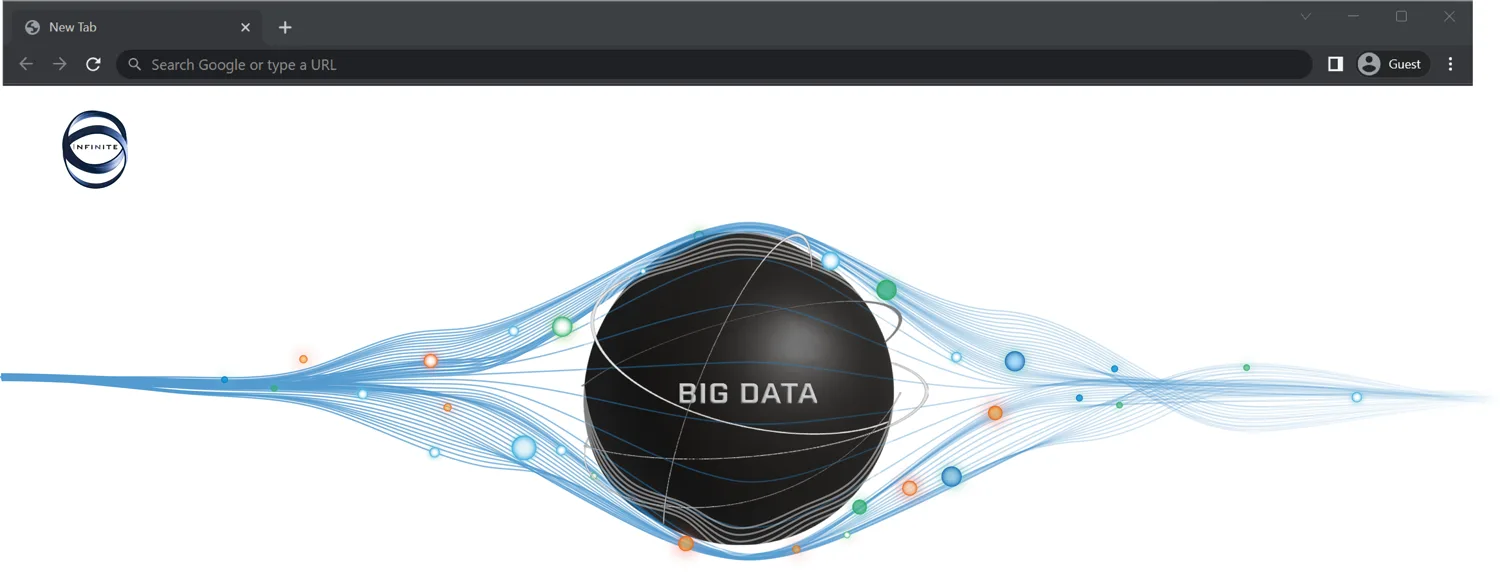
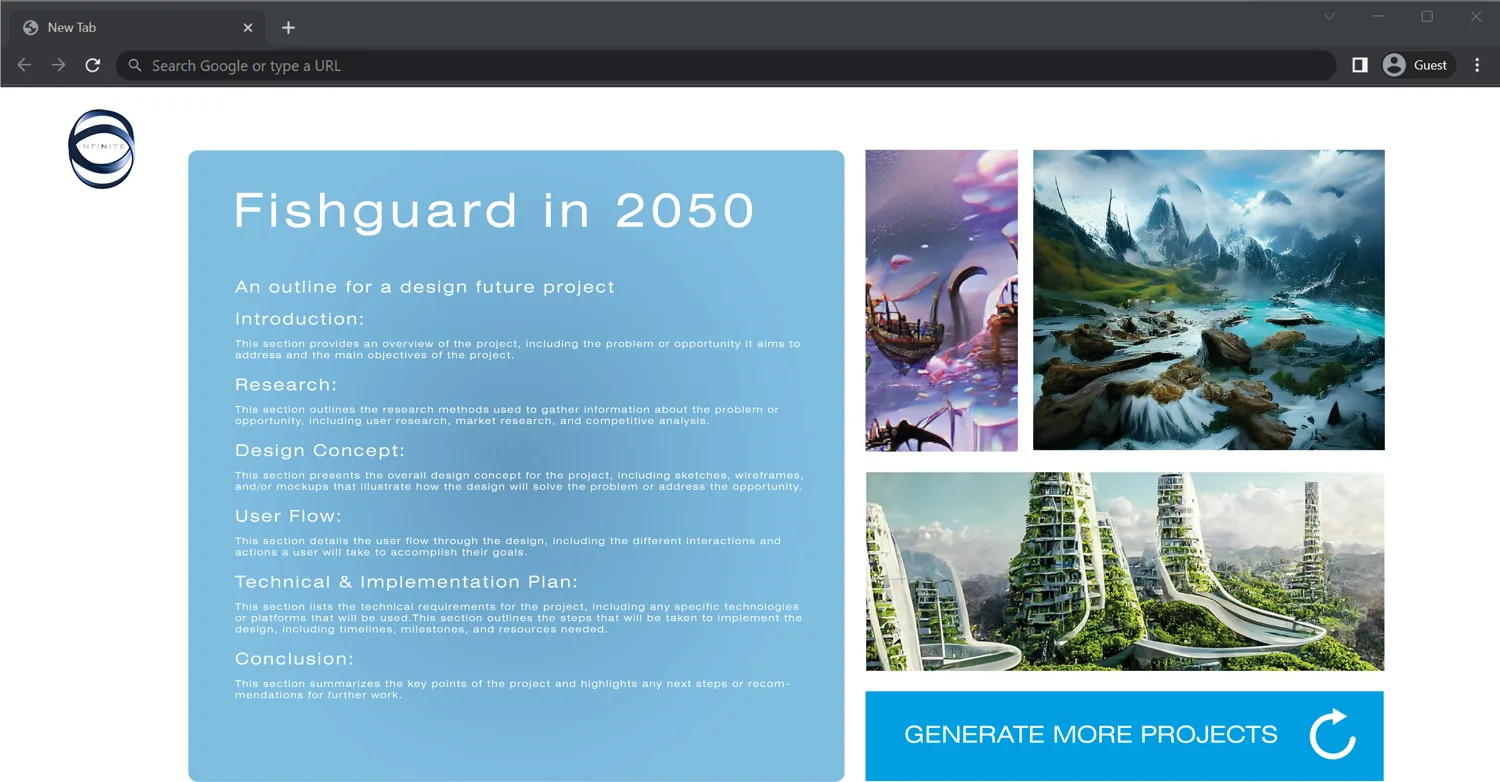
The interface was right. The engine did not exist.
The concept quietly assumed something no one could deliver in 2023: that every artefact in an archive, documents, photographs, video, handwriting, sketches, could be read, understood and described well enough to be searched by meaning rather than by filename.
- Every image and video frame described in language, not tagged by hand
- Every document distilled to what it is actually about
- Connections found across decades that nobody had thought to record
- All of it cheap enough for a community group with no budget
- Manual tagging, which no volunteer archive ever finishes
- Keyword search, which only finds what you already knew to call it
- Cloud vision APIs priced per image, which rules out an archive of thousands
- And an unavoidable condition: community memory cannot be uploaded to someone else's server
So it was filed as a good idea that arrived early. Which is a perfectly respectable outcome for a student project, and would have been the end of it.
Point it at your own mess first.
By 2026 local models changed the arithmetic completely. Vision models that read images and watch video, text models that distil documents, all running on a laptop, all free at the point of use, nothing leaving the machine. Every constraint that killed the 2023 version had dissolved.
The right way to test that is not to pitch it back to a community group. It is to run it on an archive I already own and already care about, eight years of my own work, scattered across drives, folders and clouds. A body of work I could not see, let alone use.
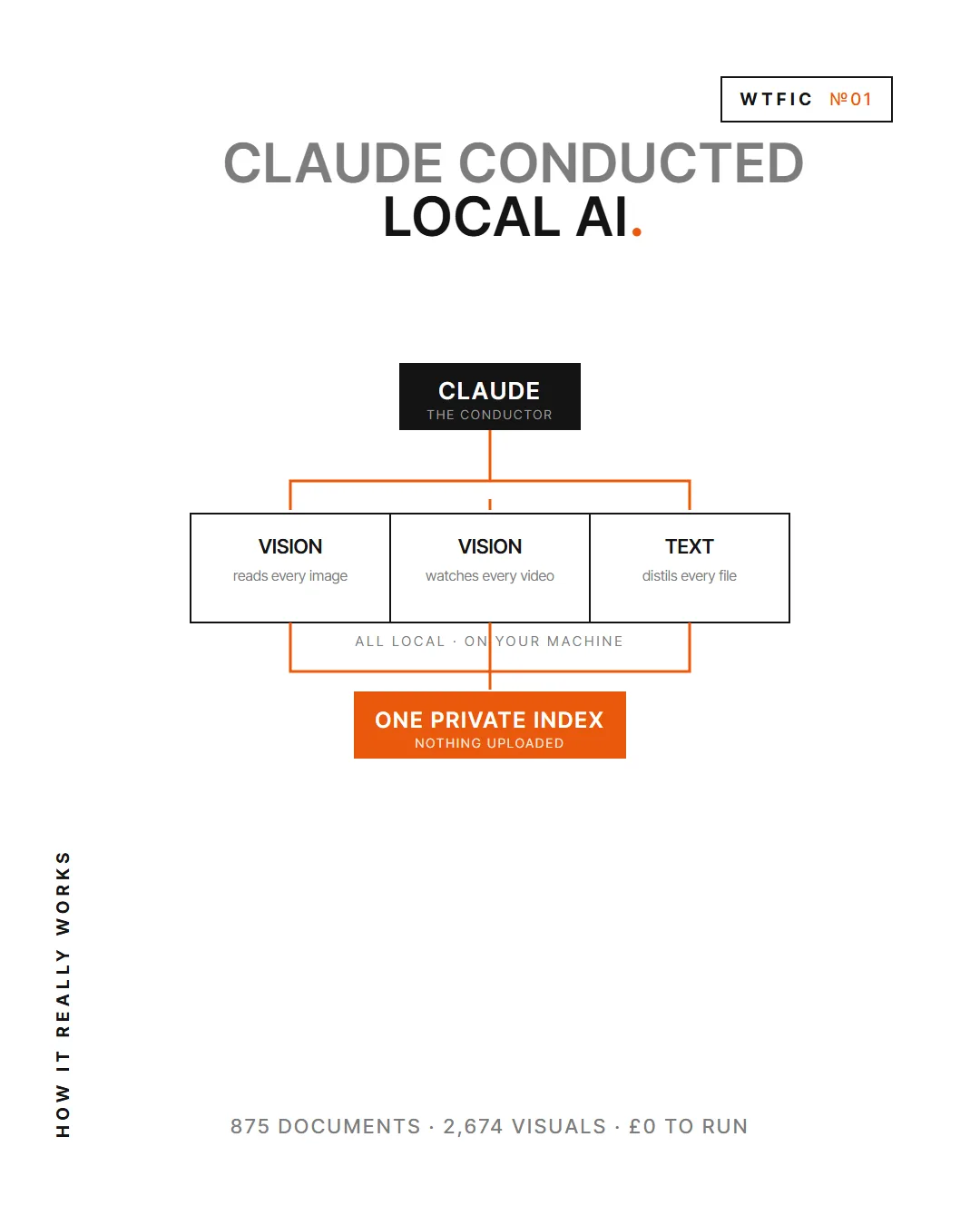
Claude conducts. Local models do the work. Vision reads every image and watches every video, text distils every file, and one private index comes out the other side.
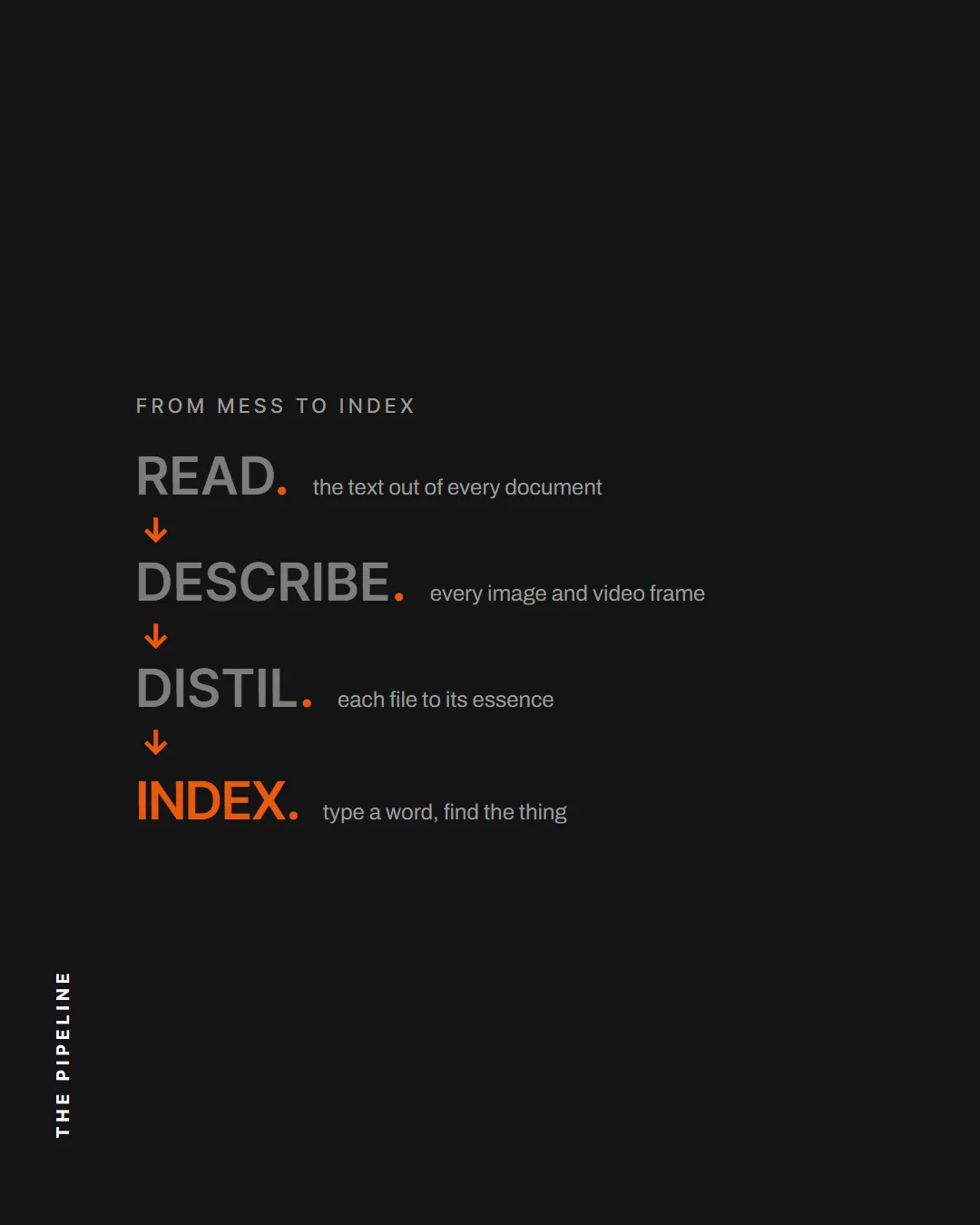
- Read, pull the text out of every document
- Describe, caption every image and video frame
- Distil, reduce each file to its essence
- Index, type a word, find the thing
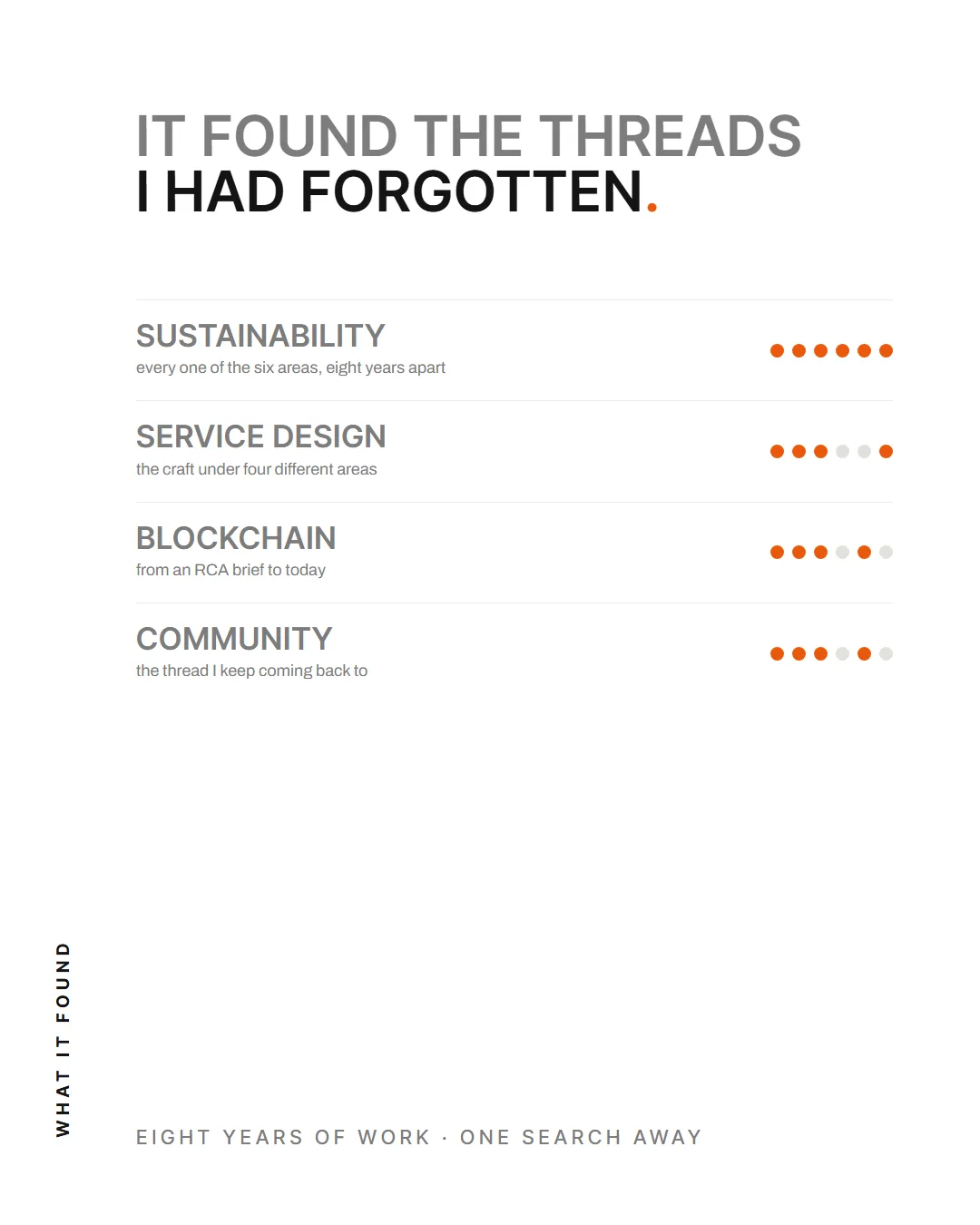
- Sustainability, present in all six areas of work, eight years apart
- Service design, the craft underneath four areas that looked unrelated
- Blockchain, running from an RCA brief straight through to today
- Community, the thread I keep coming back to without noticing
That last column is the actual output. Not a search box, a set of continuities I had lived through and could not see. The archive stopped being storage and became a map.
Who the f*ck is Claude.
The build became the first issue of a content series under that name, a running set of field notes about doing real work with AI, aimed at people who have jobs rather than opinions about model architectures. Issue №01 is this project: a nine-cell carousel and a long-form post about pointing a local AI at everything you have ever made.
Publishing it is not incidental. Writing the thing up forced the architecture to be explainable to someone with no interest in the internals, which is the same discipline that decides whether the product is any good.
The tapestry dream, with a model behind it.
Running it on my own archive proved the pipeline. The interesting version is the one the 2023 project was always about: an archive that belongs to a group of people rather than one person.
Now imagine this for a whole organisation. A company's entire body of work, private, searchable, and never walking out the door when someone leaves.
There is a gap worth naming here. AI memory today is a hidden blob, or a vector store nobody can actually look at. The 2023 tapestry solved the other half of that problem, turning an archive into a navigable, layered surface a non-expert can move through. Nobody has fused the two. That intersection is what I am calling Legible Memory, and it is the most genuinely unbuilt thing I have found.
- It is demand-neutral, you learn an enormous amount designing one screen of your own memory, with no customer required
- The retrieval half is now commodity; the legibility half is a design problem, which is my half
- It has a natural first market: any organisation whose knowledge leaves when people do
- Building a beautiful interface onto an archive nobody needs to search is the obvious failure mode
- My own archive is a friendly test case, I wrote all of it, so I already half-know what is in there
- The community version has a funding problem the personal version does not
Pitched 2023. Buildable now. Built once, for one person, as proof. The organisational version is a direction I am actively working on rather than something I have shipped, and the thing that makes me confident is not the technology, it is that I designed the interface for it three years before the engine turned up.