Make a blockchain platform feel like a bank.
Vault tokenises real-world assets, property, infrastructure, farmland, private debt and equity, so ordinary investors can buy fractional stakes in Latin American private markets that were previously institution-only. My job was to make something genuinely complicated feel trustworthy enough to put money into.
Two sides locked out of each other.
Investors are drawn to Latin America's growth, but access is genuinely hard: currency volatility, high transaction fees, and layers of legal and regulatory complexity. Meanwhile local entrepreneurs and SMEs cannot secure reliable funding, because from the outside they read as risk rather than opportunity.
That disconnect leaves capital stranded on both sides, investors locked out of growth, businesses unable to reach the money that would fund it. The platform's whole reason to exist is closing that gap; my job was to make the gap, and the bridge across it, legible in about thirty seconds.
Never lead with the blockchain.
The instinct in 2023 was to sell the technology. That was exactly wrong for this audience: the people with capital to deploy do not want a lecture on distributed ledgers, they want to know their money is safe, the asset is real, and they can get out again.
- Secure, smart-contract governance and compliance checks built in
- Accessible, fractional ownership, so the entry ticket is small
- Liquid, a marketplace to buy, sell and trade rather than being locked in
- The chain itself, infrastructure, not headline
- Token mechanics, explained only once someone had a reason to care
- Crypto aesthetics entirely, no neon, no gradients, no moon
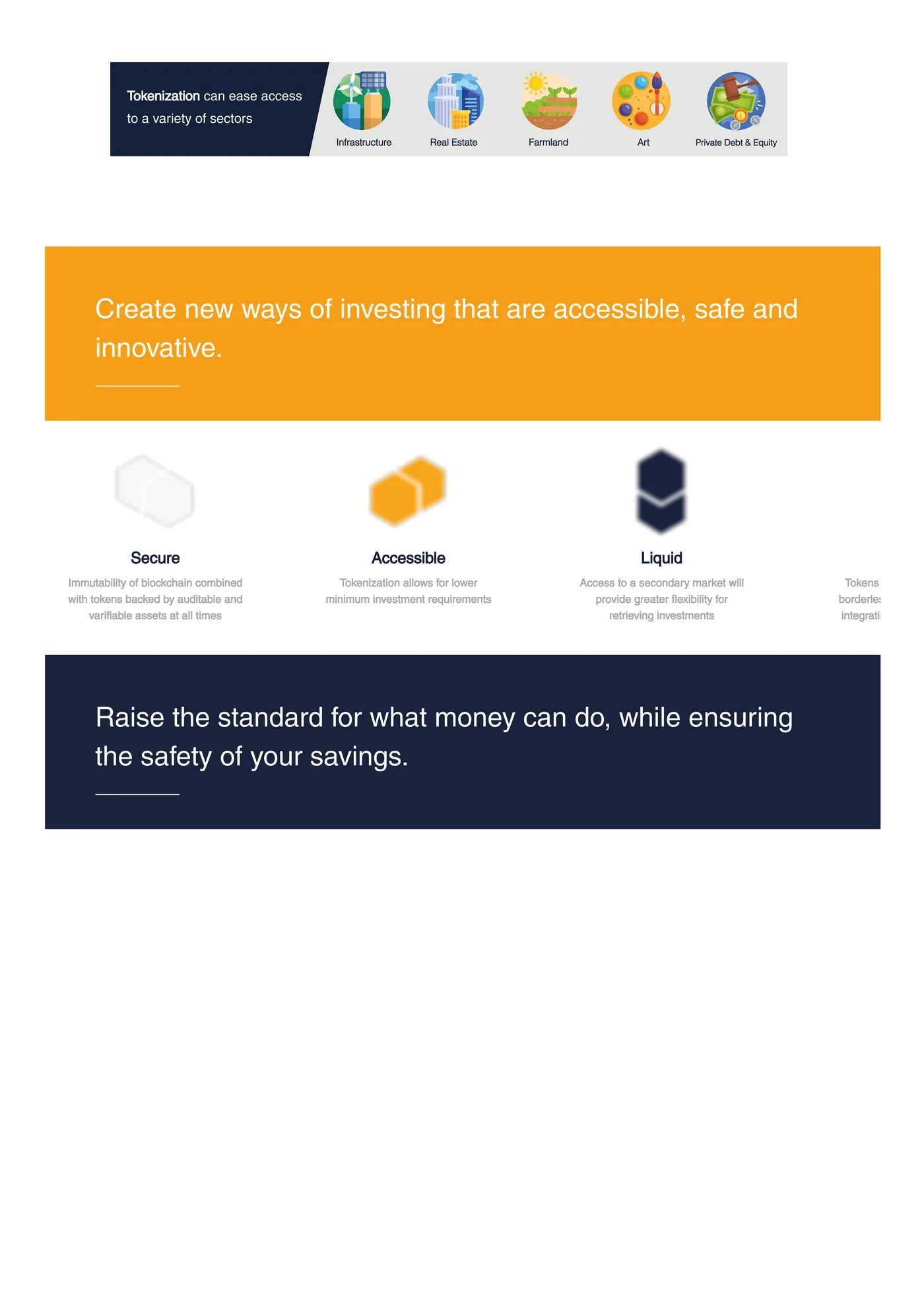
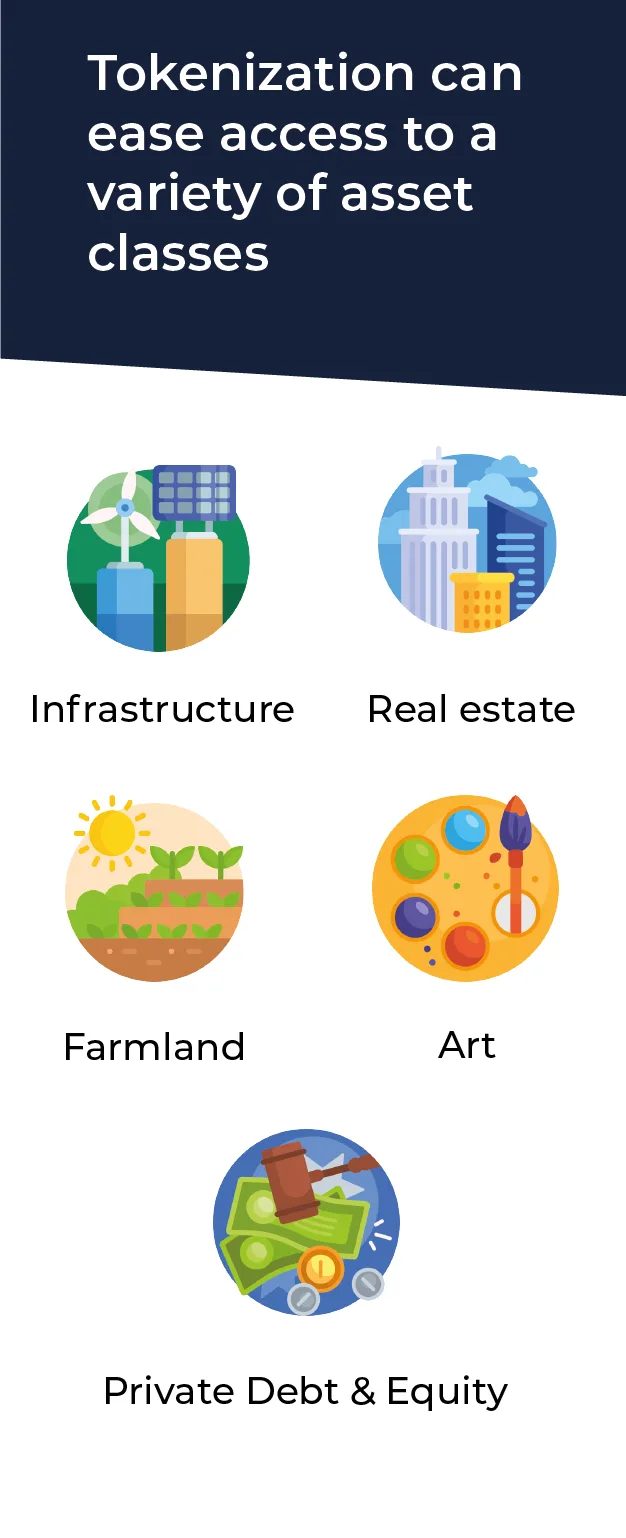
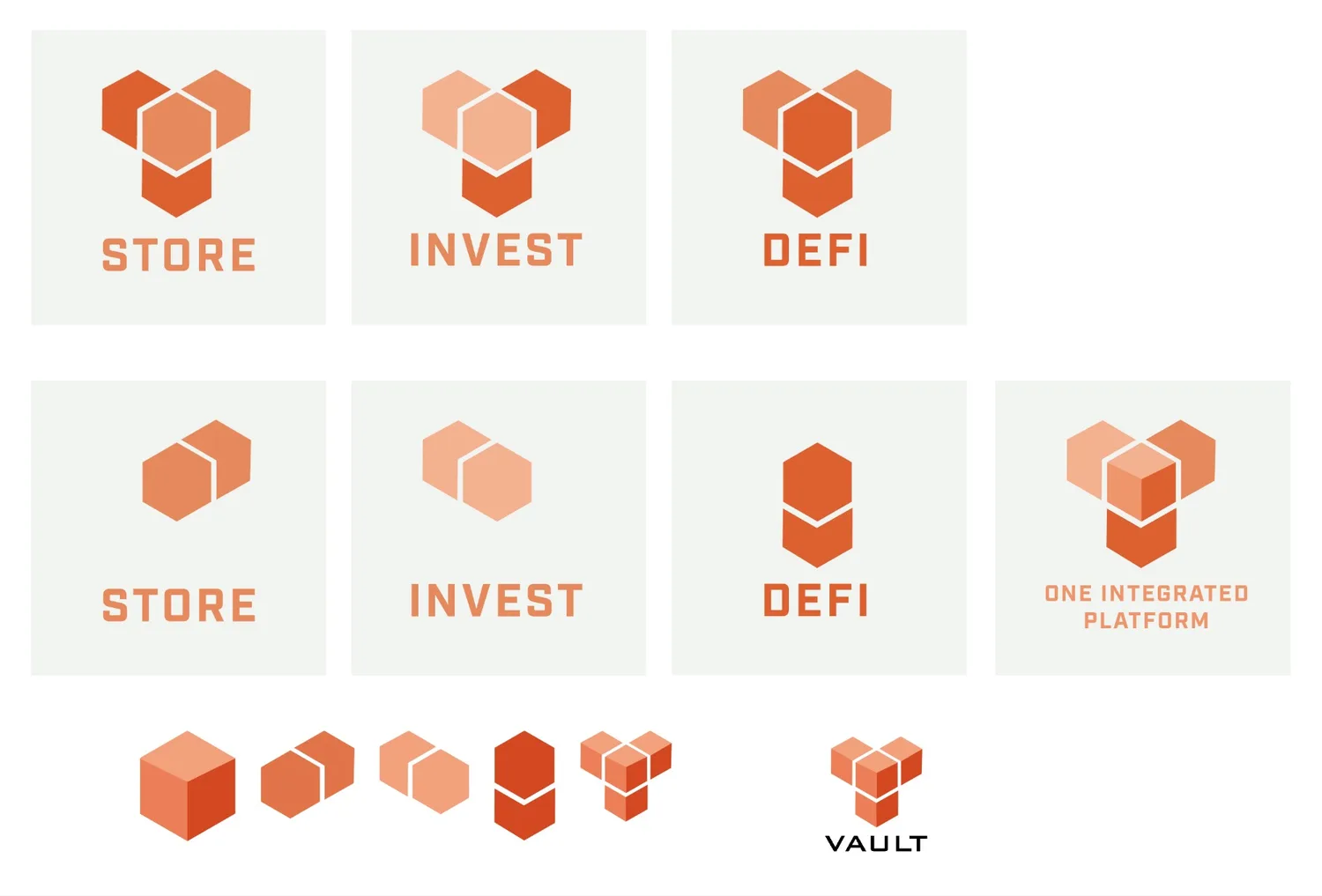
That second graphic is the one that did the most work in the room. "Blockchain" is abstract; farmland, real estate, infrastructure, art are not. Naming the asset classes turned the pitch from a technology story into a property story.
A portfolio you can read at a glance.
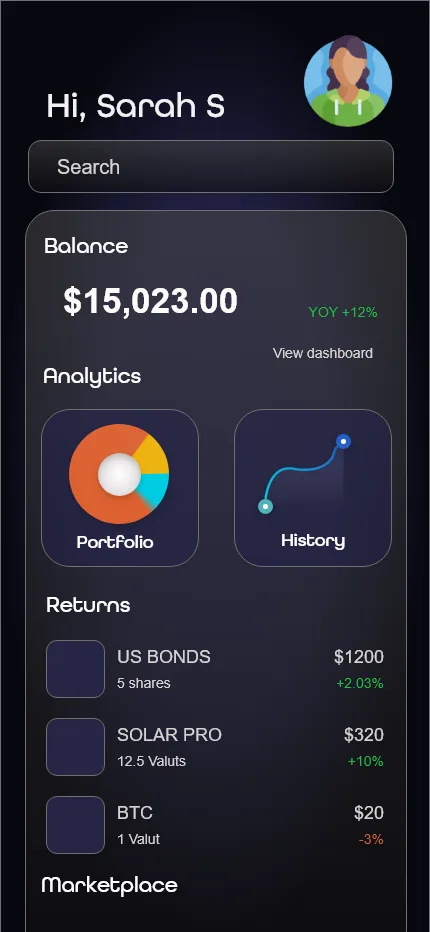
The app had to do something unusual: hold a decentralised wallet and a curated marketplace in one interface, without either feeling like a crypto exchange. So the dashboard opens on your balance and your actual holdings, bonds, a solar project, a token, named as things, not tickers.
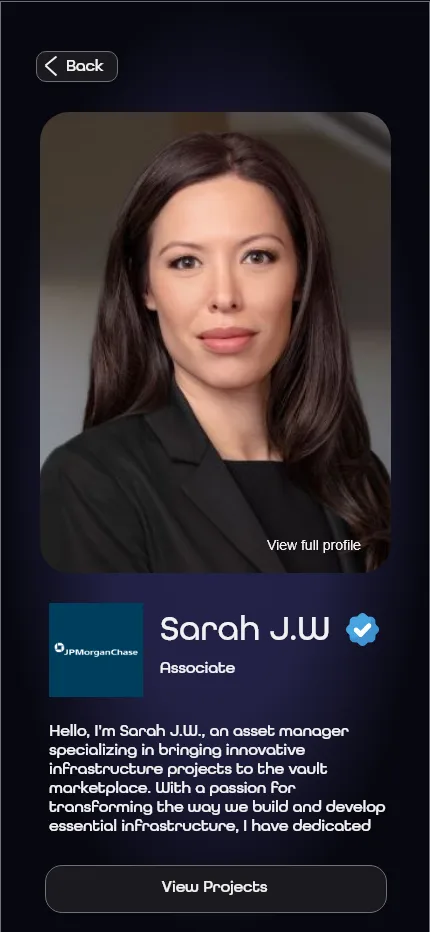
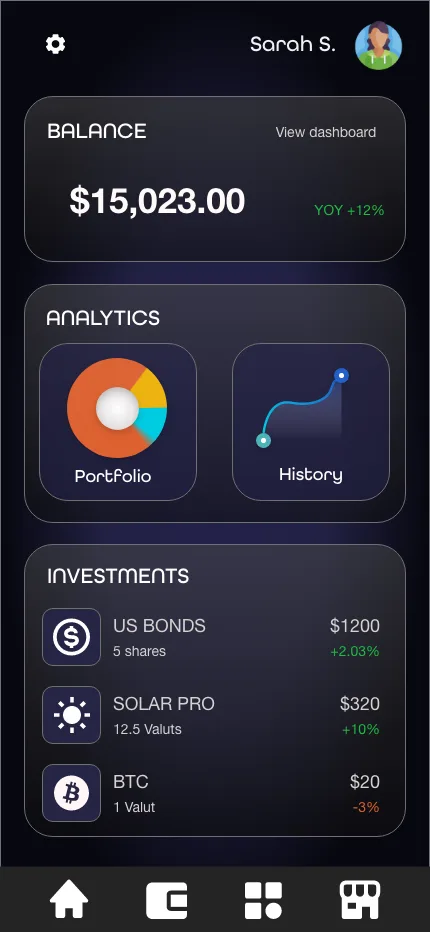
The asset-manager profile is the screen I would defend hardest. In a market where trust is the binding constraint, putting a named, verified, photographed human behind each opportunity does more for confidence than any amount of cryptographic assurance. You are not investing in a protocol, you are backing a person with a track record.
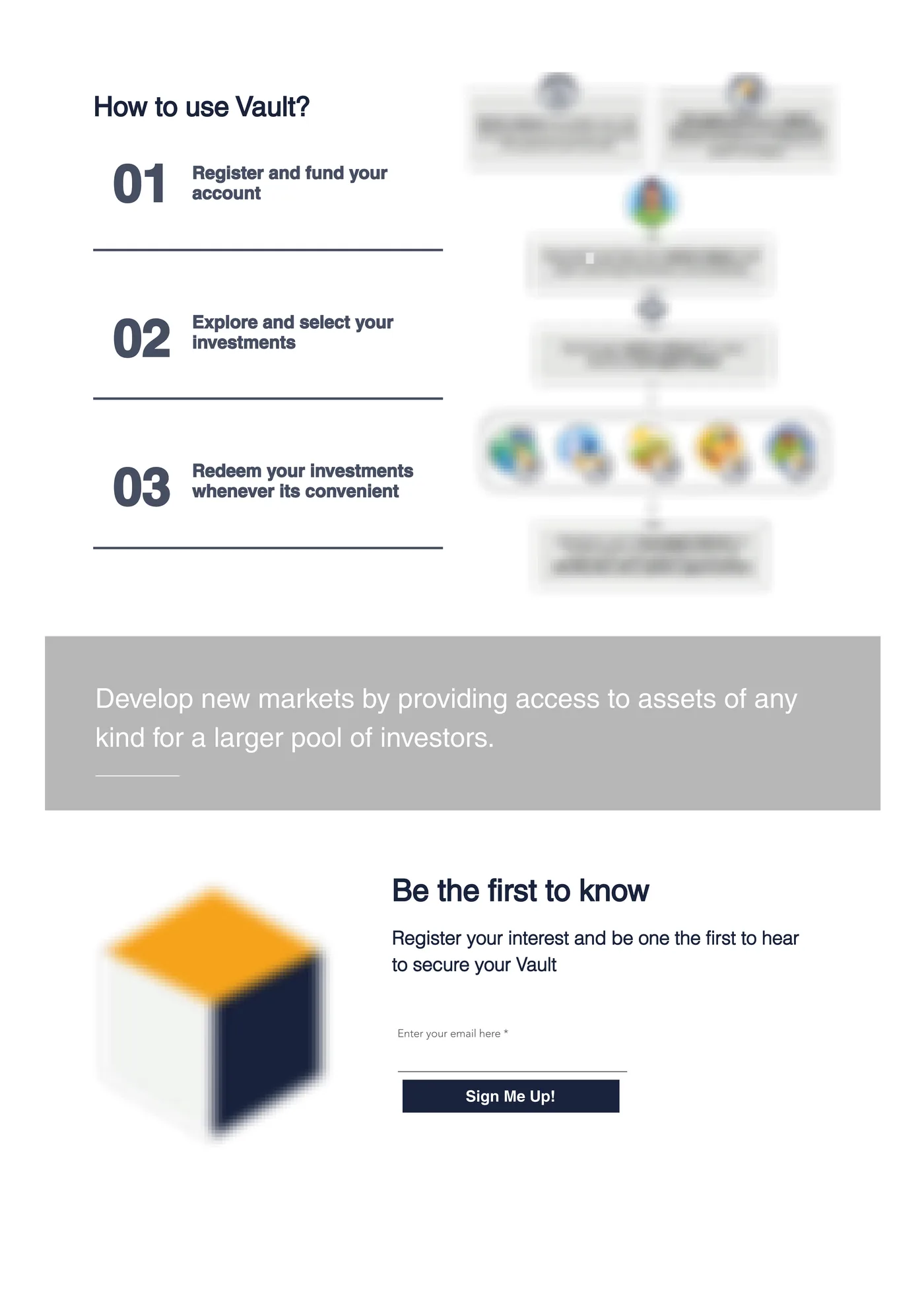
Three steps, two token types, one diagram.
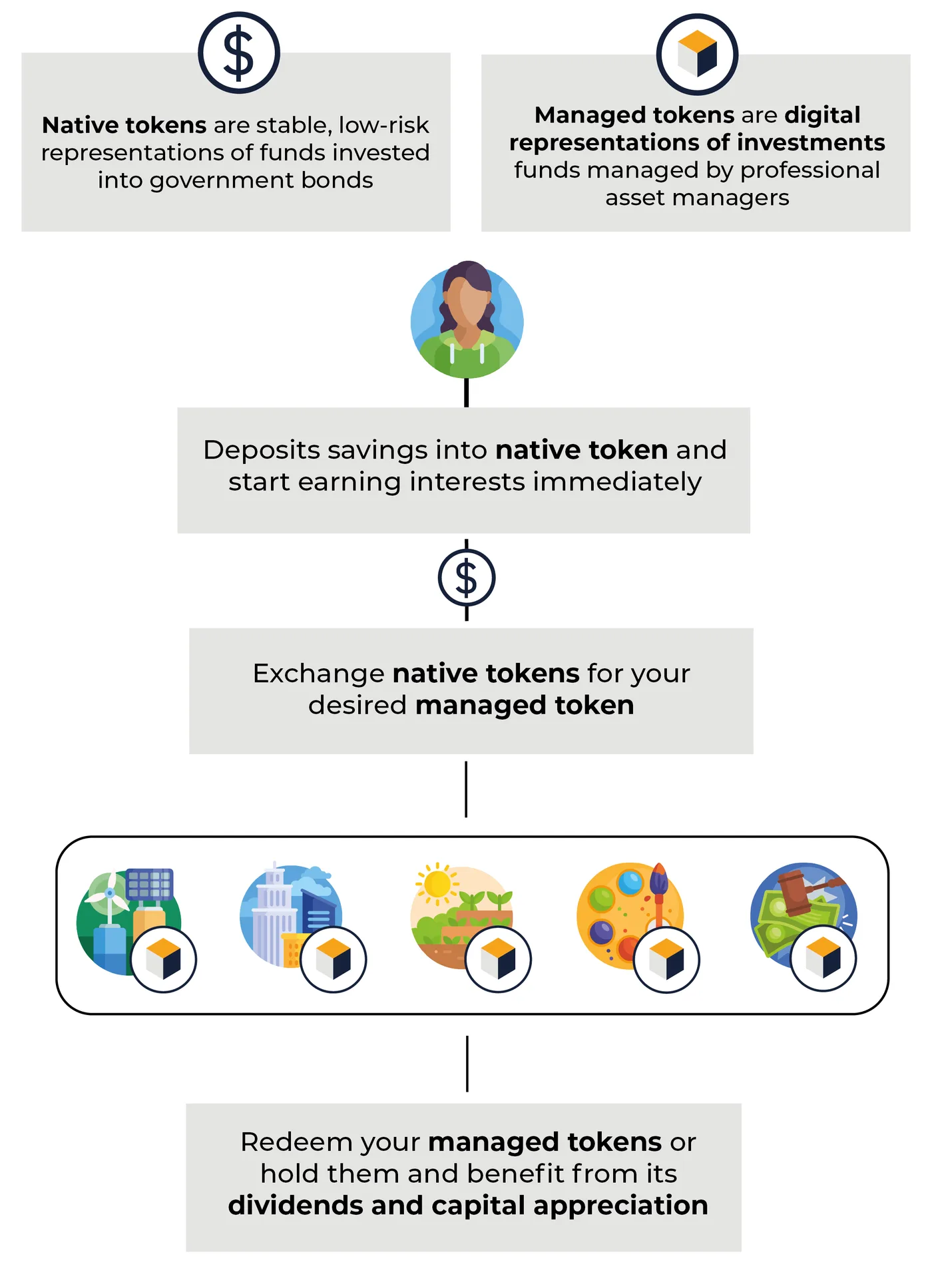
The hardest communication problem was the token architecture: native tokens holding stable value against government bonds, managed tokens representing professionally-run investments. Get that wrong and nobody understands what they are buying.
Everything shipped in English and Spanish. That is not a translation footnote, it is the product working in the market it serves, and it changed the layouts, because the Spanish copy runs roughly 20% longer and the diagrams had to survive it.
Sixty-six seconds that won it.
The whole argument, compressed into a minute of animation for the investor pitch. Everything above, the problem, the asset classes, the three pillars, the app, had to survive being said once, quickly, to people who would not ask a follow-up.
The thesis was early, not wrong.
In 2023, "tokenise real-world assets so ordinary people can own a slice of infrastructure" was a hard sell, it sat too close to a crypto market most serious investors had written off. Revisiting it in 2026, the direction reads very differently.
Tokenised private companies make the headlines. The bigger story is private infrastructure and all real assets: property, energy, farmland, private credit, art. Vault was about the whole real-asset world, before it was obvious.
I am not claiming a prediction. Plenty of people saw the same thing, and being early is only worth something if you are still standing when the market arrives, Vault was a student-adjacent venture that did not raise. But the reasoning holds up, which is the part I care about: lead with the asset, not the technology, and put a named human in front of every opportunity. Both of those are now standard practice in the category.
Demoting the technology and leading with the tangible benefit became a rule I have reached for on every technical product since, including RefiRegen: the chain, the rails and the model are never the story. What they buy the customer is.