00 / Duracell Energy · Concept · 2026
An immersive 3D
web experience.
Six days, one person,
sixteen dollars of AI.
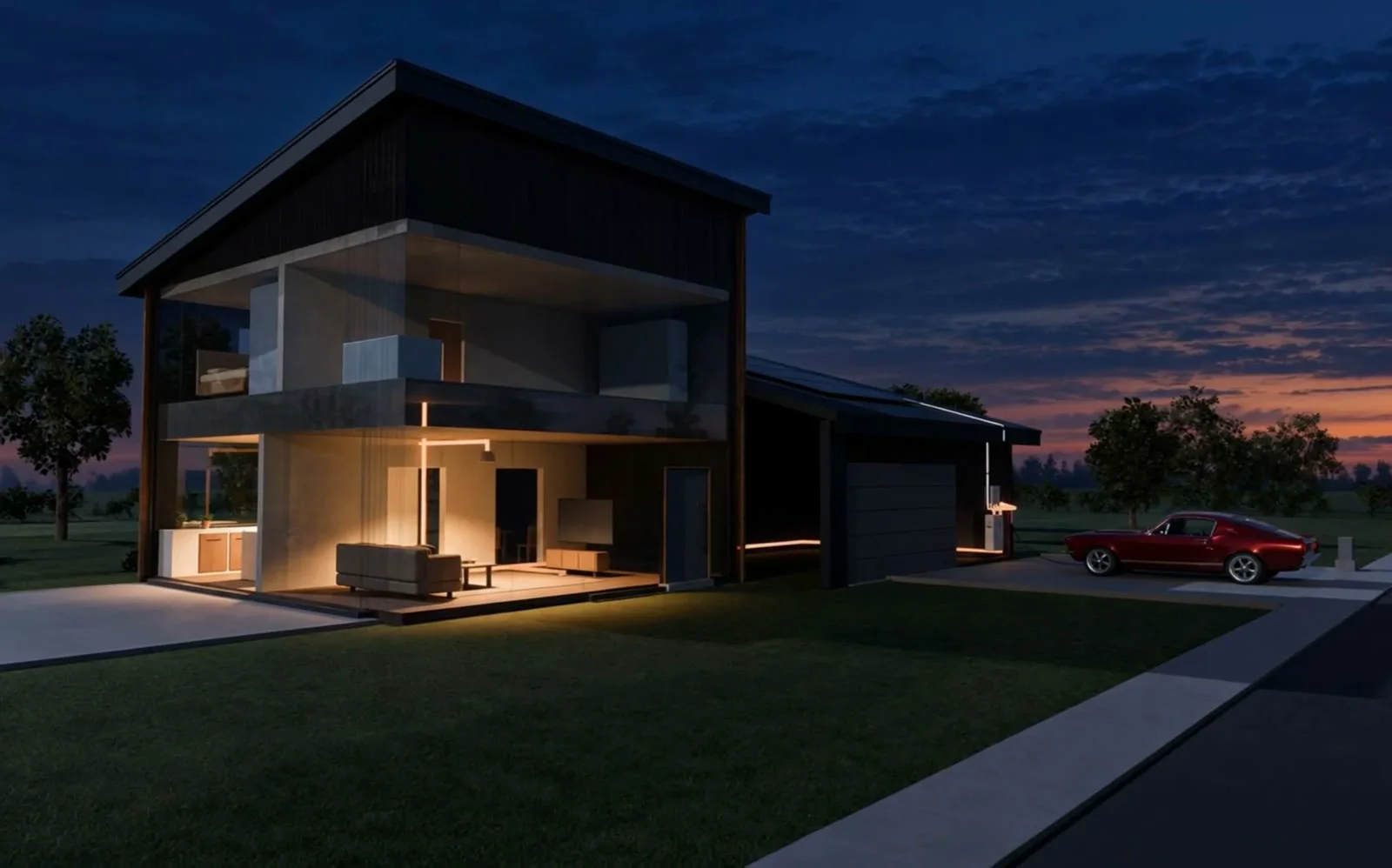
A house modelled in Blender, finished frame by frame by an image model, moved by a video model, and played back in the browser against scroll position. Six hundred and forty-nine frames, and the viewer decides how fast the day runs. Five years ago I made the same argument for the same client as a rendered film on a fixed timeline, and that took a studio, a schedule and a budget. This does things that film could not do at all.
The short version
Twenty-eight seconds, if you have twenty-eight seconds.
A day at two and a half times speed, then the evening peak, the pull-out to the neighbourhood, the bunny, and the button. Cut from the page itself rather than rebuilt for it, which is why the motion is identical.
Everything below is the long version. Open the page itself Live · unlisted · scroll is the clock to run the day at your own pace.
01 / The remake
Scroll is the clock.
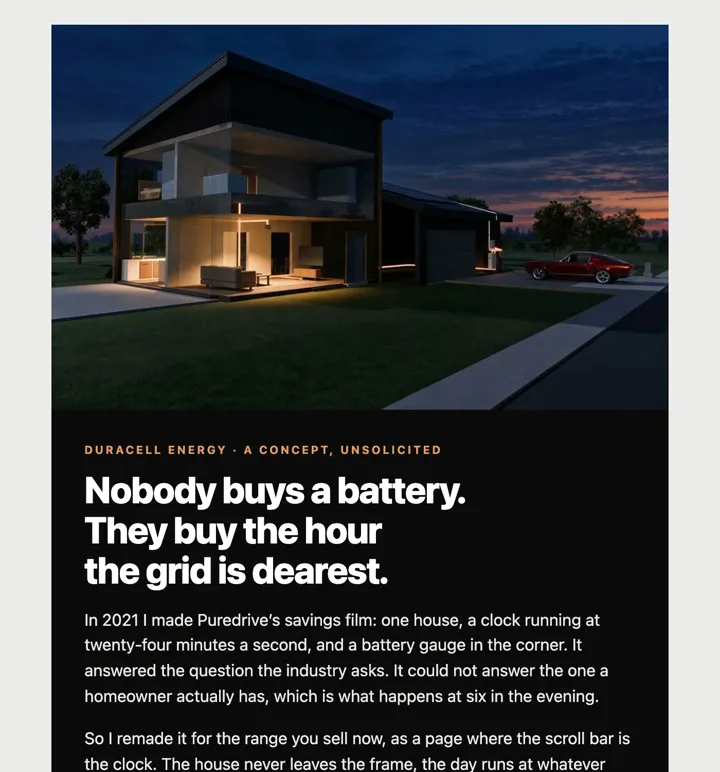
In 2021 I made Puredrive's savings film: one house, a clock running at twenty-four minutes a second, and a battery gauge in the corner. It answered the question the industry asks. It could not answer the one a homeowner actually has, which is what happens at six in the evening.
So the house never leaves the frame. The day changes around it, the numbers change with it, and the viewer decides how fast the day runs. Stop on the hour that matters and the day stops with you, which is the one thing a rendered film cannot do.
Six hundred and forty-nine frames play back against scroll position. Every number on screen, the clock, what the house is running on, the state of charge, is HTML read from that day's data rather than burnt into a frame.
02 / The day
A real day, not an average one.
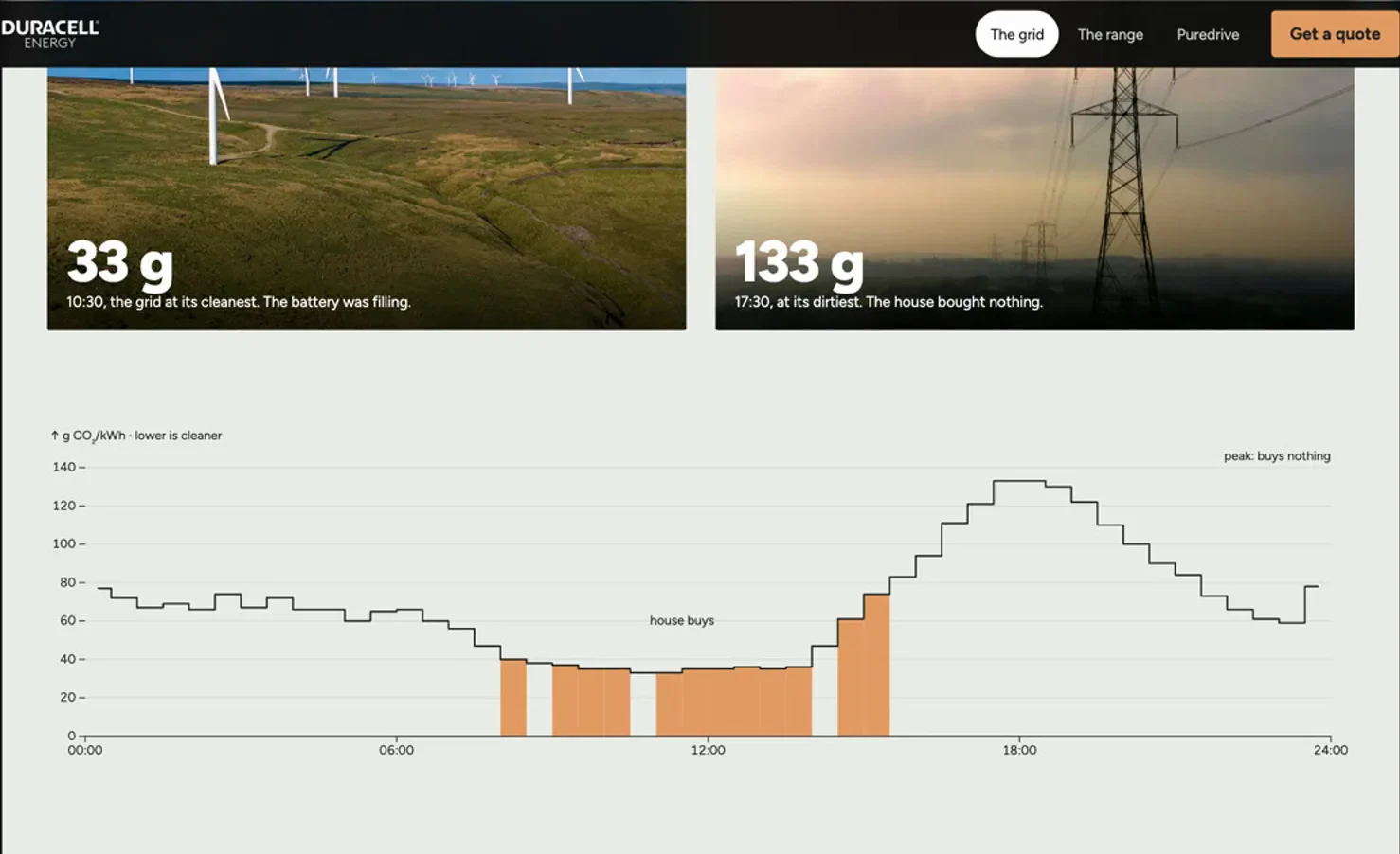
Sunday 6 September 2026, on London's real Octopus Agile prices and the real carbon intensity of the grid that day. Midday was cheap and clean, so the battery took it. At half past five the grid hit its dirtiest half-hour of the day, and the house stopped buying.
03 / The peak
The peak. The house buys nothing.
At 18:05 the house turns to x-ray. The walls go, the copper stays, and you watch stored power run the rooms in use while the grid is at its most expensive and its most polluting. It is the whole argument for a home battery, and it is the part every film skips because it lasts about two hours of a twenty-four hour day.
04 / The flip
One house, then the street, then the grid.
The last thing I wrote about the 2021 job was that it had been my first piece of work on a distributed system, thousands of small nodes each generating and storing locally, worth far more together than apart, and that I had been drawing that diagram years before I could describe it.
Puredrive's own words sit over that shot: their infrastructure point, that Britain's grid was built for a centralised system and not for millions of homes that generate electricity, and their long-term focus on decentralised, resilient energy.
05 / The range
Then he arrives.
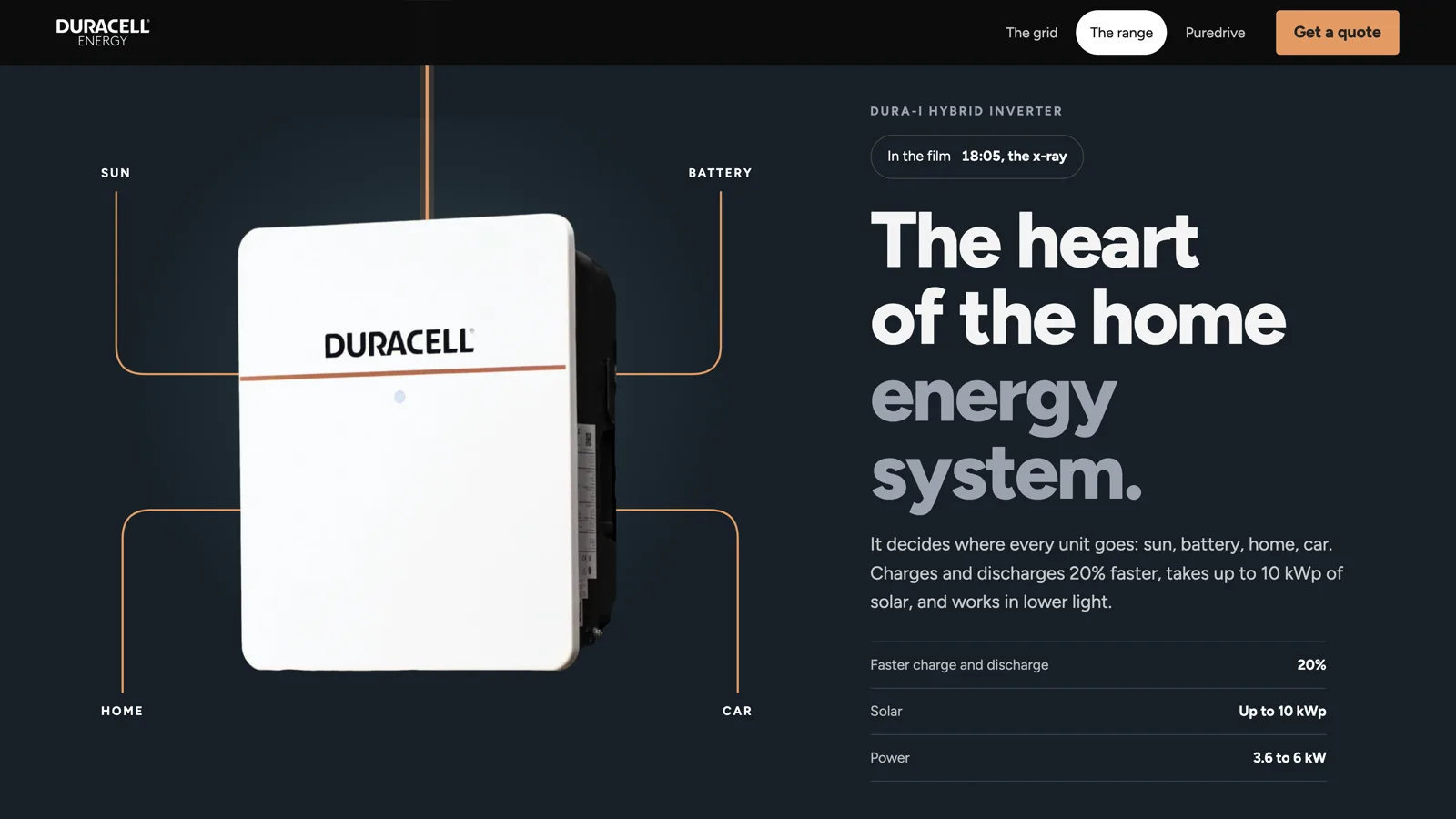
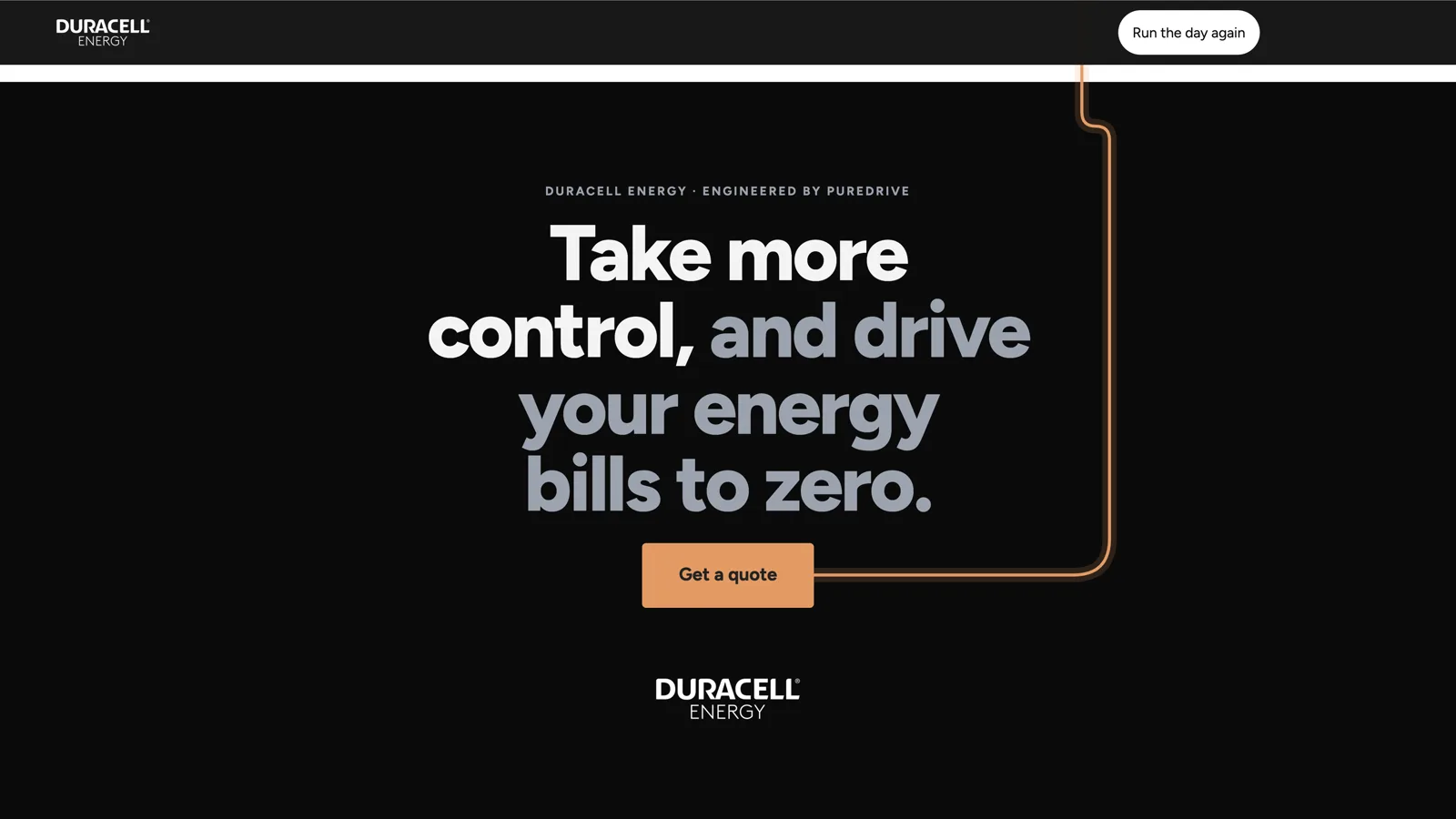
The bunny crosses once, too fast to see properly, and leaves a copper line that threads every product section from there to the Get a quote button: Dura16, Dura5, the Dura-i inverter where the line branches to sun, battery, home and car, the charger, and the app.
Duracell Energy's claims are their own, quoted from their product pages. 16.1 kWh and 8,000 cycles on the Dura16. One hour to fill or empty a Dura5. Sixty per cent to ninety per cent of a bill saved with Tariff Intelligence on a dynamic tariff.
06 / How it was made
A model first. Then the paint. Then the motion.
Nothing here was prompted into existence. The house is a real three-dimensional model, built to spec, and every frame of the film starts as a render of it. That order is the whole method: the render decides what is true, and the image model only decides what it looks like.
Given the same prompt and no control, four other image models produced a different house, a different camera or a different roof. The control is what makes six hundred and forty-nine frames one building.
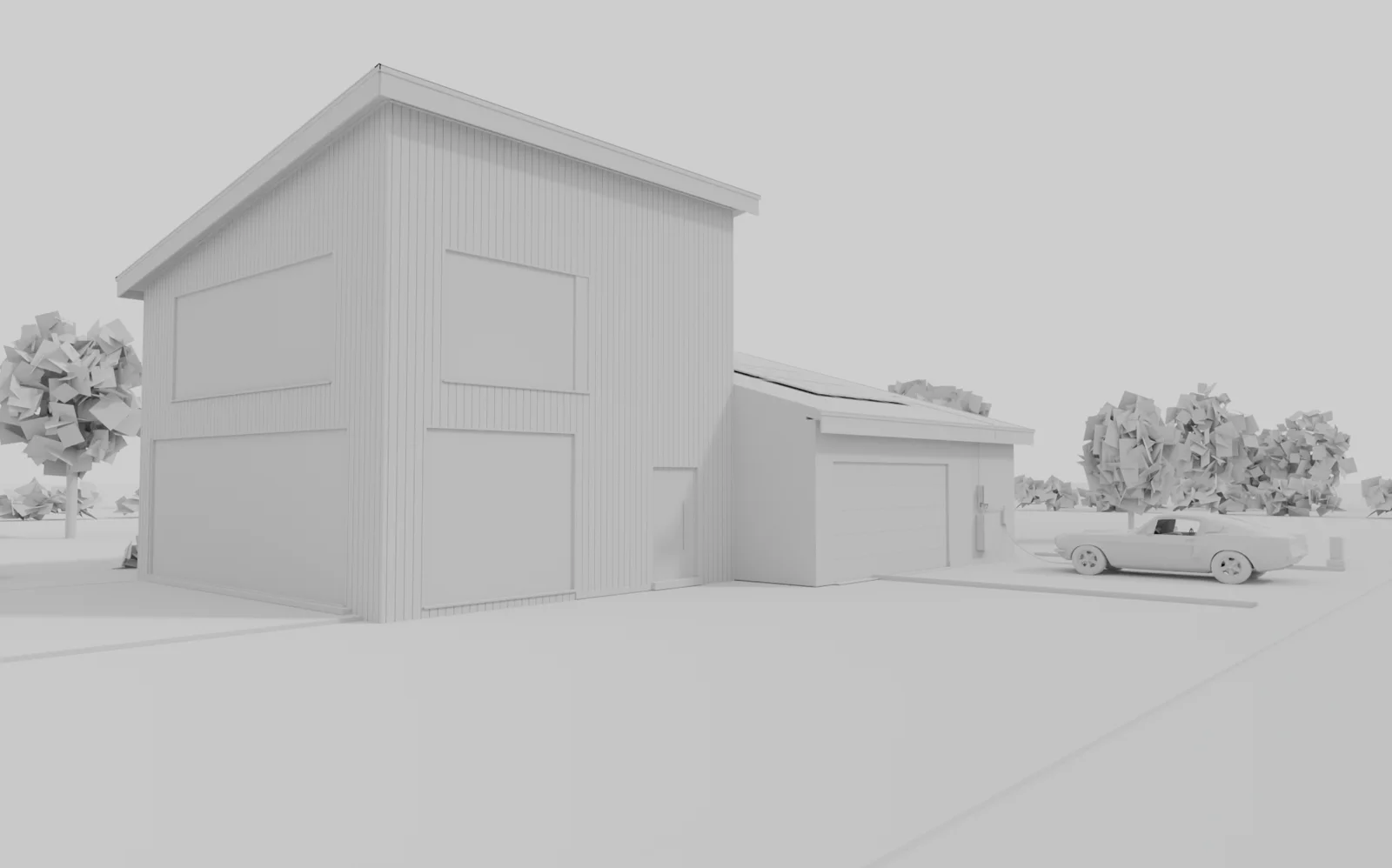
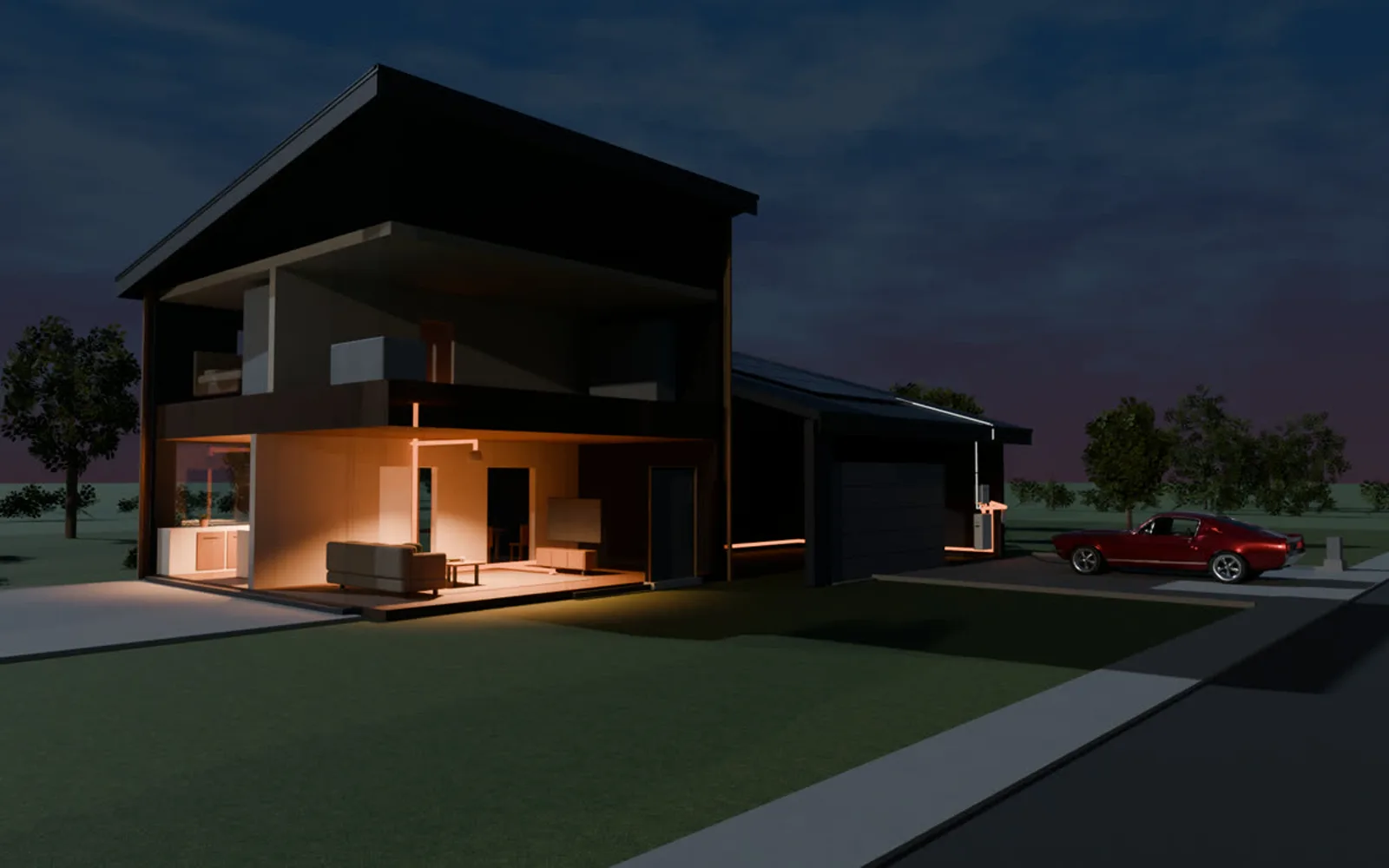
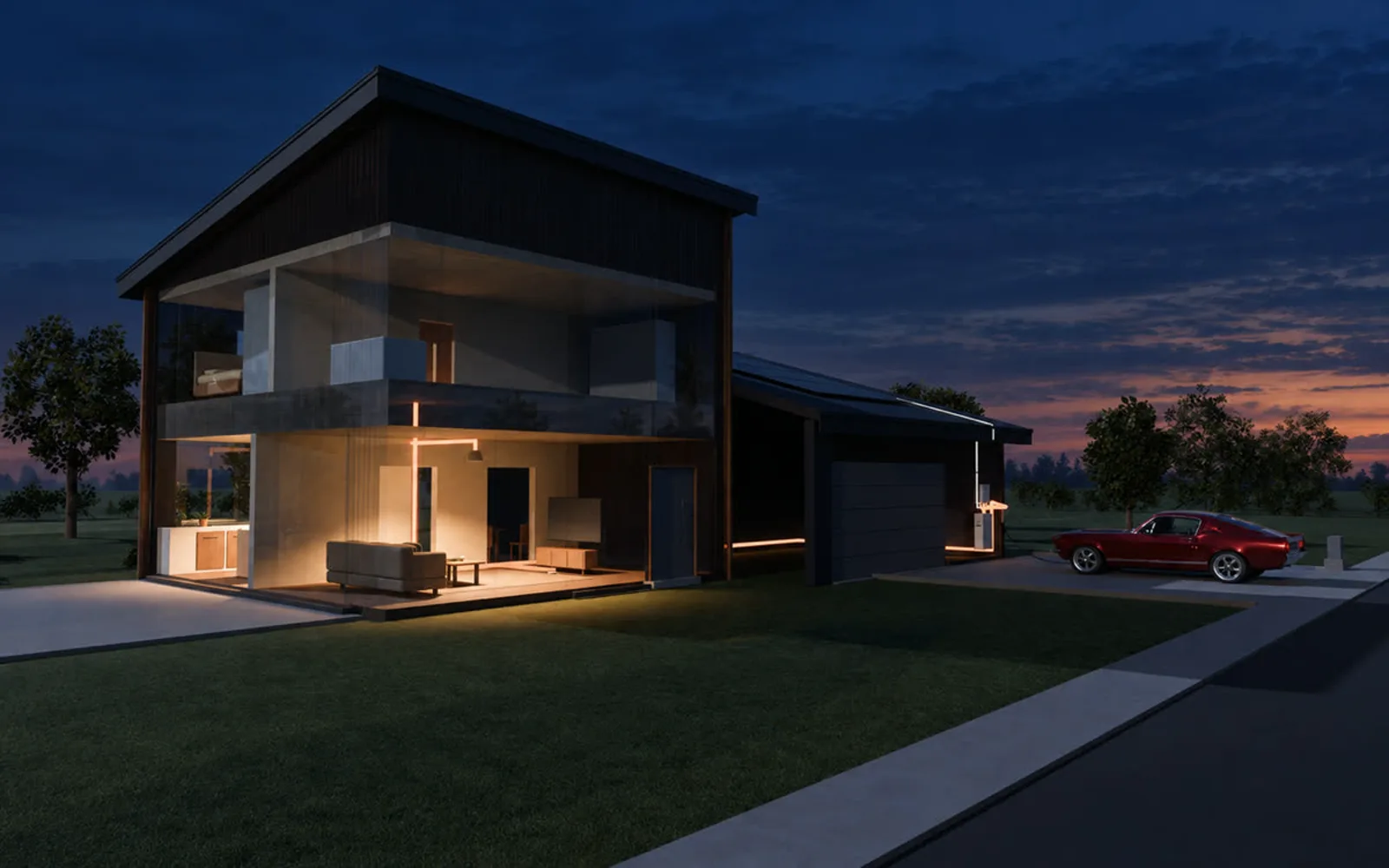
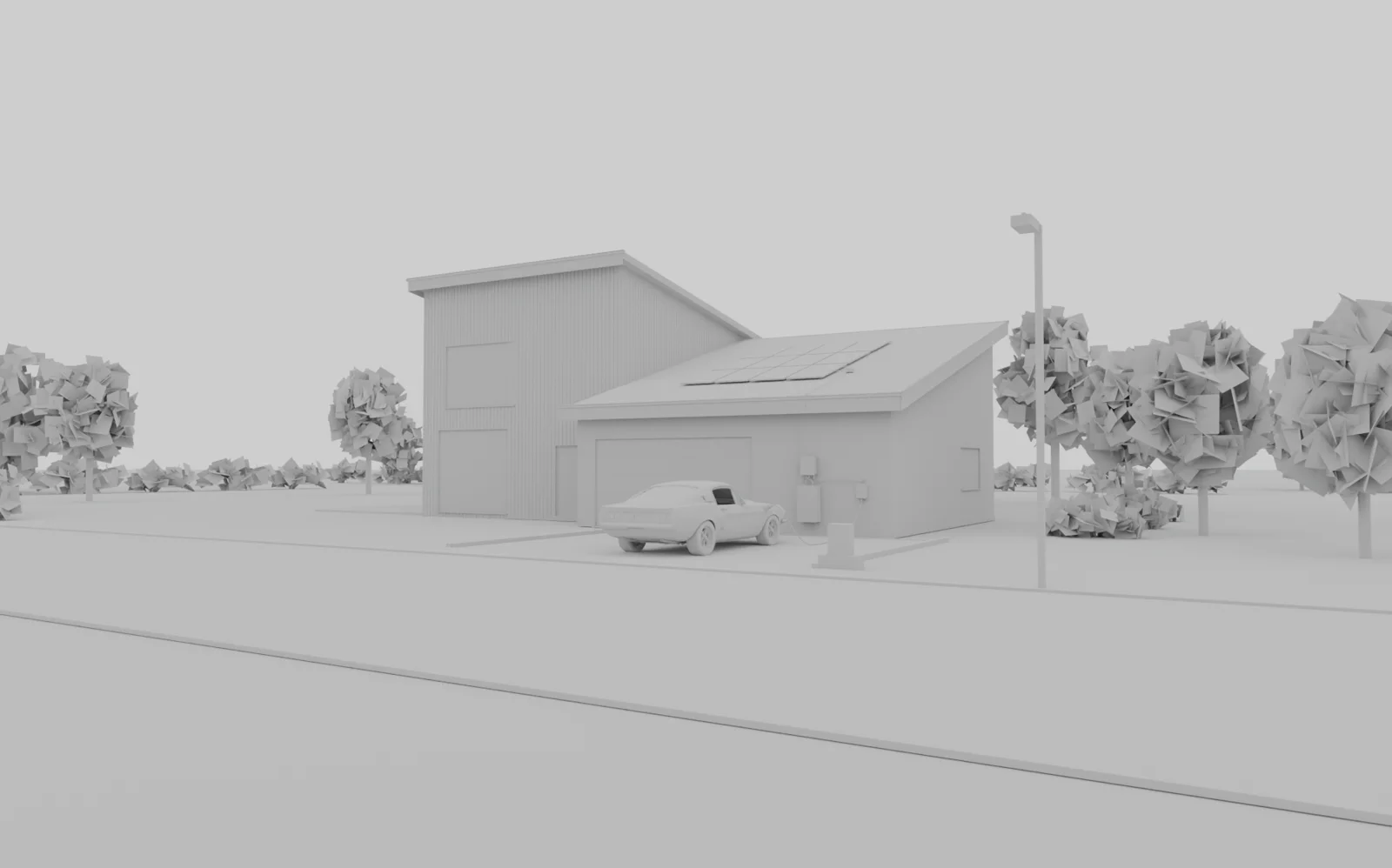
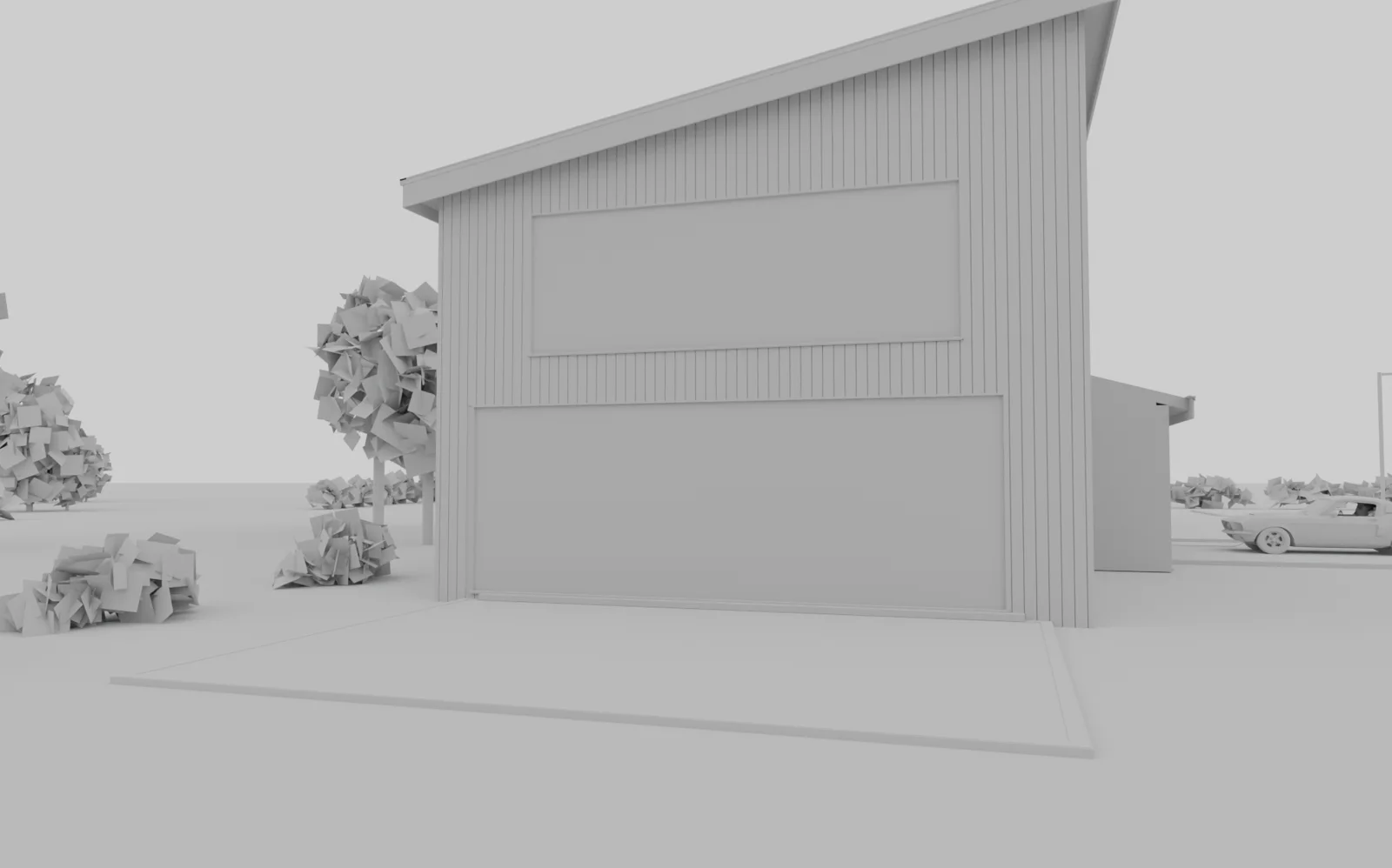

05 Play
The last step is the one that makes it a page rather than a film. Six hundred and forty-nine finished frames are decoded in the browser and played back against scroll position, and the clock, the tariff, the state of charge and what the house is running on are live text over the top, read from that day's data. Nothing is burnt in, so stopping the scroll stops the day.
What did what
| Blender 5.2, Cycles | The model, the camera path, the lighting rig, the copper routes, and a control render behind every frame of the film |
|---|---|
| Codex image_gen | The finish, painted on each control. Five image models were tried on one control and only this one kept the house, the camera and the light |
| Kling v3 Pro | Motion, four seconds at a time between two finished stills. Twenty-seven clips kept |
| Veo | Two tests, not used |
| HTML, CSS, JavaScript | The page itself. The film plays by scroll; every number on screen is text, not a frame |
| Playwright, Chrome | The capture rig. Scroll is commanded per output frame at a fixed eased speed, so every take runs the film identically |
| ffmpeg | Lossless masters first, then the copies that play |
| Octopus Agile, National Grid ESO | The day itself: London prices and grid carbon for Sunday 6 September 2026 |
07 / The visual language
The brand decided the look, not the other way round.
The palette is Duracell Energy's own, read out of the CSS on their live site rather than invented for this. Copper is the single accent and it is used as a fill, never as small text on white, where it falls to 2.3 to 1. Figtree stands in for Brown, which is theirs to licence and not mine to ship.
Two values are derived rather than found: a studio black and a control slate, for the dark sections their live site has no equivalent of. Everything else on every screen of this project, including the four pieces below, comes out of this row.
Which is why it travels
One language, one set of masters, and four formats cut from the page rather than rebuilt for it.
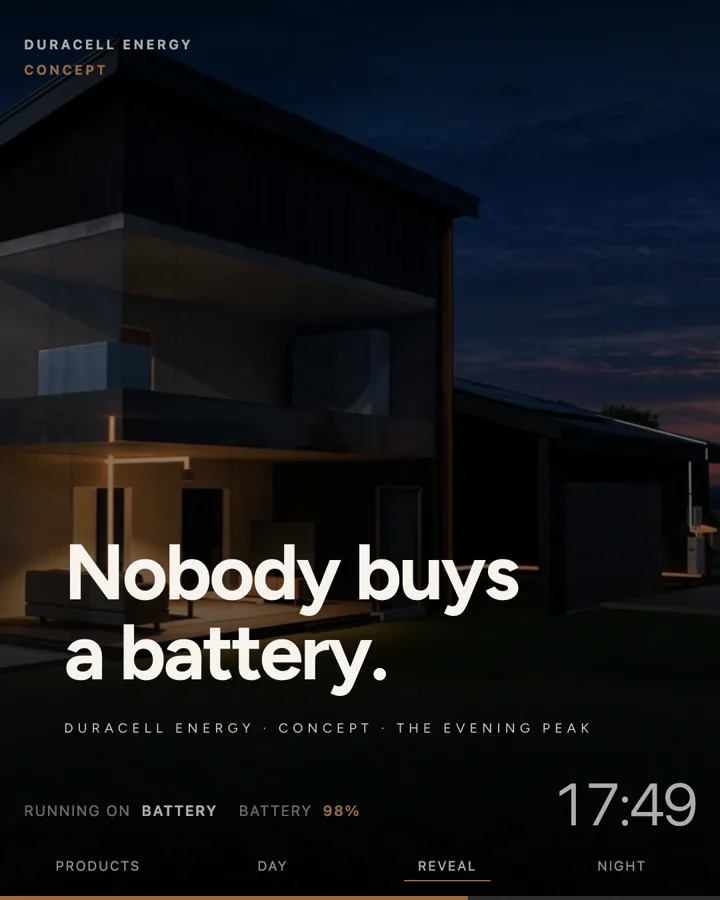
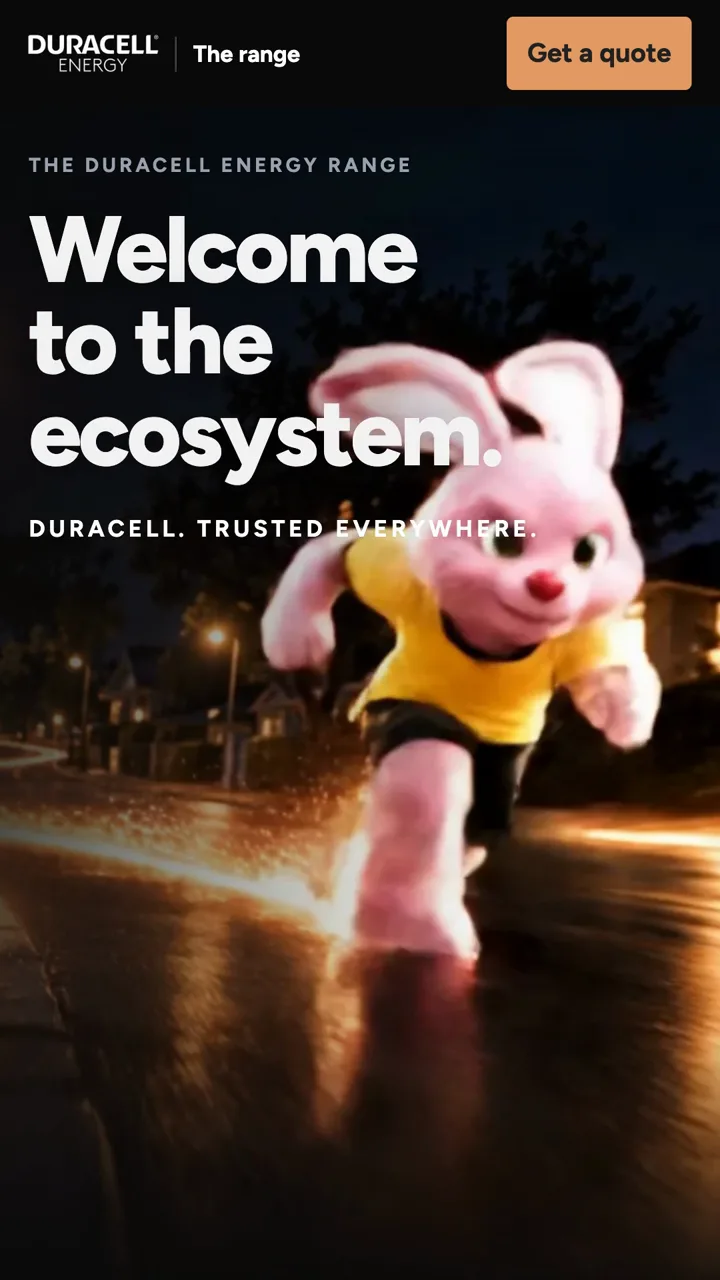
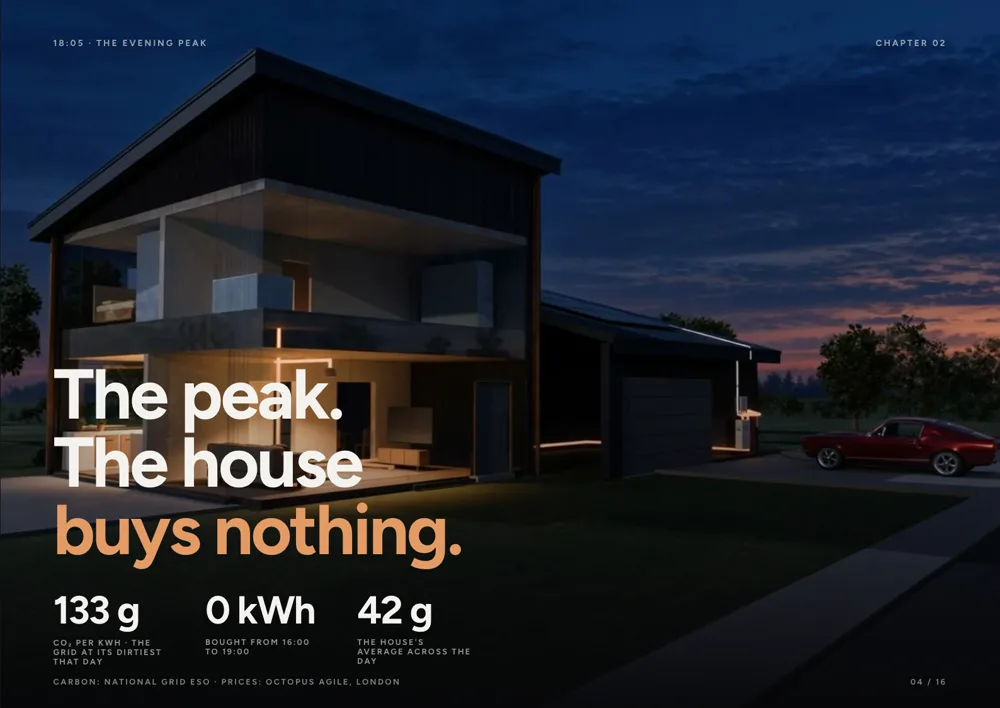
08 / Before and after
The film I made in 2021, and this one, on one clock.
The new film was driven by the old film's clock, frame for frame, so the two run in step all day. It is the same house style, the same twenty-four hours, and five years of tooling in between.
09 / What it cost
Sixteen dollars and seventy-three cents.
Six days, 11 to 17 September 2026. The stills were made on a subscription, so they cost time rather than money. The video did not.
10 / What this is
A concept, made without a brief.
Built to show what a home energy film can be now, on a real range, with real prices, in a browser.
It carries the Duracell Energy logo, their taglines and the bunny, because a concept that hedges on brand is not a concept. Every product claim on it is theirs, quoted from their own product pages, and the household is modelled and labelled as such.
It is unlisted and carries no index, like this write-up.
The 2021 job is written up separately: Puredrive Energy, in-house design, 2021–22.